Arpad

Definition and stakes

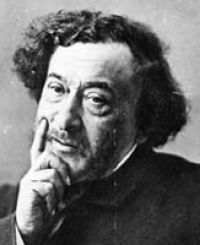
Portrait of Poul Anderson Poul Anderson,  The Golden Slave

“ It had an Italian look, not much of a galley, an old trading scow but even so—Arpad sent a man up to speak with the lookout in the crow's-nest. Only three crewfolk were seen on the other deck. Two of them fought their yardarm, trying to pull it about so they would not be blown so directly toward the island. The third stood by a lashed steering oar. The ship was sluggish, low in the water, now and then a wave breaking over the side; it was slowly foundering.
Arpad considered various matters, such as the rescue of distressed mariners and the salvage rights on their vessel. "Stand by to board!"
”
Source: Gutenberg

Anonymous,  The Hungarian Duke Arpad attacks the Bulgarians and Macedonians (896)

“ According to an anonymous chronicler in 896, the following attack by the Hungarian Duke Arpad is recorded:
[The Hungarian military leaders] returned to Arpad and sent more envoys so he could give them permission to go to Greece so they could subjugate all of Macedonia, from the Danube to the Black Sea. [Arpad allowed them] to go to Greece and conquer the country.
A few days later, Zuard and Caduse with their army crossed the Danube and captured the Beron Fortress. Then they went to the fortress of Serdica.
”
Source: Wikisource

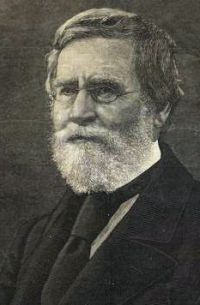
Portrait of A. H. Sayce A. H. Sayce,  Fresh Light from the Ancient Monuments

“ In the retrospective record of the prophetical annalist, the two campaigns of Sargon and Sennacherib have been brought into association, though the history dwells only upon that one which illustrated God's way of dealing with His faithful servants. Hence it is that reminiscences of the earlier invasion are allowed to enter here and there into the narrative. It was Sargon, and not Sennacherib, who was the conqueror of Hamath and Arpad, of Sepharvaim and Samaria (2 Kings xviii. 34-36) . ”
Source: Gutenberg

Get perspective with Kwize: daily news enlightened by great literature