“ But this vision did not often give Ann Eliza its negative relief; and always, beneath its hazy lines, lurked the dark conviction that Evelina was alive, in misery and longing for her. So the summer wore on. Ann Eliza was conscious that Mrs. Hawkins and Miss Mellins were watching her with affectionate anxiety, but the knowledge brought no comfort. She no longer cared what they felt or thought about her. Her grief lay far beyond touch of human healing, and after a while she became aware that they knew they could not help her. ”
Quotes about “Ann Eliza”
 Mary Jane Holmes,
Gretchen: A Novel
Mary Jane Holmes,
Gretchen: A Novel
“ So when Ann Eliza said to him, "It is such a fine day; suppose we drive along the river; it may dispel the blues," he assented, and soon found himself bowling along the smooth turnpike with Ann Eliza, whom he thought rather interesting, with the tears shed for Jerrie on her long, light eyelashes. ”
 Edith Wharton,
The Bunner Sisters — Chapter X
(1916)
Edith Wharton,
The Bunner Sisters — Chapter X
(1916)
“ For over a week Ann Eliza lay in bed, faithfully nursed by her two neighbours, while the weak-eyed child, and the pale sewing girl who had helped to finish Evelina's wedding dress, took turns in minding the shop. Every morning, when her friends appeared, Ann Eliza lifted her head to ask: "Is there a letter?" and at their gentle negative sank back in silence. Mrs. Hawkins, for several days, spoke no more of her promise to consult her husband as to the best way of tracing Mrs. Hochmüller; and dread of fresh disappointment kept Ann Eliza from bringing up the subject. ”
Edith Wharton,
The Bunner Sisters — Chapter IX
(1916)
“ Ann Eliza, aided by Miss Mellins and Mrs. Hawkins, and consciously supported by the sentimental interest of the whole street, had expended her utmost energy on the decoration of the shop and the back room. On the table a vase of white chrysanthemums stood between a dish of oranges and bananas and an iced wedding-cake wreathed with orange-blossoms of the bride's own making. Autumn leaves studded with paper roses festooned the what- not and the chromo of the Rock of Ages, and a wreath of yellow immortelles was twined about the clock which Evelina revered as the mysterious agent of her happiness. ”
“ Ann Eliza murmured to herself; but she was well-trained in the arts of renunciation, and after a scarcely perceptible pause she plunged into a detailed description of the dress-maker's “turn.” Evelina, when her curiosity was roused, was an insatiable questioner, and it was supper-time before she had come to the end of her enquiries about Miss Mellins; but when the two sisters had seated themselves at their evening meal Ann Eliza at last found a chance to say: “So she on'y had a speck of dust in her.” ”
“ Beneath her placid exterior she cherished a morbid passion for disease and death, and the sight of Ann Eliza's suffering had roused her from her habitual indifference. “There ain't so many folks comes to the store anyhow,” she went on with unconscious cruelty, “and I'll go right up and see if Miss Mellins can't spare one of her girls.” Ann Eliza, too weary to resist, allowed Mrs. Hawkins to put her to bed and make a cup of tea over the stove, while Miss Mellins, always good-naturedly responsive to any appeal for help, sent down the weak-eyed little girl to deal with hypothetical customers. ”
Edith Wharton,
The Bunner Sisters — Chapter XI
(1916)
“ Suddenly Ann Eliza remarked a small neat handkerchief on the counter: it must have dropped from the lady's purse, and she would probably come back to get it. Ann Eliza, pleased at the idea, sat on behind the counter and watched the darkening street. She always lit the gas as late as possible, keeping the box of matches at her elbow, so that if any one came she could apply a quick flame to the gas-jet. At length through the deepening dusk she distinguished a slim dark figure coming down the steps to the shop. With a little warmth of pleasure about her heart she reached up to light the gas. ”
“ Ramy?” Evelina interposed. She could never trust Ann Eliza to remember these opening ceremonies. “Thank you, ma'am,” he replied, and taking his thread-bare over-coat and shabby hat she laid them on a chair with the gesture she imagined the lady with the puffed sleeves might make use of on similar occasions. Ann Eliza's social sense was roused, and she felt that the next act of hospitality must be hers. “Won't you suit yourself to a seat?” she suggested. “My sister will reach down the clock; but I'm sure she's all right again. She's went beautiful ever since you fixed her.” ”
Mary Spring Corning, Miss Elliot's Girls: Stories of Beasts…
“ All were there—the Jones' twins, Ann Eliza and Eliza Ann, tall girls as like each other as two peas and growing so fast one could always see where their gowns were let down; Grace Tyler with curly black hair and rosy cheeks; Nellie Dimock, a little dumpling of a girl with big blue eyes and a funny turned up nose; Fannie Eldridge, looking so sweet and smiling, you would not suspect she could be guilty of the fault Susie had charged her with; and Florence Austin, whose father had lately purchased a house in Green Meadow, and with his family had come to live in the country. ”
“ Ann Eliza consulted him about the investment he had recommended, and after it had been settled that he should attend to the matter for her he took up the illustrated volume of Longfellow—for, as the sisters had learned, his culture soared beyond the newspapers—and read aloud, with a fine confusion of consonants, the poem on “Maidenhood.” Evelina lowered her lids while he read. It was a very beautiful evening, and Ann Eliza thought afterward how different life might have been with a companion who read poetry like Mr. Ramy. ”
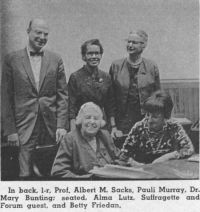
“ Ann Eliza was a stimulating intelligent companion, and Susan looked forward to seeing many of her own dreams fulfilled in her niece. Then suddenly in the fall of 1864, Ann Eliza was taken ill, and her death within a few days left a great void. ”
 Ellen Thorneycroft Fowler,
Concerning Isabel Carnaby
(1898)
Ellen Thorneycroft Fowler,
Concerning Isabel Carnaby
(1898)
“ Eliza Ann is not one of the regretting sort. She does what she thinks right, and leaves Providence to take the consequences. The first time I saw her after her illness, 'My conscience alive, Eliza Ann,' says I, 'you are a figure of fun!' 'Martha,' says she, 'the Lord called me to nurse that poor, misguided young man; and was I going to let the thought of my vile body come between me and the Lord's work?' That was how Eliza Ann looked at the matter; and it was the sensible view to my thinking." Joanna's eyes filled with tears; self-sacrifice—even in Eliza Anns—always touched her. ”
Edith Wharton,
The Bunner Sisters — Chapter XIII
(1916)
“ Ann Eliza turned her eyes from the sign as she went out and locked the door behind her. Evelina's funeral had been very expensive, and Ann Eliza, having sold her stock-in-trade and the few articles of furniture that remained to her, was leaving the shop for the last time. She had not been able to buy any mourning, but Miss Mellins had sewed some crape on her old black mantle and bonnet, and having no gloves she slipped her bare hands under the folds of the mantle. ”
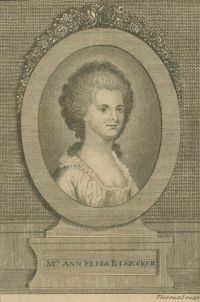 Ann Eliza Bleecker,
Peace — from The Posthumous Works of Ann Eliza Bleecker
Ann Eliza Bleecker,
Peace — from The Posthumous Works of Ann Eliza Bleecker
“ From its verdant unfoldings, the timid narcissus Now shoots out a diffident bud; Begone ye rude tempests, for sure as it freezes Ye kill this bright child of the wood: And Peace gives new charms to the bright beaming season ”
Ann Eliza Bleecker,
The History of Maria Kittle
“ Thus wildly lamenting and wandering among the smoaking ruins, he picked up some of the calcined bones of his once beautiful ANNA. At this sight despair shook his soul afresh, new agonies convulsed his features, and dropping the sad evidence of his miseries, he extended his arms to Heaven, and roared out, "Revenge! great God! revenge if thou art just and kind as represented! Oh! that I had the power of an archangel to thunder eternal horrors on the guilty wretches who have blasted the bud of my happiness, who have darkened the brightest eyes that ever opened on the light!" ”
Ann Eliza Bleecker,
The History of Maria Kittle
“ O my wife! my "MARIA! the beloved of my bosom, are you too fallen a sacrifice? Why do I survive these miseries, my God? how can mortality support them? burst - burst my srinking heart, and punish a wretch for not having died in the defence of such lovely and innoccent beings! Oh! why was I absent in this fatal hour? why did not their groans vibrate on my soul that I might have flown to their aid ?" ”
Ann Eliza Bleecker,
Elegy on the death of Gen. Montgomery…
“ Invulnerable was his soul to fear: When they explor'd their way o'er trackless snows, Where Life's warm tide thro' every channel froze, His eloquence made the chill'd bosom glow, And animated them to meet the foe ”
Ann Eliza Bleecker,
Recollection — from The Posthumous Works of Ann Eliza Bleecker
“ While the sweet charmer liv'd to bless my sight. What art thou now, my love!---a few dry bones, Unconscious of my unavailing moans: Oh! my Abella! oh! my bursting heart Shall never from thy dear idea part! ”
Ann Eliza Bleecker,
Return to Tomhanick — from The Posthumous Works of Ann Eliza Bleecker
“ Seeks the parterre with early blue bells drest, Drinks deep the honeysuckle dew, or drives The lab'ring bee to her domestic hives: Then shines the lupin bright with morning gems, And sleepy poppies nod upon their stems; The humble violet and the dulcet rose, The stately lily then, and tulip blows. Farewell my Plutarch! farewell pen and Muse! Nature exults---shall I her call refuse? ”
Ann Eliza Bleecker,
The Storm — from The Posthumous Works of Ann Eliza Bleecker
“ The whirlwind howls, the livid lightning flies, The bursting thunder sounds from shore to shore, Earth trembles at the loud prolonged roar: Down on the mountain forests rush the hail, Th' aspiring pines fall headlong in the vale ”
Ann Eliza Bleecker,
On Mrs. Johanna Lupton — from The Posthumous Works of Ann Eliza Bleecker
“ All tears of sorrow ever wip'd away; 'Sing how by tortures heav'n her faith has try'd; 'The saint endur'd it, tho' the woman dy'd!' Ah, nature will prevail! 'tis all in vain: Say, sacred muse, what loss do we sustain? ”
Ann Eliza Bleecker,
A pastoral dialogue — from The Posthumous Works of Ann Eliza Bleecker
“ Begin our walk, but cheer the lonely way With music, previous to the swallow's lay. ELIZA. My sister, cease, these hostile shades refuse Admission to the lute or peaceful Muse; Lo! the broad standard shades the flow'ry plain, Nor crooks (but musquets) arm the awkward swain; Death's heavy engines thunder thro' the vale, And Echo but retorts the savage yell ”
Ann Eliza Bleecker,
To Miss Brinckerhoff — from The Posthumous Works of Ann Eliza Bleecker
“ Eliza, when the southern gale Expands the broad majestic sail, While Friendship breathes the parting sigh, And sorrow glitters in each eye, The vessel leaves the flying shores, Receding spires and less'ning tow'rs ”
Ann Eliza Bleecker,
A short pastoral dialogue — from The Posthumous Works of Ann Eliza Bleecker
“ Nature's bounties let us sing, While the popler's silver shade O'er our lambkins is display'd. DELIA. See how she has deck'd the ground Op'ning flow'rets blush around; Crystals glitter on each hill, Polish'd by the falling rill. ”
Ann Eliza Bleecker,
To Miss Ten Eyck II — from The Posthumous Works of Ann Eliza Bleecker
“ The brazen voice of war awakes our fears, Impearling every damask cheek with tears. The savage, rushing down the echoing vales, Frights the poor hind with ill portending yells; A livid white his consort's cheeks invest ”
Ann Eliza Bleecker,
A pastoral dialogue — from The Posthumous Works of Ann Eliza Bleecker
“ And calls on Conquest to decide the war: What tho' the Goddess still defers the blow, Her arm shall soon repel th' invading foe; Her arm unfurl our starry standard wide, For Conquest loves to be on Freedom's side. ”
Ann Eliza Bleecker,
To Miss M. V. W — from The Posthumous Works of Ann Eliza Bleecker
“ All hail the day that bids stern discord cease, All hail the day which gives the warrior peace: Hark! the glad nations make a joyful noise! And the loud shouts are answer'd from the skies; Fame swells the sound wrapt in her hero's praise, And darts his splendors down to latest days. ”
Ann Eliza Bleecker,
To Mrs. D--- — from The Posthumous Works of Ann Eliza Bleecker
“ Since winter the trees of their bloom has bereft, And stiffen'd to crystal the waves. Now clad all in fur our guest she appears, By the fire-side a merry young grig; She pours out the wine, our pensiveness cheers, And at night leads us out to a jig. Then venture among the tall pines if you dare, Encounter the keen arctic wind; Dare this for to meet with affection sincere, And Pleasure untainted you'll find. I know you have Pleasure, my sister, by whiles, But then she appears in great state; She is hard of access, and lofty her smiles, While Envy and Pride on her wait. ”
Ann Eliza Bleecker,
Return to Tomhanick — from The Posthumous Works of Ann Eliza Bleecker
“ Where hid, th' elusive water-melons lie; Sportive, they make incisions in the rind, The riper from the immature to find; Then load their tender shoulders with the prey, And laughing bear the bulky fruit away. ”
Ann Eliza Bleecker,
A prospect of death — from The Posthumous Works of Ann Eliza Bleecker
“ Death! thou real friend of innocence, Tho' dreadful unto shivering sense, I feel my nature tottering o'er Thy gloomy waves, which loudly roar: Immense the scene, yet dark the view, Nor Reason darts her vision thro'. Virtue! supreme of earthly good, Oh let thy rays illume the road ”
Ann Eliza Bleecker,
On the immensity of creation — from The Posthumous Works of Ann Eliza Bleecker
“ Beyond where thought can reach, or eye can glance, My curious spirit, charm'd should traverse o'er, New worlds to find, new systems to explore: When these appear'd, again I'd urge my flight Till all creation open'd to my sight. ”
Ann Eliza Bleecker,
On seeing Miss S. T. E. crossing the Hudson…
“ Whose charms the world surprise, Whose praises, chanted in the wood, Are wafted to the skies, To view the heaven of her eyes, Where'er the light barque moves, The green hair'd sisters, smiling, rise From out their sea-girt groves. ”
 Eliza Calvert Hall,
Aunt Jane of Kentucky
Eliza Calvert Hall,
Aunt Jane of Kentucky
“ Jane Ann said she come down-stairs, her eyes sparklin' like a girl's and a bright color in her cheeks, and she had on a flowered muslin dress, white ground with sprigs o' lilac all over it, and lace in the neck, and angel sleeves that showed off her arms, and her hair was twisted high up on her head, and a big tortoise-shell [212] comb in it. Jane Ann said she looked as pretty as a picture; and jest as she come down the stairs, Harvey drove up with Judge McGowan, and Mary walked out to give him a welcome, while Harvey put away the buggy. Nobody had pleasanter ways than Mary Andrews. ”
Ann Eliza Bleecker,
Joseph — from The Posthumous Works of Ann Eliza Bleecker
“ The conscious blood revolting from each cheek, Rush to the guilty heart and refuge seek: Now vice prepares the formidable blow, Yet shrinks, encountering a defenceless foe: She summons all her forces to her aid, And big with death, now hovers o'er his head. Rapid as lightnings thro' the æther glance, So swift they to th' astonish'd youth advance; Trembling with rage they flew; they seiz'd his hair, And bade him instantly for death prepare. Aghast he gaz'd; he stiffen'd with surprise, His blood congeals, he scarce believes his eyes ”
Ann Eliza Bleecker,
On reading Dryden's Virgil — from The Posthumous Works of Ann Eliza Bleecker
“ And we not mourn the sudden ruin of our's? See York on fire---while borne by winds each flame Projects its glowing sheet o'er half the main: Th' affrighted savage, yelling with amaze, From Allegany sees the rolling blaze. ”
Ann Eliza Bleecker,
A pastoral dialogue — from The Posthumous Works of Ann Eliza Bleecker
“ The blooming meads with deep'ning green were gay, The birds were cheerful, nor the rustic less, Joy on his cheek, and in his bosom peace; Down rush'd the tawny natives from the hill, And every place with fire and murder fill; Arm'd with the hatchet and a flaming brand, They soon reverse the aspect of the land: Observe, Susanna, not a bird is there, The tall burnt trees rise mournful in the air, Nor man nor beast the smoking ruins explores, And Hudson flows more solemn by those shores. ”
Ann Eliza Bleecker,
The History of Maria Kittle
“ Alas! but a very few days ago I was hailed as the happiest of women - my fond husband anticipated all my desires - my children smiled round me with filial delight - my very servants paid me the homage due to an angel! - O my God! what a sudden, what a deplorable transition! I am fallen below contempt!" As she thus moralized on her situation, an English woman (whom humanity more than curiosity had drawn to the place) approached MARIA, and observing her tears and deep dejection, took hold of her hand, and endeavoured to smile ”
Ann Eliza Bleecker,
The History of Maria Kittle
“ KITTLE pursuing her, was intercepted by flames, the savages having fired the house. The wretched child soon discovered her deplorable situation, and almost suffocated by the smoke, with piercing cries called for help to her dear, dear mother. - Alas! what could the unhappy parent do? whole sheets of flames rolled between them, while in a phrenzy of grief she screamed out, "O my last treasure! my beloved ANNA! try to escape the devouring fire - come to me my sweet child - the Indians will not kill us - O my perishing babe! ”
