Arakan

Definition and stakes

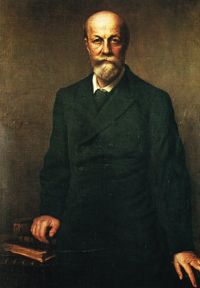
Portrait of Henry Yule Henry Yule,  Hobson-Jobson — A (1903)

“ ARAKAN, ARRACAN, n.p. This is an European form, perhaps through Malay [which Mr Skeat has failed to trace] , of Rakhaing, the name which the natives give themselves. This is believed by Sir Arthur Phayre [see Journ. As. Soc. Ben. xii. 24 seqq.] to be a corruption of the Skt. rākshasa, Pali rakkhaso, i.e. 'ogre' or the like, a word applied by the early Buddhists to unconverted tribes with whom they came in contact. It is not impossible that the Ἀργυρῆ of Ptolemy, which unquestionably represents Arakan, may disguise the name by which the country is still known to foreigners ”
Source: Wikisource

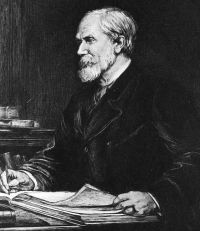
Various,  Encyclopaedia Britannica, 11th Edition…

“ The division has its headquarters at Akyab and consists of four districts—namely, Akyab, Northern Arakan Hill Tracts, Sandoway and Kyaukpyu, formerly called Ramree. Its area is 18,540 sq. m. The population at the time of the British occupation in 1826 did not exceed 100,000. In 1831 it amounted to 173,000; in 1839 to 248,000, and in 1901 to 762,102.
The principal rivers of Arakan are— (1) the Naaf estuary, in the north, which forms the boundary between the division and Chittagong; (2) the Myu river, an arm of the sea, running a course almost parallel with the coast for about 50 m.
”
Source: Gutenberg

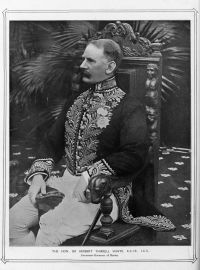
Portrait of Herbert Thirkell White Herbert Thirkell White,  Provincial Geographies of India (1923)

“ Mandalay is studded with pagodas and monasteries, for the most part modern. South of the town is the Arakan Pagoda or rather Temple (Yakaing Paya) , enshrining the great Mahamuni image, cast in the second century of our era, and brought from Arakan in 1784. Here also are six antique and much dilapidated bronze images, two men, three lions, and a three-headed elephant. The corridors leading to the shrine are adorned with frescoes. In a small lake or pond are tame tortoises fed by the pious. ”
Source: Wikisource

Get perspective with Kwize: daily news enlightened by great literature