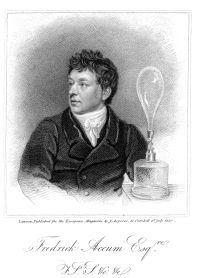
Argand lamp

Definition and stakes

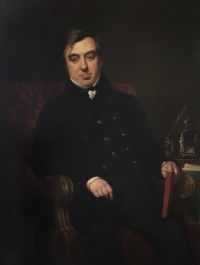
Portrait of John Ayrton Paris John Ayrton Paris,  The Life of Sir Humphry Davy, Bart…

“ The flame of a common lamp he proved, by a very simple experiment, to exceed even the white heat of solid bodies, and which is easily shown by the simple fact of heating a piece of platinum wire over the chimney of an Argand lamp fed with spirit of wine; when it will be seen that air, which is not of sufficient temperature to appear luminous, is still sufficiently hot to impart a white heat to a solid body immersed in it. ”
Source: Gutenberg

Anonymous,  Smeaton and Lighthouses

“ The Argand lamp-burners are tipped with silver, to prevent the waste and imperfection to which copper is subject, from the excessive heat of the burner.
In appearance the lights may be classed as stationary, revolving, flashing, and intermittent. In the first, as its name implies, the light has a steady and uniform appearance, and the reflectors, which are smaller than those used for revolving lights, are ranged in circular [114] zones upon a chandelier or piece of iron frame-work, with their axes inclined at such an angle as shall enable them to illuminate every part of the horizon.
”
Source: Gutenberg

W. H. Davenport Adams,  Lighthouses and Lightships

“ It was natural, therefore, that men of science should, with a view to improvement, first direct their attention to the lamp. The pioneer in this course of inquiry was Argand, who, about 1748, contrived to secure “a double current of air;” which consists, as any one may see in the first lamp he meets with, of a wick, shaped like a hollow cylinder, enclosed in a glass tube. The heat caused by the combustion of the oil produces a vigorous draught, which leads to an abundant circulation of air both internally and externally; and air is for the lamp, as for man, the plant, and the animal—life! ”
Source: Gutenberg

Get perspective with Kwize: daily news enlightened by great literature