Asakusa

Definition and stakes

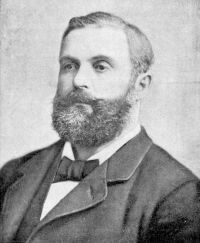
Baron Algernon Bertram Freeman-Mitford Redesdale,  Tales of Old Japan

“ At Asakusa, as indeed all over Yedo, are to be found fortunetellers, who prey upon the folly of the superstitious. With a treatise on physiognomy laid on a desk before them, they call out to this man that he has an ill-omened forehead, and to that man that the space between his nose and his lips is unlucky. Their tongues wag like flowing water until the passers-by are attracted to their stalls. If the seer finds a customer, he closes his eyes, and, lifting the divining-sticks reverently to his forehead, mutters incantations between his teeth. ”
Source: Gutenberg

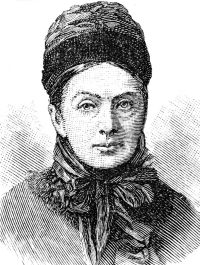
Portrait of Eliza Ruhamah Scidmore Eliza Ruhamah Scidmore,  Jinrikisha Days in Japan (1891)

“ East of Uyeno stands the great Asakusa temple, shrine of one of the most famous of the thirty-three famous Kwannons of the empire, the great place of worship for the masses, and the centre of a Vanity Fair unequalled elsewhere. Every street leading to the temple grounds is a bazaar and merry fair, and theatres, side shows, booths, and tents, and all the devices to entrap the idle and the pleasure-seeking, beset the pilgrim on his way to the sanctuary. ”
Source: Wikisource

John Paris,  Kimono

“ Beyond the brown sluggish river, the roofs and pinnacles of Asakusa were more fairy-like than a theatre scene. Asako was thinking of that first snow-white day, which introduced Geoffrey and her to the Embassy and to Yaé Smith.
She shivered. Darkness was falling. A Japanese house is a frail protection in winter time; and a charcoal fire in a wooden box is poor company. The maid came in to close the shutters for the night. Where was Tanaka? He had gone out to a New Year party with relatives. Asako felt her loneliness all of a sudden
”
Source: Gutenberg

Get perspective with Kwize: daily news enlightened by great literature