Attila the Hun

Definition and stakes

Newell Dwight Hillis,  The Blot on the Kaiser's 'Scutcheon

“ He was a Hun who devastated Italy fifteen hundred years ago. The motto of this black-hearted murderer Attila the Hun was: "Where my feet fall, let grass not grow for a hundred years." When the Kaiser read Attila's story he exclaimed: "That is the man for me!" First, he named his favourite son for Attila the Hun. Second, [21] in sending his German soldiers out to China, and later in 1914 to Belgium, he gave them this charge: "You will take no prisoners; you will show no mercy; you will give no quarter; you will make yourselves as terrible as the Huns under Attila." ”
Source: Gutenberg

J. N. Larned,  History for ready reference, Volume 2…

“ Defeat of Attila. The Hun then appears to have seen that the sinking Empire of the West offered a more certain victim to his terrors and his arms, and he turned them to that side. First forming an alliance with the Vandals (who had crossed from Spain to Africa in 429, had ravaged and subdued the Roman provinces, and had established a kingdom on the Carthaginian ground, with a naval power in the Carthaginian Sea) , Attila led his huge army into suffering Gaul. There were Ostrogoths, and warriors from many German tribes, as well as Huns, in the terrific host ”
Source: Gutenberg

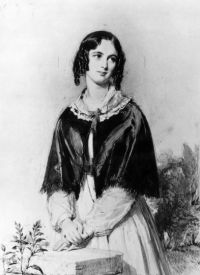
Portrait of Charlotte M. Yonge Charlotte M. Yonge,  History of Christian names (1884)

“ In the tales of the Nibelungen, the great Hun, whom Kriemhild marries after the death of Siegfried, and at whose court the general slaughter takes place, is called Etzel in the German poem, Atli in the Northern saga, and this has generally been regarded as identifying him with Attila and fixing the date of the poem; but the monarch of the Huns is hospitable and civilized, with few features in common with the savage of Roman history; and if Attalik were a permanent regal title among the Huns, the chieftain may have been any other of the royal dynasty. ”
Source: Gutenberg

Get perspective with Kwize: daily news enlightened by great literature