Sirmium

Definition and stakes

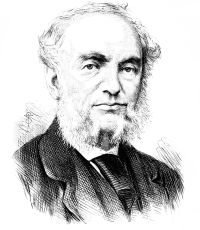
Portrait of Rossiter W. Raymond Rossiter W. Raymond,  The American Cyclopædia (1879)

“ Ziervogel's method of extracting silver by roasting the sulphuretted ore to produce silver sulphate, leaching this with hot acidulated water, and precipitating with copper, is the simplest and cheapest of all; but it requires very skilful and delicate roasting, and ores comparatively free from lead, antimony, arsenic, and zinc. The three latter tend to cause volatilization of silver; the sulphide of antimony and lead cause a sintering of the roasting charge; copper dioxide, or too high a temperature in the furnace, leads to the formation of metallic silver, instead of the desired sulphate. ”
Source: Wikisource

William J. Miller,  Geology: The Science of the Earth's Crust

“ Serpentine is common and widespread, especially in igneous and metamorphic rocks, but never as a really original mineral. It always results from alteration of certain other magnesia-bearing silicate minerals, such as pyroxene, amphibole, olivine, etc.
Silver. Native silver is not a very rare mineral and it is mined in certain parts of the world, but most of the metal is obtained from certain silver-bearing minerals, especially sulphides and a chloride. Silver crystallizes rather rarely in the isometric system. More commonly it occurs as irregular masses, plates, and wirelike forms.
”
Source: Gutenberg

Get perspective with Kwize: daily news enlightened by great literature