“ Such a battle at Newbury would correspond to the battle at Ligny (let it be fought upon a Friday) . Meanwhile, the western half, hurrying up in aid, has failed to effect a junction before the eastern half was defeated, comes up too late above Newbury, and finding it is too late, retires upon Abingdon. The victorious invader pursues them, and at noon on the second day engages them in a long line which they hold in front of Abingdon. ”
Battle of Newbury
Definition and stakes
The theme of “Battle of Newbury” has been addressed by authors such as James Longstreet, Charles Francis Atkinson, A. H. Newton, William Francis Patrick Napier and Walter Scott. It is often associated with terms like cavalry, duke, Wellington, Wellesley and Arthur.
Quotes about “Battle of Newbury”
1911 Encyclopedia Britannica (1911)
“ March on, boys!” At Gloucester he commanded a division, and at the first battle of Newbury he led the infantry of the royal army. With Hopton, in 1644, he served at Arundel and Cheriton. At the second battle of Newbury he made a gallant and memorable defence of Shaw House. He was made a baron by the king, and at Naseby he once more commanded the main body of the foot. He afterwards served in the west, and with 1500 men fought stubbornly but vainly the last battle for the king at Stow-on-the-Wold (March 1646) . ”
 Walter Scott,
The Fortunes of Nigel
Walter Scott,
The Fortunes of Nigel
“ Nothing less than habitual practice could, at the battle of Newbury and elsewhere, have enabled the Londoners to keep their ranks as pikemen, in spite of the repeated charge of the fiery Prince Rupert and his gallant cavaliers. ”
John Camden Hotten, The History of Signboards, from the Earliest times to the Present Day
“ This Jack of Newbury, alias Winchcombe, alias Smallwoode, “was the most considerable clothier England ever had. He kept an hundred looms in his house, each managed by a man and a boy. He feasted King Henry VIII. and his first Queen Catherine at his own house in Newbury, now divided into sixteen clothiers’ houses. He built the Church of Newbury, from the pulpit westward to the town.” [98] At the battle of Flodden in 1513, he joined the Earl of Surrey with a corps of one hundred men, well equipped at his sole expense, who distinguished themselves greatly in that fight. ”
John Richard Green, History of the English People, Volume VI
“ The Scottish army in England refused to march further from its own country; and used the siege of Newcastle as a pretext to remain near the Border. With the army of Essex annihilated and the Scots at a safe distance, no obstacle seemed to lie between the king and London; and as he came up from the West Charles again marched on the capital. But if the Scots were detained at Newcastle the rest of the victors at Marston Moor lay in his path at Newbury ”
Wilson's Tales of the Borders and of Scotland…
“ After the battle, his sons found his mangled and lifeless body in a narrow lane, between two gardens, surrounded by a heap o' dead Loyalists, who had sunk beneath his sword before he fell.It is said that the first blow is half the battle; and it was so wi' the Covenanters upon this occasion; their sudden victory at Newburn not only struck dismay into the hearts o' the royal troops, but reason and fear baith began to whisper their warnings in the ears o' the monarch. He once more became a negotiator and seeker for peace with his thrice-cheated and injured subjects. ”
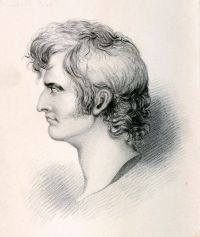 William Francis Patrick Napier,
History of the war in the Peninsula and in the south of France from the year 1807 to the year 1814…
(1840)
William Francis Patrick Napier,
History of the war in the Peninsula and in the south of France from the year 1807 to the year 1814…
(1840)
“ Great bodily exertion, unceasing watchfulness, exact combinations to protect their flanks and communications without scattering their forces, these were common to both. In defence firm, cool, enduring; in attack fierce and obstinate; daring when daring was politic, but always operating by the flanks in preference to the front: in these things they were alike, but in following up a victory the English general fell short of the French emperor. The battle of Wellington was the stroke of a battering-ram, down went the wall in ruins. ”
History of Jack of Newbury (1810)
“ Shortly after the King had occasion to raise an army against the Scots, who were risen against the English, Jack of Newbury raised at his own expence, one hundred and fifty men, cloathed them in white coats, red caps, and yellow feathers and led them himself. ”
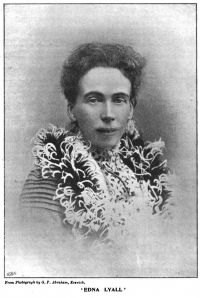 Edna Lyall,
In Spite of All: A Novel
Edna Lyall,
In Spite of All: A Novel
“ Twisse half wished he had let them go when on the 18th September it seemed likely that the two armies would encounter each other in the near neighbourhood of Newbury. A sharp skirmish was reported from Aldbourn Chase, and on the 19th the King’s forces took possession of Newbury, to the great disgust of the inhabitants, who were strongly in favour of the Parliament. In their breasts bitter memories still lingered which made them little inclined to favour a king who was swayed by his “popish” wife. ”
William Francis Patrick Napier,
History of the war in the Peninsula and in the south of France from the year 1807 to the year 1814…
(1836)
“ It is certainly a great thing to fight a great battle; and against such a general as Wellington, and such troops as the British, a man may well be excused, if he thinks twice, ere he puts his life and fame, and the lives and fame of thousands of his countrymen, the weal or woe of nations, upon the hazard of an event, which may be decided by the existence of a ditch five feet wide, or the single blunder of a single fool, or the confusion of a coward, or by any other circumstance however trivial. ”
A. H. Newton, Out of the Briars (1910)
“ And it seemed to us that they were after the Colored troops. But our leaders were too shrewd for them and they were repulsed and their depot, magazines and machine shops at Beaufort, N. C., were blown up and also at Newberne. A great battle was fought about Fort Fisher and the Rebels were overcome. Hundreds were killed and wounded in this battle.The Colored troops in front of Richmond were moved from the breastworks on the left at Fort Harrison, to the hill in the center, where we built up a fine elevation overlooking the Rebel works in Richmond. ”
John Anderton Naylor, From John O'Groats to Land's End
“ Newcastle's "White Coats," a regiment of thoroughly trained soldiers from the borders of Cheshire and Wales, who would not retreat, were almost annihilated, and Prince Rupert himself only escaped through the superior speed of his horse, and retired into Lancashire with the remains of his army, while Newcastle and about eighty others fled to Scarborough, and sailed to Antwerp, leaving Sir Thomas Glemham, the Governor of York, to defend that city. But as most of his artillery had been lost at Marston Moor, and the victors continued the siege, he was soon obliged to surrender. ”
William Francis Patrick Napier,
English Battles and Sieges in the Peninsula
“ Soon the fog vanished, and the German horsemen were seen174 retiring in close and beautiful order before twelve thousand French infantry, advancing in battle array. At intervals, twenty guns would start forwards and send their bullets whistling and tearing up the ground beneath the Germans, while scattered parties of light cavalry scouting out capped all the hills in succession, peering abroad and giving signals to the main body. Wellington then sent Graham over the river with two divisions and a brigade of English cavalry, concentrating the rest of his troops near Moresco to await the event. ”
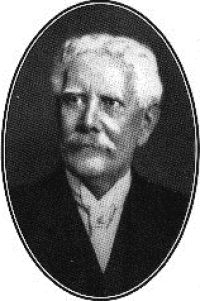 Charles Oman,
A History of the Peninsular War…
Charles Oman,
A History of the Peninsular War…
“ If the French artillery had less effect against the English than against most of Napoleon’s foes, it was because of Wellington’s admirable custom of hiding his troops till the actual moment of battle. Austrian, Russian, or Prussian generals occupied a hillside by long lines drawn up on the hither slope, of which every man could be counted. Hence they could be thoroughly searched out and battered by the French guns, long before the infantry was let loose. ”
William Francis Patrick Napier,
English Battles and Sieges in the Peninsula
“ To mask this movement the skirmishing was renewed on the 28th so warmly that a general battle was expected; yet an ostentatious display of men, the disappearance of baggage, and the casting up of earth indicated some other design. In the evening, the French infantry were sensibly diminished, the cavalry was descried winding over the distant mountains towards the allies’ left, and the project was then apparent. Wellington arrived from the right, and observed the distant columns for some time with great earnestness ”
Charles Harding Firth, Dictionary of National Biography… (1887)
“ His own army was greatly superior in cavalry, and he distressed the enemy by cutting off their supplies. The severity of the weather was ruinous to his forces. The defeat of the army left in Yorkshire (Selby, 11 April 1644) obliged Newcastle to make a hurried retreat to York, where the armies of Fairfax, Manchester, and the Scots closed in upon him. On 1 July Prince Rupert successfully raised the siege, and on the following day the battle of Marston Moor took place. ”
William Francis Patrick Napier,
English Battles and Sieges in the Peninsula
“ Soult and Marmont had above sixty thousand men in line, seven thousand being cavalry, with ninety guns. Wellington had only twenty-eight thousand sabres and bayonets, and the country, a cavalry one, furnished no position to compensate for inferior numbers: a battle gained would certainly have terminated the war. Yet the crisis passed without mischief, because Wellington so concealed his weakness, and outfaced his enemies with such audacity, such a blending of resolution and genius that the French marshals retired and separated without striking! ”
1922 Encyclopædia Britannica (1922)
“ Still, it would be wrong to class Neuve Chapelle among British defeats. The troops were undoubtedly encouraged by seeing that German positions could be stormed and the captured ground held against powerful counter-attacks. Nearly 1,700 prisoners had been taken and the German losses had exceeded the British. Rifles, artillery and machine-guns had found splendid targets, and the German battalions who had shown themselves in the open had been shot down in masses. It was felt that another attack in which the lessons of the battle could be turned to good effect might lead to far-reaching results. ”
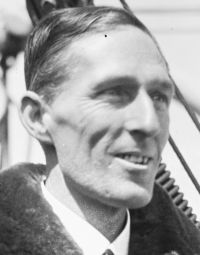 Philip Gibbs,
Now It Can Be Told
Philip Gibbs,
Now It Can Be Told
“ Those were relics of a battle on May 9th, a year before, when swarms of boys, of the '16 class, boys of eighteen, the flower of French youth, rushed forward from the crossroads at La Targette, a few hundred yards away, to capture these ruins of Neuville St.-Vaast. They captured them, and it cost them seven thousand in killed and wounded—at least three thousand dead. They fought like young demons through the flaming streets. They fell in heaps under the German barrage-fire. Machine—guns cut them down as though they were ripe corn under the sickle. ”
Anonymous, Cassell's History of England, Vol…
“ At Auborne Chase Essex was attacked by the flying squadrons of Rupert, and after beating them off he found the king posted across his path at Newbury on the 20th of September. The royal army occupied the bank of the river which runs through the place, to prevent his passage. Every part where there was a chance of the Parliamentary forces attempting to cross was strongly defended by breastworks, and musketeers lined the houses facing the river. It was supposed that Charles could easily keep the Roundheads at bay, and force them to retreat or starve. ”
William Francis Patrick Napier,
History of the war in the Peninsula and in the south of France from the year 1807 to the year 1814…
(1840)
“ Now the allies were in possession of that road on the 4th, and on the 9th the French army was actually invested. The intelligence from Paris must therefore have reached the allies first, as in fact it did, and it was not Soult, it was lord Wellington who commenced the battle. The charge would therefore bear more against the English general, who would yet have been the most insane as well as the wickedest of men to have risked his army and his fame in a battle where so many obstacles seemed to deny success. ”
Edward Farr, The History of England in Three Volumes…
“ Lord Wellington still pursued them; and on the 21st of June he gained a complete victory over them on the plains of Vittoria. In this battle the enemy lost one hundred and fifty-one pieces of cannon, four hundred and fifteen waggons of ammunition, all their baggage, provisions, and treasures, with the French commander’s, Jourdan’s, baton of a marshal of France. Their loss in killed and wounded, according to their own statement, amounted to eight thousand men; while the total loss of the allies was seven hundred and forty killed, and four thousand one hundred and seventy-four wounded. ”
 E. M. Newman,
The Mentor: The Virgin Islands of the United States of America…
E. M. Newman,
The Mentor: The Virgin Islands of the United States of America…
“ Newman sends us word from London that air raids there are strengthening instead of weakening the morale of the British. Few Londoners ever think of hiding in the bomb-proof cellars when the enemy planes arrive, and when the warning signal is given the entire population rushes to the roofs of buildings and other points of vantage to watch the fight. ”
Montgomery B. Gibbs, Military Career of Napoleon the Great
“ For the eleventh time Ney led on his 10,000 horse to the attack. The cuirassiers wheeled about, reformed, and again charged with tremendous energy, and a valor that set at contemptuous defiance the tempest of grape-shot, and balls of the artillery and musketry which opposed their advance. Men rolled off, and horses fell plunging; even pistols were discharged in their faces, and swords thrust over their bayonets in vain. The British infantry, though shaken for a moment again closed their ranks, fell into line and continued to fire. ”
August Niemann, The Coming Conquest of England
“ The battlefield was an awful spectacle. Before the front innumerable wounded, crying out for help, where no help was possible, were writhing in agony, for the retreat of the English artillery had had to be executed without thought of those left behind; wounded horses, wildly kicking to free themselves from their harness, increased the horror of the terrible scene, whilst stray divisions of English cavalry riding amongst them were fired upon by their own infantry out of fear of the advance of the Russian riflemen. ”
 Hilaire Belloc,
The History of England from the First Invasion by the Romans to the Accession of King George the Fifth…
Hilaire Belloc,
The History of England from the First Invasion by the Romans to the Accession of King George the Fifth…
“ The design was believed impracticable; but all the attempts of the royalists to impede his progress were defeated; [b] and on the twenty-sixth day the discharge of four pieces of cannon from Presbury Hills announced his arrival to the inhabitants. [c] The besiegers burnt their huts and retired; [d] and Essex, having spent a few days to recruit his men and provision the place, resumed his march in the direction of London. [e] On his approach to Newbury, [Sidenote a: A.D. 1643. August 10.] ”
Charles Francis Atkinson, 1911 Encyclopædia Britannica (1911)
“ Those who sought to gain peace through victory were meanwhile driving Maurice back from hedge to hedge towards the open ground at Newbury, but every attempt to emerge from the lanes and fields was repulsed by the royal cavalry, and indeed by every available man and horse, for Charles’s officers had gauged Manchester’s intentions, and almost stripped the front of its defenders to stop Waller’s advance. Nightfall put an end to the struggle around Newbury, and then—too late—Manchester ordered the attack on Shaw House. ”
C. H. Firth, Oliver Cromwell and the Rule of the Puritans in England
“ At Newbury, on October 27th, Manchester’s army, strengthened by Waller’s forces and by what remained of Essex’s troops, made a joint attack on the King. Charles had only ten thousand men to oppose to the nineteen thousand brought against him, but he 113had chosen a strong position between two rivers, protected on one side by Donnington Castle, and covered, where it was most assailable, by intrenchments. Above all, his army was under a single commander, while the Parliament’s was directed by a committee. ”
 David Hume,
The History of England in Three Volumes…
David Hume,
The History of England in Three Volumes…
“ This gallant commander, having vigorously exerted himself in Lancashire and Cheshire, had collected a considerable army; and joining Sir Charles Lucas, who commanded Newcastle’s horse, hastened to the relief of York with an army of twenty thousand men. The Scottish and parliamentary generals raised the siege, and drawing up on Marston Moor, purposed to give battle to the royalists. Prince Rupert approached the town by another quarter, and, interposing the River Ouse between him and the enemy, safely joined his forces to those of Newcastle. ”
William Francis Patrick Napier,
History of the war in the Peninsula and in the south of France from the year 1807 to the year 1814…
(1831)
“ The cavalry skirmishers were already exchanging pistol-shots, when lord Wellington, suddenly arriving, ordered the division to retire, and, taking the personal direction, covered the retreat with the fifty-second and ninety-fifth, the cavalry, and Ross’s troop of horse-artillery. Nor was there a moment to lose: the enemy, with incredible rapidity, brought up both infantry and guns, and fell on so briskly, that all the skill of the general and the readiness of the excellent troops composing the rear guard, could scarcely prevent the division from being dangerously engaged. ”
Related terms
Authors who wrote about “Battle of Newbury”
 James LongstreetCharles Francis AtkinsonA. H. NewtonWilliam Francis Patrick NapierWalter ScottHilaire BellocPhilip GibbsJohn Camden HottenEdna LyallCharles OmanJohn Richard Green
 Samuel Rawson GardinerCharles Harding FirthAnonymousEdward FarrDavid Hume
 Mrs. Humphry WardCharles MorrisC. H. Firth
 Benson John Lossing