“ No—I am a toiler in Bleecker Street, of its reeking pavements, its fly-infested purlieus, where the Italian children grub and shout and sun themselves in the gutters, in the air of a thousand smells throbbing under the noonday sun. The homecoming to the third-rate suburb used to be refreshing and soothing like a delicate perfume. To see the children laughing and rosy in the square inch of garden, to see Alicia, sparkling with her young energy and enthusiasm,—it had all been like coming into a cool temple filled with shapes of beauty, after wandering in some fetid bazaar. ”
Bleecker Street
Definition and stakes
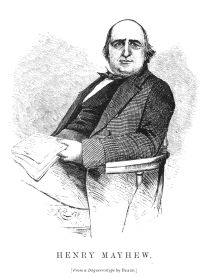
The theme of “Bleecker Street” has been addressed by authors such as Edward Nicholas Clopper, James Dabney McCabe, Sherwood Anderson, Willard W. Glazier and Henry Mayhew. It is often associated with terms like avenue, Broadway, city, new and York.
Quotes about “Bleecker Street”
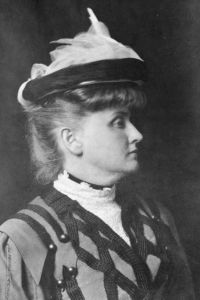 Gertrude Franklin Horn Atherton,
Sleeping Fires: a Novel
Gertrude Franklin Horn Atherton,
Sleeping Fires: a Novel
“ A good many of them hang out there when in New York. There is one thing in your favor. Your—pardon me—beauty won't be so conspicuous in Bleecker Street as it would be in hotels. It isn't only actresses that lodge there, but—well—those ladies so richly dowered by nature they command the longest pocketbooks, and the owners thereof sometimes have a pew in Trinity Church and a seat on the Stock Exchange. The great world averts its eyes from Bleecker Street, and you will be as safe in there as the most respectable sinner. ”
James Dabney McCabe, Lights and Shadows of New York Life
“ Now a profusion of signs announce that hospitality is to be had at a stated price, and the old mansions are put to the viler uses of third-rate boarding houses and restaurants.In many respects Bleecker street is more characteristic of Paris than of New York. It reminds one strongly of the Latin Quarter, and one instinctively turns to look for the Closerie des Lilas. It is the headquarters of Bohemianism, and Mrs. Grundy now shivers with holy horror when she thinks it was once her home. The street has not entirely lost its reputation. No one is prepared to say it is a vile neighborhood ”
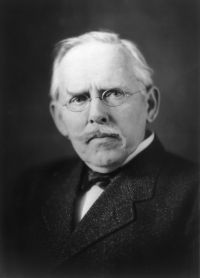 Jacob A. Riis,
The Battle with the Slum
Jacob A. Riis,
The Battle with the Slum
“ Though the latter often gives the police the Bleecker Street house as his permanent address on the principle that makes the impecunious seeker of a job conduct his correspondence from the Fifth Avenue Hotel or the Savoy, he is rarely found there, and if found, is not kept long. If he does get in, he is quiet and harmless because he has to be. Crooks in action seek crooked houses kept by crooked men, and they find them along the Bowery more readily than anywhere. There are the shows and the resorts that draw the young lads, who, away from home, are all too easily drawn, to their undoing. ”
James Dabney McCabe, Lights and Shadows of New York Life
“ It will purchase anything. Much is spent by those who do not dwell here, but come here to hide their secrets. Women come here to meet other men besides their husbands, and men bring women here who are not their wives. Bleecker street asks no questions, but it has come to suspect the men and women who are seen in it. ”
Jr. Horatio Alger, Slow and Sure: The Story of Paul Hoffman the Young Street-Merchant
“ Paul and his mother went out, and got on board a Bleecker street car, which soon brought them to the desired number. The house was quite respectable in appearance, far more so certainly than the burned tenement house. The time had been when Bleecker street was fashionable, and lined with the dwellings of substantial and prosperous citizens. That time had gone by. Still it was several grades above the streets in the lower part of the city. Paul rang the bell, and the door was opened by a maid-servant. "I saw an advertisement in the Herald about some rooms to let," said Paul. ”
James Dabney McCabe, Lights and Shadows of New York Life
“ Bleecker street never asks madame for her marriage certificate, nor does it seek to know why her numerous friends are all gentlemen, or why they come only when the “husband” is away.Honest, hard-working men come here with their families. Their earnings are regular, but small, and they prefer the life of this street to the misery of the tenement house. Others there are who live in the street, and occupy whole dwellings with their families, who stay here from force of habit. They are “slow” people, dull of comprehension, and to them the mysteries of their neighborhood are a sealed book. ”
Willard Grosvenor Bleyer, Types of News Writing
“ All over town the going was treacherous enough to send many a smoothshod pedestrian to sudden and sometimes ignominious downfall. On one Main-street corner a perfectly respectable old gentleman went the “zip-bang!” route, as the sporting writers would have it, and startled passers-by with dark blue language when he spied his shiny Easter hat whiff hastily across the street and cave in against an adamant store front. On a busy corner at the evening rush hour, a swarthy, well-dressed young man went to the pavement all spraddled out, and tripped a woman with a potted lily in her arms. ”
 Arthur Bartlett Maurice,
Fifth Avenue
Arthur Bartlett Maurice,
Fifth Avenue
“ To those who really understand them, every one of the great, vital streets of the world has a soul as well as a body. The social invader from the West, the merchant whose establishment still found profit in Grand Street, the banker from Broad Street, or the ship's chandler from South, the club awakening to the fact that its quarters on Broadway or in one of the side streets near Irving Place was too far downtown, or in size inadequate to its growing membership—those were the agencies that wrought the Avenue's material development. ”
 Hilaire Belloc,
Mr. Clutterbuck's Election
(1908)
Hilaire Belloc,
Mr. Clutterbuck's Election
(1908)
“ The driver, a North countryman of sturdy temper, insisted upon knowing an exact address, but upon receiving a reply which savoured too much of carelessness about The Future Life, he whipped up his horse and drove northward as he was bid, taking, as is the invariable custom of hackney coachmen, the largest and the widest artery of the place, a street known for some centuries as the London Road, [Pg 134] called during the eighties and nineties The Boulevard, but since the feat of arms of General Baden-Powell, characteristically and finally christened Mafeking Avenue. ”
Sinclair Lewis, Main Street (1920)
“ When Carol had walked for thirty-two minutes she had completely covered the town, east and west, north and south; and she stood at the corner of Main Street and Washington Avenue and despaired. Main Street with its two-story brick shops, its story-and-a-half wooden residences, its muddy expanse from concrete walk to walk, its huddle of Fords and lumber-wagons, was too small to absorb her. The broad, straight, unenticing gashes of the streets let in the grasping prairie on every side. She realized the vastness and the emptiness of the land. ”
 Brander Matthews,
Vignettes of Manhattan; Outlines in Local Color
Brander Matthews,
Vignettes of Manhattan; Outlines in Local Color
“ The car was now speeding swiftly down Broadway, obstructed by no carriages, no carts, no tracks, no wagons, and no drays. Below Astor Place the sidewalks were as bare as the street itself was empty. The shades were down in the windows of the many-storied buildings which towered above the deserted thoroughfare, and the flamboyant signs made their incessant appeals in vain. ”
 Anna Katharine Green,
The Sword of Damocles: A Story of New York Life
Anna Katharine Green,
The Sword of Damocles: A Story of New York Life
“ The name which he had just read, was that of the old lover of Jacqueline Japha, Roger Holt, and the address given, was 63 Baxter Street.Twilight comes with different aspects to the broad avenues of the rich, and the narrow alleys of the poor. In the reeking slums of Baxter Street, poetry would have had to search long for the purple glamour that makes day’s dying hour fair in open fields and perfumed chambers. Even the last dazzling gleam of the sun could awaken no sparkle from the bleared windows of the hideous tenement houses that reared their blank and disfigured walls toward the west. ”
Jacob Riis, How the Other Half Lives — Chapter IV: The Down Town Back-Alleys
“ Take a look into this Roosevelt Street alley; just about one step wide, with a five-story house on one side that gets its light and air--God help us for pitiful mockery!--from this slit between brick walls. There are no windows in the wall on the other side; it is perfectly blank. The fire-escapes of the long tenement fairly touch it; but the rays of the sun, rising, setting, or at high noon, never do. It never shone into the alley from the day the devil planned and man built it. ”
Arthur Bartlett Maurice,
Fifth Avenue
“ Somehow, in thinking of the old days, I find it hard to reconcile those men and women who lived under the Knickerbocker sway with their newspapers. It is pleasanter to dwell upon the old customs, to picture Mr. Manhattan leaving the scurrilous sheet behind him when he departed from his store or counting house, and repairing with clean hands to the wife of his bosom and his family, somewhere in Greenwich Village, or Richmond Hill, or Bond Street, or the beginnings of Fifth Avenue. ”
 Geraldine Bonner,
The book of Evelyn
(1913)
Geraldine Bonner,
The book of Evelyn
(1913)
“ Roger said, “I like you in brown.”I love going down Fifth Avenue in the dark of a winter evening. The traffic of business is over. Motors and carriages go spinning by, carrying people [Pg 61] to dinners. The big glistening street is like an artery with the joyous blood of the city racing through it, coursing along with the throb, throb, throb of a deathless vitality. ”
 Rupert Brooke,
Letters from America — New York
(1916)
Rupert Brooke,
Letters from America — New York
(1916)
“ Fifth Avenue is handsome, the handsomest street imaginable. It is what the streets of German cities try to be. The buildings are large, square, 'imposing,' built with the solidity of opulence. The street, as a whole, has a character and an air of achievement. "Whatever else may be doubted or denied, American civilisation has produced this." One feels rich and safe as one walks. Back in Broadway, New York dropped her mask, and began to betray herself once again. A little crowd, expressionless, intent, and volatile, before a small shop, drew me. ”
 Henry Mayhew,
London Labour and the London Poor…
Henry Mayhew,
London Labour and the London Poor…
“ From the Obelisk at the junction, or approximate junction, of the Westminster, Waterloo, Blackfriars, Borough, and London-roads, in pretty well every direction to the banks of the Thames, are a mass of private-looking streets—as far as the absence of shops constitutes the privacy of a street—old and half-ruinous, or modern and trim, in all of which perhaps may be found street-sellers, and in some of which are pickpockets, thieves, and prostitutes. ”
Hilaire Belloc,
The River of London
(1912)
“ There is not even a city wall remaining from the past, nor so much as a broad outer street, delimiting what may still be noble and permanent from these hopeless suburbs. Little scraps of what were once happy and united villages still stand like islands in this flood of mean brick. For the most part they are to be distinguished no longer save by the narrowness and crookedness of their streets, [Pg 34] and when at last one comes to the inner part, where there is something of history and of meaning and of an inherited culture, one comes upon it without introduction and without grace. ”
Hilaire Belloc,
The Green Overcoat — Chapter 9
(1912)
“ Then he remembered that in a little time the Knocker-up would come his rounds, and that that wretched street of slaves would wake to work for the rich in the city.The thought decided him. He rapped gently with his knuckles on the ground floor window. There was no response. He rapped a second time. A terse but unpleasant oath assured him that he had aroused whoever slept therein. ”
 Honoré de Balzac,
Beatrix
(1839)
Honoré de Balzac,
Beatrix
(1839)
“ The streets are what they were four hundred years ago,—with one exception; population no longer swarms there; the social movement is now so dead that a traveller wishing to examine the town (as beautiful as a suit of antique armor) may walk alone, not without sadness, through a deserted street, where the mullioned windows are plastered up to avoid the window-tax. This street ends at a postern, flanked with a wall of masonry, beyond which rises a bouquet of trees planted by the hands of Breton nature, one of the most luxuriant and fertile vegetations in France. ”
Gerald Breckenridge, The Radio Boys with the Revenue Guards
“ They stood on the corner of Broadway and Forty-second street, immediately in front of the Knickerbocker. Toward it Bob, who was fond of good eating, gazed with longing.“Too high-priced for my purse,” said Jack. “Besides, we haven’t the time to waste over eating there. Takes too long. We must be on our way. However, I can do you better than a lunch counter, so come on. I know a place around here on Forty-second street.”Taking the lead, Jack led the way through the busy 42 throng that congests traffic at Times Square at all hours of the day and practically all of the night, too. ”

“ This Nancy trudged for hours through straight and terrible streets called avenues, with a dismal husband and a tired baby at her side. Third Avenue, Fourth Avenue, then quickly across Fifth Avenue, which had nothing to do with us, and again across to Sixth Avenue ... and everywhere dirty shops, screaming children, jostling girls, rude men, trains rushing overhead, street-cars screeching and clanging. Then, at last, Seventh Avenue, where there were streets full of quiet, squalid boarding-houses, fewer screaming children, fewer dirty shops, and no trains. ”
Edward Nicholas Clopper, Child Labor in City Streets
“ The street is painted as a black monster by some social workers, who can discern nothing but evil in it. Nevertheless the street is closely woven into the life of every city dweller, for his contact with it is daily and continuous. If it is all evil, it ought to be abolished ”
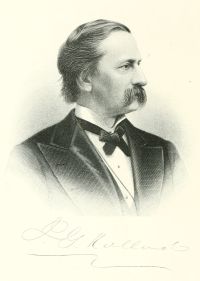 J. G. Holland,
Sevenoaks: A Story of Today
J. G. Holland,
Sevenoaks: A Story of Today
“ Talbot, who was as sure of Mr. Belcher's tastes as he was of his own. One street was too quiet, one was too dark; one house was too small, and one was too tame; one house had no stable, another had too small a stable. At last, they came out upon Fifth avenue, and drove up to a double front, with a stable almost as ample and as richly appointed as the house itself. It had been built, and occupied for a year or two, by an exploded millionaire, and was an elephant upon the hands of his creditors. Robert Belcher was happy at once. ”
 Ellis Parker Butler,
Wetter New York
(1907)
Ellis Parker Butler,
Wetter New York
(1907)
“ AN UPPER WEST SIDE STREET "Business and pleasure occupy the people as usual!" When I reached my office I stood for a few minutes looking out at the crowded junction of Fifth Avenue and Broadway, where they cross Twenty-third Street. Here were the same hurrying crowds that I had seen there of old. Below me I saw the same policeman guarding the pedestrians across the crowded streets, and the same sleepy cab horses drowsing in the sun along the edge of Madison Square. ”
Adrian C. Anson, A Ball Player's Career
“ The street itself in a narrow one, being barely wide enough for two vehicles to pass each other, and yet over its pavements there is a constantly flowing tide of people such as Fifth Avenue in New York, State Street in Chicago, Rotten Row in London, or even the Champs Ely-see in Paris cannot equal. ”
 Arthur Morrison,
Tales of mean streets — INTRODUCTION
(1894)
Arthur Morrison,
Tales of mean streets — INTRODUCTION
(1894)
“ Foul slums there are in the East End, of course, as there are in the West; want and misery there are, as wherever a host is gathered together to fight for food. But they are not often spectacular in kind.Of this street there are about one hundred and fifty yards—on the same pattern all. It is not pretty to look at. A dingy little brick house twenty feet high, with three square holes to carry the windows, and an oblong hole to carry the door, is not a pleasing object; and each side of this street is formed by two or three score of such houses in a row, with one front wall in common. ”
Edward Hungerford, The Personality of American Cities
“ And so it has come to pass that Brooklyn has no main street—in the sense that about every other town in the United States, big or little, has a main street. If you wish to call Fulton street, running from the historic Fulton ferry right through the heart of the original city and far out into the open country a main street, you will be forced to admit that it is the ugliest main street of any town in the land: narrow, inconsequential, robbed of its light and air by a low-hanging elevated railroad almost its entire length. ”
 Joyce Kilmer,
Main Street, and Other Poems
Joyce Kilmer,
Main Street, and Other Poems
“ The truck and the motor and trolley car and the elevated train They make the weary city street reverberate with pain: But there is yet an echo left deep down within my heart Of the music the Main Street cobblestones made beneath a butcher's cart. God be thanked for the Milky Way that runs across the sky, That's the path that my feet would tread whenever I have to die. Some folks call it a Silver Sword, and some a Pearly Crown, But the only thing I think it is, is Main Street, Heaventown. ”