“ Burris frowned again. “Don’t call me Chief,” he said.Malone nodded. “Okay,” he said. “But if you don’t know what it is, you must have some idea of what you don’t know. I mean, is it larger than a breadbox? Does it perform helpful tasks? Is it self-employed?”“Malone,” Burris sighed, “you ought to be on television.”“But—”“Let me explain,” Burris said. His voice was calmer now, and he spoke as if he were enunciating nothing but the most obvious and eternal truths. “The country,” he said, “is going to hell in a handbasket.”Malone nodded again. ”
Burris
Definition and stakes
The concept of "Burris" emerges across literature as a multifaceted figure, often embodying leadership, intrigue, or existential dilemma. In Randall Garrett’s works, Burris appears as a pragmatic leader navigating espionage and psionics, grappling with moral ambiguity and bureaucratic absurdity.
Karel Matěj Čapek-Chod portrays Burris as a soldier, marked by dignity and tension in wartime settings, while Richard Hurd references him in classical contexts, linking him to mythological archetypes. These varied depictions underscore Burris’s adaptability as a symbol of authority, vulnerability, and the complexities of human endeavor across genres and eras.
Quotes about “Burris”
Richard Hurd, The works of Richard Hurd, volume 1…
“ The comic arose from the risor and dicax, who was either a satyr himself, or some character of an extravagant, ridiculous cast, like a satyr. Of this kind, says Diomedes, from whom I take this account, are Autolychus and Burris: which last particular I mention for the sake of justifying a correction of the learned Casaubon. This great critic conjectured, that, instead of Burris, in this place, it should be read Busiris. His reason is “nam Burris iste ex Græcorum poetis mihi non notus:” which reason hath more force, than appears at first sight. ”
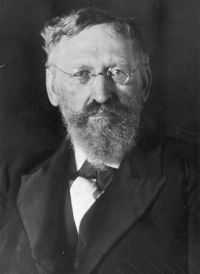 Karel Matěj Čapek-Chod,
Poet Lore
(1923)
Karel Matěj Čapek-Chod,
Poet Lore
(1923)
“ Burris.—In a certain man-made trap where so many of our own dear boys perished. Erna.—Time enough for all that after supper, gentlemen. Please take your places. (At kitchen door.) Bara, one more place, please. Rudy will do us the honor tonight. The first time this year, brother. (She sits. Lena does not see where to go.) Burris (Noticing, and with ostentatious matter of factness offers her his arm) .—Your servant, my lady. (His intended kindness in not noticing her condition is spoiled. She does not see his offered arm. He takes her hand and places it on his arm.) ”