“ Jakes had removed its usual load of photographs and ornamental pottery, and now, with her back to her fellow creatures, was playing the intermezzo from "Cavalleria Rusticana." Her small hands moving upon the keys showed the red knuckles and uneven nails which had come to her since first she learned that composition within earshot of the diapason of trains passing by Clapham Junction, mightily challenging her laborious tinkle-tinkle, and with as little avail as now the night of the Karoo challenged it. ”
Cavalleria Rusticana
Definition and stakes
The theme of “Cavalleria Rusticana” has been addressed by authors such as Henry Edward Krehbiel and David Ewen. It is often associated with terms like cavalry, chivalry, horse, knight and Italy.
Quotes about “Cavalleria Rusticana”
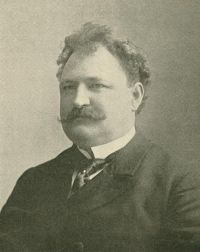 Henry Edward Krehbiel,
A Second Book of Operas
“ When "Cavalleria Rusticana" appeared on the scene, two generations of opera-goers had passed away without experiencing anything like the sensation caused by this opera. They had witnessed the production, indeed, of great masterpieces, which it would be almost sacrilegious to mention in the same breath with Mascagni's turbulent and torrential tragedy, but these works were the productions of mature masters, from whom things monumental and lasting were expected as a matter of course; men like Wagner and Verdi. ”
David Ewen, The Lighter Classics in Music
“ Though he enjoyed varying degrees of success with L’Amico Fritz in 1891 and Iris in 1898, he never again duplicated the acclaim given Cavalleria Rusticana; and it is still the only one of his operas performed in the world’s foremost opera houses. As he himself once said sadly: “It is a pity I wrote Cavalleria first. I was crowned before I became king.” ”
Henry Edward Krehbiel,
A Second Book of Operas
“ The brevity of the realistic little tragedy, the swiftness of its movement, its adherence to the Italian ideal of melody first, its ingenious combination of song with an illuminative orchestral part—these elements in union created a style which the composers of Italy, France, and Germany were quick to adopt. "Pagliacci" was the first fruit of the movement and has been the most enduring; indeed, so far as America and England are concerned, "Cavalleria rusticana" and "Pagliacci" are the only products of the school which have obtained a lasting footing. ”
Henry Edward Krehbiel,
Chapters of Opera
“ A woman of the world, sated and weary with a life of amours, meets a young singer, feels the sensations of a pure love pulsing in her veins and sends him out of her presence uncontaminated. Here are poetry and beauty; but not matter for three-quarters of an hour of a rambling musical dialogue, such as the librettists and composer of "Cavalleria Rusticana" have strained and tortured it into. ”
Henry Edward Krehbiel,
A Second Book of Operas
“ Mere talent for artful device will not suffice. There are many effective bits of expressive writing in the score of "Iris," but most of them are fugitive and aim at coloring a word, a phrase, or at best a temporary situation. There is little flow of natural, fervent melody. What the composer accomplished with tune, characteristic but fluent, eloquent yet sustained, in "Cavalleria rusticana," he tries to achieve in "Iris" with violent, disjointed, shifting of keys and splashes of instrumental color. ”
1911 Encyclopædia Britannica, Volume 17… (1911)
“ There a symphony by him was performed in 1879, and various other compositions attracted attention, so that money was provided by a wealthy amateur for him to study at the Milan Conservatoire. But Mascagni chafed at the teaching, and soon left Milan to become conductor to a touring operatic company. After a somewhat chequered period he suddenly leapt into fame by the production at Rome in 1890 of his one-act opera Cavalleria Rusticana, containing a tuneful “intermezzo,” which became wildly popular. Mascagni was the musical hero of the hour, and Cavalleria Rusticana was performed everywhere. ”
Henry Edward Krehbiel,
A Second Book of Operas
“ The thought of "Cavalleria rusticana" had been in my head for several years. I wanted to introduce myself with, a work of small dimensions. I appealed to several librettists, but none was willing to undertake the work without a guarantee of recompense. ”
Henry Edward Krehbiel,
A Second Book of Operas
“ There he became director of a school for orchestral players, though he had first to learn to play the instruments; he also taught pianoforte and thoroughbass, and eked out a troublous existence until his success in competition for the prize offered by Sonzogno, the Milanese publisher, made him famous in a day and started him on the road to wealth. It was but natural that, after "Cavalleria rusticana" had virulently affected the whole world with what the enemies of Signor Mascagni called "Mascagnitis," his next opera should be looked forward to with feverish anxiety. ”
George Fleming, Horse shoes and horse shoeing: their origin… (1869)
“ Though mounted on stronger animals, the Roman cavalry could make but little impression against that of Persia and Arabia. The faculty of moving quickly, and coming down in a flying cloud of skirmishers, as well as rapid retreating and rallying, always assured the superiority of the Numidian and Parthian horse when contending against the heavy infantry and cavalry masses of the Romans. ”
Charles Mills, The History of Chivalry; Or, Knighthood and Its Times…
“ In northern Italy no knightlike humanities softened the vindictiveness of the Italian mind. Warriors never admitted prisoners to ransom. The annals of their contests are destitute of those graceful courtesies which shed such a beautiful lustre over the contests of England and France. No cavalier ever thought of combating for his lady’s sake, and a lady’s favour was never blended with his heraldic insignia. There were no regular defiances to war as in other countries: honour, that animating principle of chivalry, was not known ”
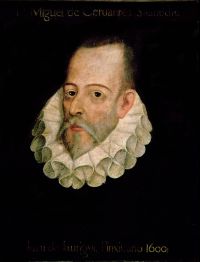 Miguel de Cervantes Saavedra,
Don Quixote
“ Who more ready to face danger than Felixmarte of Hircania? Who more sincere than Esplandian? Who more impetuous than Don Cirongilio of Thrace? Who more bold than Rodamonte? Who more prudent than King Sobrino? Who more daring than Reinaldos? Who more invincible than Roland? and who more gallant and courteous than Ruggiero, from whom the dukes of Ferrara of the present day are descended, according to Turpin in his ‘Cosmography.’ All these knights, and many more that I could name, señor curate, were knights-errant, the light and glory of chivalry. ”
 John Ruskin,
Val d'Arno
(1890)
“ III. The usurer's fang, and the debtor's shame, might both have been trodden down under the feet of Italy, had her knights and her workmen remained true to each other. But the brotherhoods of Italy were not of Cain to Abel—but of Cain to Cain. Every man's sword was against his fellow. Pisa sank before Genoa at Meloria, the Italian Ægos-Potamos; Genoa before Venice in the war of Chiozza, the Italian siege of Syracuse. Florence sent her Brunelleschi to divert the waves of Serchio against the walls of Lucca; Lucca her Castruccio, to hold mock tournaments before the gates of vanquished Florence. ”
John Ruskin,
On the Old Road, Vol. 2 (of 2)
“ Risen from her grave, she led the Lombard League in this final battle. Three hundred of her nobles guarded her caroccio; nine hundred of her knights bound themselves—under the name of the Cohort of Death—to win for her, or to die.The field of battle is in the midst of the plain, now covered with maize and mulberry trees, from which the traveler, entering Italy by the Lago Maggiore, sees first the unbroken snows of the Rosa behind him and the white pinnacles of Milan Cathedral in the south. The Emperor, as was his wont, himself led his charging chivalry. ”
The Book of the Thousand Nights and a Night… (1885)
“ As soon as it was day, the two hosts mounted their strong steeds and levelled their lances and wore their harness of war; then they raised their slogan cries and drew out in battle-array, whilst came forth all the lordly knights and the lions of fights. Now the first to open the gate of battle was Rustam, who urged his charger into mid-field and cried out, “God is most Great! I am Rustam, champion-in-chief of the Arabs and Ajams. Who is for tilting, who is for fighting? Let no sluggard come out to me this day or weakling!” Then there rushed forth to him a champion of the Persians ”
Charles Mills, The History of Chivalry; Or, Knighthood and Its Times…
“ The sports of chivalry were so elegant and graceful that we might have supposed the refined Italians would have embraced them in all their circumstances. But the arena of the Coliseum, so admirably adapted for a tournament, was used for Moorish games. The matrons and virgins of Rome, arrayed in all their bravery, were seated in its ample galleries, and beheld, not a gallant and hurtless encounter between two parties of knights with lances of courtesy, but a succession of sanguinary conflicts between cavaliers and bulls. ”
Firdawsi, The Persian Literature, Comprising The Shah Nameh…
“ In this hunting excursion he is completely armed, being supplied with spear, sword, shield, mace, bow and arrows. Like the knight-errants of after times, he seldom even slept unarmed. Single combat and the romantic enterprises of European Chivalry may indeed be traced to the East. Rustem was a most illustrious example of all that is pious, disinterested, and heroic. ”
John Ruskin,
Modern Painters, Volume 5 (of 5…
“ The knight rides in a suit of rusty armor. It has evidently been polished also carefully, and gleams brightly here and there; but all the polishing in the world will never take the battle-dints and battle-darkness out of it. His horse is gray, not lustrous, but a dark, lurid gray. Its mane is deep and soft: part of it shaken in front over its forehead—the rest, in enormous masses of waving gold, six feet long, falls streaming on its neck, and rises in currents of softest light, rippled by the wind, over the rider’s armor. ”
John Ruskin,
The Stones of Venice, Volume 3…
“ Above him, a bold arched canopy is sustained by two projecting shafts, and on the pinnacle of its roof is the statue of the knight on his war-horse; his helmet, dragon-winged and crested with the dog’s head, tossed back behind his shoulders, and the broad and blazoned drapery floating back from his horse’s breast,—so truly drawn by the old workman from the life, that it seems to wave in the wind, and the knight’s spear to shake, and his marble horse to be evermore quickening its pace, and starting into heavier and hastier charge, as the silver clouds float past behind it in the sky. ”
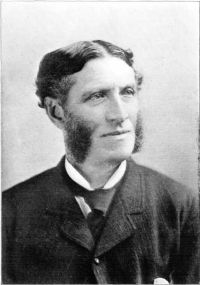 Matthew Arnold,
The poetical works of Matthew Arnold
(1897)
“ And Rustum plucked it back with angry groan. Then Sohrab with his sword smote Rustum's helm, Nor clove its steel quite through; but all the crest He shore away, and that proud horse-hair plume, Never till now defiled, sank to the dust; And Rustum bowed his head. But then the gloom Grew blacker, thunder rumbled in the air, And lightnings rent the cloud; and Ruksh the horse, Who stood at hand, uttered a dreadful cry: No horse's cry was that, most like the roar Of some pained desert-lion, who all day Has trailed the hunter's javelin in his side, And comes at night to die upon the sand ”
Various, The Continental Monthly, Vol. 6…
“ Every one has read so much poetry about valiant youths, mounted on fiery yet docile steeds, doing deeds of miraculous prowess in the ranks of their enemies—our literature is so full of tapestried representations of knightly retinues and charging squadrons—the towering form of Murat is so conspicuous in the narratives of the Napoleonic wars—and history has so often repeated the deeds of those horsemen who performed such illustrious feats in the combats of half a century ago, that we associate with the cavalry only ideas of splendor and glory, of wild freedom and dashing gallantry. ”
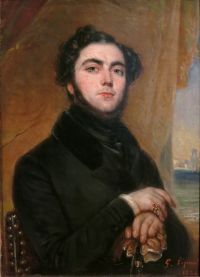 Eugène Sue,
The Pilgrim's Shell; Or, Fergan the Quarryman…
“ About three hundred men-at-arms constituted the cavalcade of the Duke of Aquitaine. These cavaliers, the only survivors of a thousand warriors who departed on the Crusade, now habituated to battle, inured to fatigue and bronzed by the sun of Syria, had long braved the dangers of the murderous climate. Their heavy iron armor weighed on their robust bodies no more than a coat of gauze. ”
William Alexander Caruthers, The Cavaliers of Virginia, vol…
“ The thundering clatter of the chargers' heels as this numerous cavalcade now passed in long succession over the bridge before the gazing citizens, thus untimely awakened from their slumbers, at length began to die away in silence, broken at intervals by the measured tramp of an occasional party of the more staid, older and less eager Cavaliers, pursuing the main body at a pace more suited to their age ”
Charles Mills, The History of Chivalry; Or, Knighthood and Its Times…
“ A ship without a rudder, a horse without a bridle, were other illustrations of the prevailing sentiment, and more expressive of the characteristic of chivalric love, which assigned superiority to woman, which made her the directress of the thoughts, and inspirer of the courage of her chosen cavalier. “A knight may never be of prowess, but if he be a lover,” was the sentiment of Sir Tristram, a valiant peer of Arthur, and it was echoed by every gentle son of chivalry. ”
Adventures of an Aide-de-Camp; or…
“ The general and staff had by this time arrived, and I soon became aware that we were the lions of the evening: our scarlet uniforms and silver epaulettes attracted universal observation. My fair Italian was sensible of this, and seemed proud to have me as her cavalier: her eyes sparkled with animation, and her vivacity increased; while her little heart bounded with delight at this momentary triumph over sundry disappointed cavalieri and female rivals. Vanity apart, a rich foreign uniform on a tolerably good figure has a great attraction for female eyes. ”
Charles Mills, The History of Chivalry; Or, Knighthood and Its Times…
“ The Arabian horse must have been already prepared for part of the discipline of a chivalric horse. On his own sandy plains he had been accustomed to stop his career when his fleetness had cast the rider from his seat; and in the encounter of lances so often were knights overthrown, that to stand firm, ready to be mounted again, was a high quality of a good horse. The steed of the Cid was very much celebrated in Spain; and, in acknowledgment for an act of great kindness, the owner wished to present him to the king, Alfonso of Castile. To induce the king to accept him, he showed his qualities. ”
 Charlotte M. Yonge,
History of France
“ The individual French knights did brilliant exploits, for indeed it was the time of the chief blossom of fanciful chivalry, a knight of Dauphiné, named Bayard, called the Fearless and Stainless Knight, and honoured by friend and foe; but the Spaniards were under Gonzalo de Cordova, called the Great Captain, and after the battles of Cerignola and the Garigliano drove the French out of the kingdom of Naples, though the war continued in Lombardy. ”
 Arnold Henry Savage Landor,
In the forbidden land
(1898)
“ The cavalcade was a weird and picturesque sight, the riders with their many-coloured dresses, their matchlocks with red flags, their jewelled swords, their banners with long ribbons of all colours flying in the wind; all galloping furiously, shouting, yelling and hissing, amidst a deafening din of thousands of horse-bells. ”
Charles Mills, The History of Chivalry; Or, Knighthood and Its Times…
“ When the plains of France were one vast tilting ground for the French and English knights, stern fanaticism did not draw the sword. In the crusades, romantic aspirations after woman’s smiles seldom inspired the hero’s chivalry, but in the wars of Edward III. in France, every cavalier fought for the honour of his lady-mistress as well as for the ambition of his King. ”
 William Ware,
Zenobia; or, the Fall of Palmyra
“ This was partly owing to the greater proportion of cavalry, and to the admixture of the long lines of elephants with their burdens, their towers and litters; but more perhaps to the perfectness with which each individual, be he on horse or foot, be he servant, slave or master, is furnished, respecting both arms, armor, and apparel. Julia beheld it, if with sorrow, with pride also.'Between an army like this,' she said, 'so appointed, and so led and inflamed, and another like that of Rome coming up under a leader like Aurelian, how sharp and deadly must be the encounter! ”
Elizabeth D. Renninger, The Story of Rustem, and other Persian hero tales from Firdusi
“ For coming up with the enemy, the hero, catching one trooper from his horse, struck another with the man as if he were a club, dashing out his brains. Then one by one he tore the riders from their saddles, dashing them to the ground with such force as to break their skulls, and necks, and backs. And finally it came the turn of the great champion also to feel the wrath of Rustem. Reaching out his hand, therefore, quickly he caught hold of Kaloun’s spear, tore it from him, and with it struck him from his saddle. ”
