Centaurs

Definition and stakes

J. C. Lawson,  Modern Greek Folklore and Ancient Greek Religion…

“ What then did the ancients mean by the word ‘centaur’?
The mention of the name is apt to carry away our minds to famous frieze or pediment, where in one splendidly impossible creation of art the excellences of man, his head and his hands, are wed with the horse’s strength and speed. This was the species of Centaur which the great sculptors and painters in the best period of Greek Art chose to depict, and these among educated men became the Centaurs par excellence.
”
Source: Gutenberg

John W. Mollett,  An Illustrated Dictionary of Words used in Art and Archaeology (1883)

“ The Centaurs are represented with the body of a horse, and bust, head, and arms of a man. (Fig. 146.) In Christian archæology, the Centaur is a symbol of the swift passage of life, the force of the instincts, and in a special sense, of adultery. The war of the Centaurs and the Lapithæ is the subject of the frieze at the British Museum, from a temple of Apollo in Arcadia. Hippo-centaurs were half horse ”
Source: Gutenberg

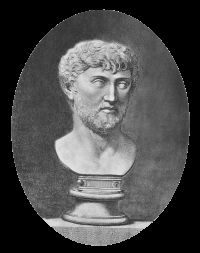
Portrait of Titus Lucretius Carus Titus Lucretius Carus,  On the Nature of Things

“ Thus, Centaurs and the limbs of Scyllas, thus The Cerberus-visages of dogs we see, And images of people gone before— Dead men whose bones earth bosomed long ago; Because the images of every kind Are everywhere about us borne—in part Those which are gendered in the very air Of own accord, in part those others which From divers things do part away, and those Which are compounded, made from out their shapes. For soothly from no living Centaur is That phantom gendered, since no breed of beast Like him was ever ”
Source: Gutenberg

Get perspective with Kwize: daily news enlightened by great literature