Pelasgians

Definition and stakes

Peder Mariager Pictures of Hellas: Five Tales of Ancient Greece

They understood that it was the Pelasgians’ intention to disarm them, and their wrath found vent in fierce invectives.
“Listen to the dogs!” they shouted. “Ere the battle has begun, they talk like conquerors. Do the bragging fools suppose they can blow the cliff over with their snail horns?”
But the herald did not allow himself to be interrupted.
19 “Cychreans!” he continued, “the Pelasgians whom ye have enslaved must be set free and, in compensation for your crime of murder, we demand that you deliver up to us Lyrcus, who has provoked war and pillaged peaceful dwellers in the land.
Source: Gutenberg

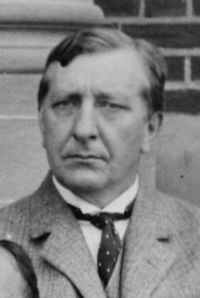
J. N. Larned History for ready reference, Volume 3… (1895)

Those who hold it to have been Aryan have not only the testimony of Greek and Roman writers against them, but also the facts that there were Pelasgians in Italy whose stone constructions are standing to this day, and that the Etruscan language and culture had no Aryan affinities. The writer further points out that the walls of Pelasgic cities, whether in Italy, Greece, or Asia Minor, all resemble each other, and that the origin of Greek civilisation was also Pelasgian.
Source: Gutenberg

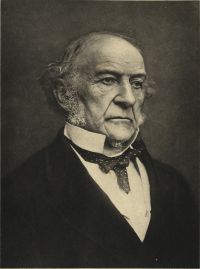
Portrait of John Linton Myres John Linton Myres 1911 Encyclopædia Britannica, Volume 21… (1911)

Ephorus, relying on Hesiodic tradition of an aboriginal Pelasgian type in Arcadia, elaborated a theory of the Pelasgians as a warrior people spreading (like “Aryans”) from a “Pelasgian home,” and annexing and colonizing all the parts of Greece where earlier writers had found allusions to them, from Dodona to Crete and the Troad, and even as far as Italy, where again their settlements had been recognized as early as the time of Hellanicus, in close connexion once more with “Tyrrhenians.”
Source: Wikisource

Get perspective with Kwize: daily news enlightened by great literature