“ Subject to the provisions of the next succeeding section, with respect to Berar, the following shall be Governors’ Provinces, that is to say, Madras, Bombay, Bengal, the United Provinces, the Punjab, Bihar, the Central Provinces and Berar, Assam, the Northwest Frontier Province, Orissa, Sind, and such other Governors’ Provinces as may be created under this Act. (2) Burma shall cease to be part of India. (3) In this Act the expression ” Province ” means, unless the context otherwise requires, a Governor’s Province, and ” Provincial ” shall be construed accordingly. ”
Central Provinces and Berar
Definition and stakes
The Central Provinces and Berar, a province of British India (1903–1950), arose from the unification of the Central Provinces and the leased territory of Berar, a region nominally governed by Hyderabad. This administrative area, covering the hills and plateaus of central India, became a key subject for research on its varied tribes and social groups, as highlighted by scholars such as R.
V. Russell, who recorded communities like the Mahars and Andhs. Works such as the Encyclopaedia Britannica emphasized its landscape and administration, while legal structures like the 1935 Government of India Act defined its position. Collectively, these sources shed light on the region’s intricate social structure and shifting political significance within colonial India.
Quotes about “Central Provinces and Berar”
R. V. Russell, The Tribes and Castes of the Central Provinces of India…
“ They numbered nearly 1,200,000 persons in the combined Province in 1911, and are most numerous in the Nāgpur, Bhandāra, Chānda and Wardha Districts of the Central Provinces, while considerable colonies are also found in Bālāghāt, Chhindwāra and Betūl. Their distribution thus follows largely that of the Marāthi language and the castes speaking it. Berār contained 400,000, distributed over the four Districts. In the whole Province this caste is third in point of numerical strength. In India the Mahārs number about three million persons, of whom a half belong to Bombay. ”
R. V. Russell, The Tribes and Castes of the Central Provinces of India…
“ Andh.1—A low cultivating caste of Berār, who numbered 52,000 persons in 1911, and belong to the Yeotmal, Akola and Buldāna Districts. The Andhs appear to be a non-Aryan tribe of the Andhra or Tamil country, from which they derive their name. The territories of the Andhra dynasty extended across southern India from sea to sea in the early part of the Christian era. This designation may, however, have been given to them after migration, emigrants being not infrequently called in their new country by the name of the place from which they came, as Berāri, Purdesi, Audhia (from Oudh) , and so on. ”
Related terms
Authors who wrote about “Central Provinces and Berar”
Thomas Wolseley HaigR. V. Russell Sir Woodbine ParishWilliam CrookeVariousSir W. H. Sleeman
 Meadows Taylor
 Hubert Howe BancroftJames Sutherland Cotton, William Wilson Hunter…
 Henry Yule
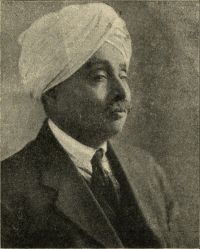 Lala Lajpat Rai
 Joseph ConradH. C. WyllyJames WoodJames Talboys Wheeler
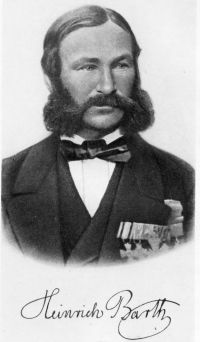 Heinrich BarthJ. N. LarnedSir Alexander BurnesJames KennedySir Thomas Stamford Raffles
Sir Woodbine ParishWilliam CrookeVariousSir W. H. SleemanMeadows TaylorHubert Howe BancroftJames Sutherland Cotton, William Wilson Hunter…Henry YuleLala Lajpat RaiJoseph ConradH. C. WyllyJames WoodJames Talboys WheelerHeinrich BarthJ. N. LarnedSir Alexander BurnesJames KennedySir Thomas Stamford Raffles