Gaur

Definition and stakes

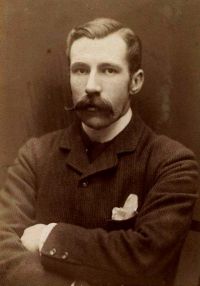
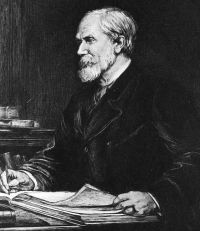
Portrait of Ernest Binfield Havell Ernest Binfield Havell,  A Handbook of Indian Art (1920)

“ On the north-eastern side of India, Gaur was for several centuries one of the most important building centres of Hindustan. In the sixteenth century it was reckoned by the Portuguese as one of the greatest of Indian cities, its population being estimated at over a million. Its early history as the capital of the Hindu kingdom of Gaur, when it was known under the name of Lakhnauti, goes back to many centuries before Christ. ”
Source: Wikisource

Various,  Encyclopaedia Britannica, 11th Edition…

“ The gaur, which extends into Burma and the Malay Peninsula, where it is known as seladang, is the typical representative of an Indo-Malay group of wild cattle characterized by the presence of a ridge on the withers, the compressed horns, and the white legs. The gaur, which reaches a height of nearly 6 ft. at the shoulder, is specially characterized by the forward curve and great elevation of the ridge between the horns. The general colour is blackish-grey. Hill-forests are the resort of this species. ”
Source: Gutenberg

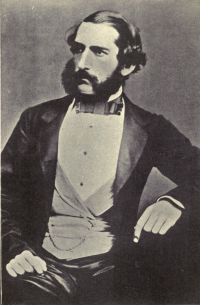
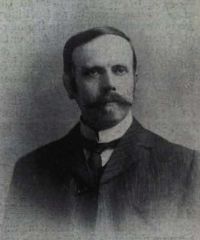
Portrait of Robert Armitage Sterndale Robert Armitage Sterndale,  Natural History of the Mammalia of India and Ceylon

“ HABITAT.—Regarding this, I quote at length from Jerdon, whose inquiries were carefully made. He says: "The gaur is an inhabitant of all the large forests of India, from near Cape Comorin to the foot of the Himalayas. On the west coast of India it is abundant all along the Syhadr range on Western Ghâts, both in the forests at the foot of the hills, but more especially in the upland forests and the wooded country beyond the crest of the Ghâts. ”
Source: Gutenberg

Get perspective with Kwize: daily news enlightened by great literature