Charles II of Spain

Definition and stakes

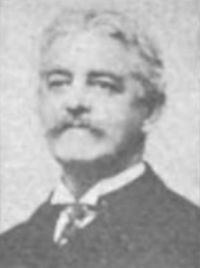
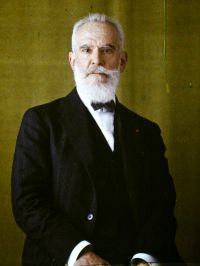
Portrait of Rafael Altamira Rafael Altamira A History of Spain

It appears, therefore, that the empire was more a matter of show than of strength, and that Spain, who already had a surfeit of responsibility, what with her conquests in Italy, Africa, and the Americas, must bear the burden for all. The reign of Charles would seem to be the parting of the ways for Spain. If she could have restricted herself to her purely Spanish inheritance, even with the incubus of her Italian possessions, she might have prolonged her existence as a great power indefinitely.
Source: Gutenberg

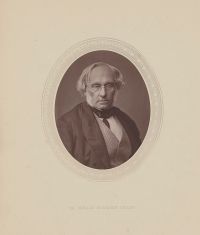
Portrait of Edward Shepherd Creasy Edward Shepherd Creasy 15 decisive battles of the world Vol 2 (1851)

As the time passed on, and the prospect of Charles II. of Spain dying without lineal heirs became more and more certain, so did the claims of the house of Bourbon to the Spanish crown after his death become matters of urgent interest to French ambition on the one hand, and to the other powers of Europe on the other. At length the unhappy King of Spain died. By his will he appointed Philip, Duke of Anjou, one of Louis XIV.'s grandsons, to succeed him on the throne of Spain, and strictly forbade any partition of his dominions.
Source: Wikisource

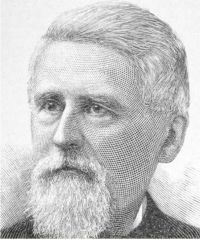
A. H. Johnson Europe in the Sixteenth Century…

Since the resignation of the Austrian lands to Ferdinand in 1521, he had looked on Spain as the centre of his rule, and had identified himself with Spanish interests in Church and State. It was Spain that had chiefly supported him in his European struggles, and he now came, rather as King of Spain and Emperor of the West, than as a German prince, to re-establish the unity of the Empire and of the ancient Church. Charles, however, was too good a statesman to ruin his cause by over haste.
Source: Gutenberg

Get perspective with Kwize: daily news enlightened by great literature