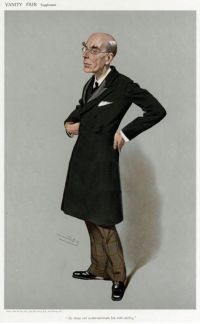
Charles Watson-Wentworth, 2nd Marquess of Rockingham

Definition and stakes

Archaeological Journal (1845)

The manor next came to Sir Edward Watson, subsequently to Sir Lewis Watson, who, zealously attached to the royal cause, garrisoned the castle for the service of Charles the First, and who, in consideration of his loyalty, was afterwards created (1645) Baron Rockingham, of Rockingham.
In 1714, Lewis Watson, created Earl of Rockingham, possessed the manor. The title devolved in 1745 upon his brother Thomas, who dying in 1746 the earldom became extinct, but the barony came to his cousin, Thomas Wentworth, created Marquess of Rockingham, 1746, and this dignity also became extinct in 1750.
Source: Wikisource

Portrait of Leslie Stephen Leslie Stephen Dictionary of National Biography… (1899)

His father—created on 28 May 1728 Baron Wentworth of Malton, Yorkshire, and on 19 Nov. 1734 Baron of Harrowden, and Viscount Higham of Higham Ferrers, Northamptonshire, and Baron of Wath and Earl of Malton, Yorkshire—succeeded to the barony of Rockingham on the death (26 Feb. 1745–6) of his cousin, Thomas Watson, third earl of Rockingham—the earldom and associated honours, except the barony, then becoming extinct—and was created on 19 April 1746 Marquis of Rockingham.
Source: Wikisource

Charles Harding Firth Dictionary of National Biography… (1892)

KNOWLER, WILLIAM (1699–1773) , divine, third son of Gilbert Knowler, gent., of Stroud House, at Herne in Kent, was baptised on 9 May 1699 (Nichols, Literary Anecdotes, ii. 129) . He was educated at St. John's College, Cambridge, graduated B.A. in 1720, M.A. in 1724, and LL.D. in 1728. On leaving Cambridge, Knowler became chaplain to Thomas Watson Wentworth, then Lord Malton, who was in 1746 created Marquis of Rockingham. Lord Malton had inherited the papers of his great-grandfather, Thomas Wentworth, earl of Strafford [q. v.]
Source: Wikisource

Get perspective with Kwize: daily news enlightened by great literature