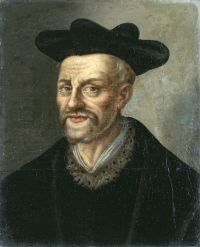
Charles d'Orléans de Villon

Definition and stakes

The New International Encyclopædia…

“ Villon joined in the poetical competitions he held at his Court. But Charles was not the rival of Villon; he was the last of the mediæval poets—Villon is modern. His favorite subjects were Love and Spring, and on these two themes he composed many rondels, one of which is the charming Le temps a laissé son manteau, so often introduced into anthologies. Saintsbury says of him: “Few early poets are better known than Charles of Orléans, and few deserve their popularity better.” ”
Source: Wikisource

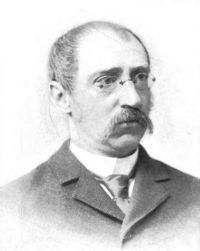
Portrait of George Saintsbury George Saintsbury,  1911 Encyclopædia Britannica (1911)

“ Villon, for this or some other crime, was sentenced to banishment, and he did not attempt to return to Paris. In fact for four years he was a wanderer; and he may have been, as each of his friends Regnier de Montigny and Colin des Cayeux certainly was, a member of a wandering thieves' gang. It is certain that at one time (in 1457) , and probable that at more times than one, he was in correspondence with Charles d'Orléans, and it is likely that he resided, at any rate for some period, at that prince's court at Blois. ”
Source: Wikisource

Portrait of George Saintsbury George Saintsbury,  A Short History of French Literature

“ The characteristics of Villon may be looked at either technically or from the point of view of the matter of his work. He had an extraordinary mastery of the most artificial forms of poetry which have ever been employed. The rondel, which Charles d'Orléans wrote with so much grace, he did not use, but his rondeaux are generally exquisite. The ballade, however, was his special province. No writer has ever got the full virtue out of the recurrent rhymes and refrains, which are the special characteristics of the form, as Villon has. ”
Source: Gutenberg

Get perspective with Kwize: daily news enlightened by great literature