Chobe River

Definition and stakes

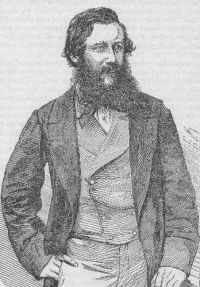
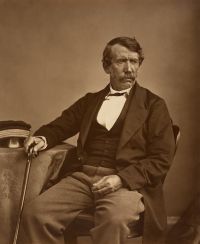
Portrait of David Livingstone David Livingstone,  Missionary Travels and Researches in South Africa

“ We visited all these in succession, and found here, as every where in the Makololo country, orders had preceded us, "that Nake (nyake means doctor) must not be allowed to become hungry."
The banks of the Chobe, like those of the Zouga, are of soft calcareous tufa, and the river has cut out for itself a deep, perpendicular-sided bed. Where the banks are high, as at the spot where the wagons stood in 1851, they are covered with magnificent trees, the habitat of tsetse, and the retreat of various antelopes, wild hogs, zebras, buffaloes, and elephants.
”

Source: Gutenberg

Andrew A. Anderson,  Twenty-Five Years in a Waggon in South Africa…

“ The Chobe was followed up to 16 degrees 40 minutes, south latitude, where two branches come down from the north. The Chobe is a fine river, with many rapids and falls, and swarms with crocodiles and hippopotami, snakes and iguana.
The natives have many canoes and are great fishermen, using a kind of harpoon for the larger fish. The Mambo natives are very expert in this sport and lay traps for them. Bows and arrows and spears are the general weapons used, but many guns have been introduced into the country of late years.
”
Source: Gutenberg

Andrew A. Anderson,  Twenty-Five Years in a Waggon in South Africa…

“ The country along the Zouga river is very level. This river enters, or, I may say, empties Lake N’gami, the altitude being 2813 feet, and flows to the great pan above-named in April and May, and in June and July flows into the lake. The only outlet for the surplus water of the Zouga is the Mababe river to the Chobe, one of the main streams of the Zambese, and the water in the Mababe flows either way according to the rainfall, showing the perfect level of the country. Gigantic trees grow along these rivers and the region adjoining ”
Source: Gutenberg

Get perspective with Kwize: daily news enlightened by great literature