Chordata

Definition and stakes

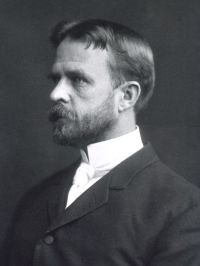
Francis M. Balfour,  The Works of Francis Maitland Balfour…

“ Body cavity and mesoblastic somites. The Chordata, or at least the most primitive existing members of the group, are characterized by the fact that the body cavity arises as a pair of outgrowths of the archenteric cavity. This feature [114] in the development is a nearly certain indication that the Chordata are a very primitive stock. The most remarkable point with reference to the development of the two outgrowths is, however, the fact that the dorsal part of each outgrowth becomes separated from the ventral. ”
Source: Gutenberg

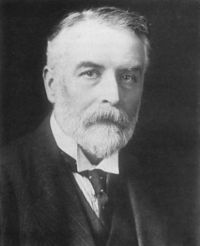
Portrait of George Albert Boulenger George Albert Boulenger,  The Cambridge natural history, Vol… (1904)

“ With the assumption of a terrestrial life, the higher Vertebrates lost their gills as functional organs, respiration being then performed by entirely different organs, the lungs. But even in these cases, the gill-slits appear in the embryo; and remains of one pair can usually be recognised in the adult state of even the highest Vertebrates. Another fundamental characteristic of the Chordata is given by the central nervous system, which lies entirely above the alimentary canal, just dorsal to the notochord. ”
Source: Gutenberg

Portrait of Peter Chalmers Mitchell Peter Chalmers Mitchell,  1911 Encyclopædia Britannica (1911)

“ The Vertebrata Craniata share with the Cephalochordata the fundamental characters of the group Chordata. They are bilaterally symmetrical animals with a well-marked metameric segmentation of the muscles and muscle septa, with a gut opening by an anterior ventral mouth, with lateral gill-slits in the embryo or adult, and with a ventro-posterior anus; with a dorsal tubular central nervous system, under which lies in the embryo or adult an unsegmented notochord of endodermal origin ”
Source: Wikisource

Get perspective with Kwize: daily news enlightened by great literature