Christina of Sweden

Definition and stakes

Various The Southern Literary Messenger… (1836)

Nursed in scenes of carnage and blood, what could she be but a monster, the existence of whom would fain be believed to have sprung but in the heated imagination of a dream? In a more civilized country, behold Christina of Sweden. She was reared by her father to be any thing but a useful woman. She knew no restraint when young, and when she ascended the throne, knew no law but her own will—and what was the result?
Source: Gutenberg

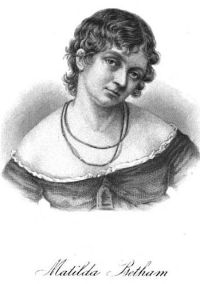
Portrait of Mary Matilda Betham Mary Matilda Betham A Biographical Dictionary of the Celebrated Women of Every Age and Country (1804)

Until the year 1654, nothing memorable occurred in Sweden. In that year Christina finally resigned her crown, finding it impossible to reconcile her literary pursuits, or, more properly, her love of ease and romantic turn of mind, with the duties of her station. Her intention was spread over the kingdom instantaneously; and this extraordinary resolution, which greatly exalted her character with the Swedes, affected them like a sudden explosion of thunder. All were struck dumb with her firmness; no one attempting to dissuade her from a purpose upon which they perceived her determined.
Source: Wikisource

Julia Cartwright Christina of Denmark, Duchess of Milan and Lorraine…

Christina, on the contrary, is clad in mourning robes, and her white frilled cap and veil and plain cambric ruff are without a single jewel. But the fine features and noble presence reveal her high lineage. Instead of a fan, she holds a parchment deed in her hand, and on her shield the arms of Austria and Denmark are quartered with those of Milan and Lorraine, while above we read the proud list of her titles—Queen of Denmark, Sweden, and Norway, Duchess of Milan, Lorraine, Bar, and Calabria, and Lady of Tortona.
Source: Gutenberg

Get perspective with Kwize: daily news enlightened by great literature