“ The drive to Epsom, when you get well out of London, is sufficiently pretty; but the part of it which most took my fancy was a district preëminently suburban, the classic community of Clapham. The vision of Clapham had been a part of the furniture of one’s milder historic consciousness—the vision of its respectable common, its evangelical society, its rich drab humanity, its goodly brick mansions of the Georgian era. ”
Clapham Common
Definition and stakes
The theme of “Clapham Common” has been addressed by authors such as Constance Holme, Gilbert Slater, Roy Horniman, H. G. Wells and Henry James. It is often associated with terms like Emma, class, new, society and social.
Quotes about “Clapham Common”
 Leslie Stephen,
The Life of Sir James Fitzjames Stephen…
Leslie Stephen,
The Life of Sir James Fitzjames Stephen…
“ I have never met with a single man who, like myself, had passed a long series of years in a free intercourse with every class of society who was not more or less what is called a Latitudinarian.' In fact, he had discovered that Clapham was not the world, and that the conditions of salvation could hardly include residence on the sacred common. ”
 Walter Lionel George,
A London Mosaic
Walter Lionel George,
A London Mosaic
“ I would rather think that in a few of those Victorian places, sweet old ladies in mauve silk and lace serve tea in Rockingham cups, which they dust themselves for fear of Sarah Jane. One such place is Crescent Grove. That is the sort of place one would like to live in, when one feels rather older. It is near Clapham Common, and, of course, it is a blind alley, so that no rude traffic may pass up and down when the milkman has finished his melodious round. The houses are clean, stuccoed, comfortable. The knockers are cleaned every day. ”
Henry S. Simmonds, All about Battersea
“ Brayley "it would seem to have been eventually successful, a certain portion of the Common being now held on lease of Earl Spencer as Lord of the Manor of Battersea."—Brayley, Surrey Mantel, Vol. III. p. 281. [1] The Manor of Peckham in the Confessor's reign belonged to this Parish, which has since been thrown into Camberwell; Penge being still continued as part of the Manor though separated from the rest by Streatham and Lambeth.—Manning and Bray's History and Antiquities of Surrey, Vol. I., p. 327.Last century Clapham Common was little better than a morass; it covers 202 acres. ”
J. Ewing Ritchie, Here and There in London
“ There, where it must live, or bear no life, it may find all hollow, delusive, and false. The seasons may be unpropitious. The common ills farmers are heir to, such as potato disease, the fly at the turnips, the rot in the sheep, may be theirs in no common degree; nevertheless, the Clapham omnibus duly deposits at the Treasury in Downing-street p. 214Mr. Smith, who, with the exception of two hours for lunch, and another hour or so for miscellaneous conversation, and the perusal of the Times, will, from ten till four, magnanimously devote himself to his country’s good. ”
Constance Holme, The trumpet in the dust (1921)
“ Clapham rejoined humorously. “But you’re likely right. I can’t abide folks to be mooning around or lying about half their time. I like to see a bit of elbow-grease put into life, same as it might be a kitchen-table! I was brought up to think there was nowt like work, and I can’t say I’ve ever found anything better. My Tibbie’s a grand worker an’ all, and yon little Libby of hers shapes to frame the same way.... But folks can’t last for ever and that’s a fact; and I’ve always sworn as I’d end my days in them almshouses on Hermitage Hill.” ”
P. Austin Nuttall, The Nuttall Encyclopædia
“ Clapham, a SW. suburb of London, in the county of Surrey, 4 m. from St. Paul's, and inhabited by a well-to-do middle-class community, originally of evangelical principles, and characterised as the Clapham Set.Clapperton, Captain Hugh, an African explorer, born at Annan; bred in the navy, joined two expeditions into Central Africa to ascertain the length and course of the Niger, but got no farther than Sokoto, where he was attacked with dysentery and died (1788-1827) . ”
Constance Holme, The trumpet in the dust (1921)
“ Clapham! ‘’Twouldn’t be fair,’ I says to him, firm but kind, ‘not to go letting her have her chance.’... Almshouses is meant for folks like me, his lordship says,” she went on, the toss of her head infinitely more impressive than anything in that line achieved by Mrs. James—“folks as can’t frame to fight their way. ’Tisn’t everybody as has titles voting for ’em, and coronets shaking hands!” ”
Constance Holme, The trumpet in the dust (1921)
“ Mr. Baines, as all the village was aware, was hardly the sort to rise up early in order to bathe his face in morning dew. Besides, as she reminded herself again, this enchanting dispensation of Providence could not possibly seem as important to him as it did to her. Why, in the pressure of business he might even forget it—let it stand over, perhaps, until to-morrow! Mrs. Clapham could hardly restrain herself from rushing off to sit waiting for him on his office doorstep when she thought of that. ”
Constance Holme, The trumpet in the dust (1921)
“ One said to oneself, “What is it? What is it?” and then knew it to be the feet of the new generation on the road. The patter and clatter of those feet wove themselves into the last of Mrs. Clapham’s dream. She heard the clink of clogged soles, the lighter slither of leather, the whistles and cries of the boys, the running chatter of little girls. And, long after the stream had passed on, it seemed to her that she heard other feet on the hill—the thin little dragging feet of little Libby and Baby Steve.... ”
Constance Holme, The trumpet in the dust (1921)
“ Not to be peering at other folks’ gardens to see if they’re shaping better than ourn, or to take up more o’ the man’s time than our rightful share. Not to go setting t’ kitchen chimbly afire, or chattin’ to people out in the road——”“I don’t fancy I’ll give any trouble over any o’ them things,” Mrs. Clapham put in, feeling she simply couldn’t stand another sentence just then that began with the word “not.” It was just Mrs. Bell’s way, she was saying diligently to herself, and she must do her best not to mind it. ”
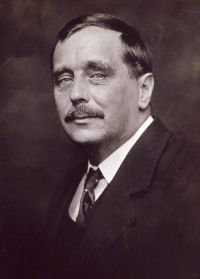 H. G. Wells,
Love and Mr. Lewisham
H. G. Wells,
Love and Mr. Lewisham
“ That’s better. And in the first place I hope—I do so hope”—Chaffery was suddenly very impressive—“that you’re not a Dissenter.” “Eh!” said Lewisham, and then, “No! I am not a Dissenter.” “That’s better,” said Mr. Chaffery. “I’m glad of that. I was just a little afraid—Something in your manner. I can’t stand Dissenters. I’ve a peculiar dislike to Dissenters. To my mind it’s the great drawback of this Clapham. You see ... I have invariably found them deceitful—invariably.” ”
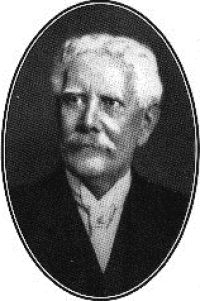 Charles Oman,
A History of England
Charles Oman,
A History of England
“ But just as all England was growing panic-stricken at his tyranny, he died suddenly. He was celebrating the marriage of one of his followers, Osgood Clapa, at the thegn's manor of Clapham, in Surrey, when, as he raised the wine-cup to drink the bridegroom's health, he fell back in an apoplectic fit, and never spoke again (1042) . ”
H. G. Wells,
Love and Mr. Lewisham
“ Lewisham turned over sharply without finishing that page. “My life at Clapham,” continued the letter, “has irked me for some time, and to tell you the truth, the spectacle of your vigorous young happiness—you are having a very good time, you know, fighting the world—reminded me of the passing years. To be frank in self-criticism, there is more than a touch of the New Woman about me, and I feel I have still to live my own life. What a beautiful phrase that is—to live one’s own life!—redolent of honest scorn for moral plagiarism. ”
Constance Holme, The trumpet in the dust (1921)
“ Emma had finished her setting of her sorrowful prisoners to rights, and was now returned to her post at the table. (Would she never sit? Mrs. Clapham wondered exasperatedly.) “You’re not as lish on your feet for one thing—I’ve noticed that. Think on how you kicked table-leg or summat when you come in. And there’s a look about you I don’t like, same as I’ve seen in a deal of folks as was quick took off. What, there was one day I see you coming back from your job, I was feared you’d drop down dead in the street! ”
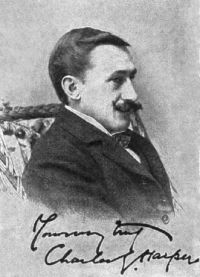 Charles G. Harper,
The Brighton Road: The Classic Highway to the South
Charles G. Harper,
The Brighton Road: The Classic Highway to the South
“ It is all the doing of the middle classes, that the veil is thrown over these things. In times when the middle class and the Nonconformist Conscience traditionally lived at Clapham, it mattered comparatively little what excesses were committed; but that class has so increased that it has to be subdivided into Upper and Lower, and has Claphams of its own everywhere. It is—or they are—more wealthy than before, and they read things, you know, and are a power in Parliament, and are something in the dominie sort to those other classes above and below. ”
Constance Holme, The trumpet in the dust (1921)
“ Yet Jemmy—or so at least Mrs. Clapham had been known to insist—would have been right enough but for Emma. He was never a star, of course, either in looks or brains, but he was right enough as men went, seeing that in most cases they didn’t go far. It was hardly credible that he should have turned into the mad skeleton of his later years, peering at people from behind the ferns, or, later still, from a room upstairs. When he wasn’t peering he was emptying water-jugs upon callers’ heads, or throwing things at the passers-by. ”
Constance Holme, The trumpet in the dust (1921)
“ The staring women sprang to attention at once, and, with the help of the butcher, began a search. It was Mrs. Bell who finally pounced on it where it lay, flown from the charwoman’s hand in the track of the butcher’s wheels.“Happen you’ll agree now as it’s safest with me!” she demanded grimly, and pocketed it as the other nodded.... “Ay, I can’t say I seem fit to be trusted with it at present!” Mrs. Clapham agreed, though with an inward sigh, and feeling as if, with the loss of the key, something vital had been taken from her. “Now I’ll be getting up again, if you’ll lend me a hand.” ”
Constance Holme, The trumpet in the dust (1921)
“ Clapham more uneasy than ever. She had allowed herself that one hit at Tibbie’s mother, that one scratch, so to speak, at Tibbie’s corpse; but when once that fundamental demand of her queer nature had had its way, her whole procedure altered subtly. Her hands ceased to twitch as if she were being torn in twain by some inward strife. Even her colour faded a little, that pronounced flush which seemed to speak of triumph rather than grief, and into her black eyes came an expression which was obviously meant to convey pity.“Nay, now, you can’t think I meant anything against the poor lass!” ”
 William De Morgan,
A Likely Story
William De Morgan,
A Likely Story
“ And pride, once roused—and she or it is not a sound sleeper—won't go to bed again on any terms, not even when indignation is quite tired out, and ready for another snooze. So when Euphemia got to Clapham Junction, it was not her drowsy indignation that made up its mind she should take a third-class single ticket, but her proper pride, which said peremptorily that even a weekly return would be absurd. ”
Constance Holme, The trumpet in the dust (1921)
“ Folks as has to rely on their neighbours can’t have everything just so. All the same, it fair breaks my heart to see the place just slaped over same as it were a Witham slum!”“You’ll have to let me lend you a hand when I get fixed!” Mrs. Clapham laughed, trying not to notice the tossed heads and shrugged shoulders of her annoyed hosts. “It’s my job, you know,” she went on, as the old woman nodded and smiled. “I could clean a house o’ this size with nobbut the one hand!” Old Mrs. Bendrigg nodded again and chuckled and said “Thank ye kindly!” and “Ye can’t come too soon for me!” ”
Kate Dickinson Sweetser, Boys and Girls from Thackeray
“ He has done me and Hannah, too. Mr. Speck, the artist, says he is a wonder at drawing.Our little Clive has been to London on a visit to his uncles and to Clapham, to pay his duty to his step-grandmother, the wealthy Mrs. Newcome. She was very gracious to him, and presented him with a five pound note, a copy of Kirk White's poems and a work called Little Henry and his Bearer, relating to India, and the excellent catechism of our Church. Clive is full of humour, and I enclose you a rude scrap representing the Bishopess of Clapham, as Mrs. Newcome is called. ”
Constance Holme, The trumpet in the dust (1921)
“ It was Emma who answered her without pause, taking up the gage instantly, and smoothing her own voice still further in order to heighten the contrast with the strident tones.“Eh, now, Martha Jane Fell, you shouldn’t come bursting in like that! ’Tisn’t nice, when folks is in trouble, to come making a stir; and Mrs. Clapham’s heart not what it should be—not by a deal.” ”
Constance Holme, The trumpet in the dust (1921)
“ Nay, when folks is most certain, yon’s the time to look out; so don’t get boasting, Ann Clapham, for fear of a judgment.”“Nay, but I’m not boasting—nowt o’ the sort!” The charwoman’s hands, at work again on her knees, actually threatened to rub a hole in the good black gown. “I’ve never been one to get above myself and I’m not now. ”
Constance Holme, The trumpet in the dust (1921)
“ Would any woman, for instance, with a heart softened either by nature or time, have schemed to keep a mother from her dying child? A fresh wave of sorrow engulfed Mrs. Clapham when she remembered that, but for Emma, she might still have seen Tibbie alive. No, there could be no question now of entrusting the children to her, after that.Her expression changed slowly as she looked steadily at Martha Jane, and for the first time she seemed to resemble the happy Mrs. Clapham of the happy morning.“Nay, Martha Jane,” she said quietly, “I can believe you without that. ”
Constance Holme, The trumpet in the dust (1921)
“ Clapham’s simple, orderly spirit it was hard to say which was worse. And suddenly she felt that, muddle or mockery, she wasn’t able to bear it. The child in her which had played with the toys of old Mr. T. rose and clung stubbornly to the House of Dreams.Emma was talking again, she found, still standing there, still filling her with that hatred of God and her roundabout self.“They don’t take children in almshouses, so I’m told. They don’t want ’em; it wouldn’t do. Folks as is ready for almshouses is ready for rest, and there wouldn’t be that much rest, wi’ children always about. ”
Constance Holme, The trumpet in the dust (1921)
“ Clapham chuckled, her natural good temper responding at once to the other’s change of tone. “I don’t know as it’d be quite nice to go on filling up charity-houses as long as that.... But it grubs me a bit, you piling it on as I’m over old for my job. Come to that, you’re only four or five year younger yourself!”“I’ve had a deal easier life, though,” Emma returned, in the same unprovocative tone, “a deal easier, you’ll think on. I’ve never had to do a hand’s turn for anybody but my own. You was in service ten year or more afore you was wed, and then, after Jonty died, you took to this job. ”
Roy Horniman, Israel Rank (1907)
“ From day to day I salved my conscience by assuring myself that, though I was spending my capital, I was making friends who could not fail to be useful to me. Inwardly I knew perfectly well that the class of young men I was mixing with could never help me to a livelihood. I shut up the house at Clapham and took rooms near Piccadilly, and eighteen months of my life were wasted in unprofitable lounging. I seldom rose till late, and when I was dressed strolled round to a luxurious bar near Bond Street to meet several boon companions and spend the afternoon in tippling. ”
Constance Holme, The trumpet in the dust (1921)
“ Clapham. “I don’t say Jemmy didn’t do his share in harming the poor lad, but none of us need telling it was you as did most. Anyway, you could have fed him and darned him, and seen to his poor wants. I’m a mother myself, as you very rightly say, and I don’t need telling that.”“Ay, but it was Jemmy set him agen me——!” Emma began again, losing her head completely, and again choking and stammering into silence. There was a moment’s pause, while she stared at Mrs. Clapham with the flush deep on her round face, and then she flung her apron over her head with a sudden sweep and a sharp wail. ”
Constance Holme, The trumpet in the dust (1921)
“ Mrs. Clapham began to wonder whether she wasn’t being merely absurd in trying to take her beautiful day so beautifully. Martha Jane gave her much the same uncomfortable feeling as that curate of Mrs. Tanner’s used to give her in church; the same feeling that she might have had if a clown had been introduced into a Bethlehem Play.“It’s right kind of you, I’m sure,” she replied, as she had already replied right and left, but with none of the usual heartiness in her voice. ”


