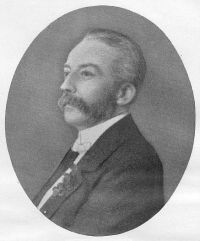
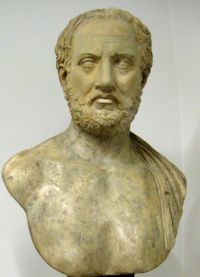
Cleon of Athens

Definition and stakes

1911 Encyclopædia Britannica, Volume 6… (1911)

“ Pericles was reinstated, and Cleon now for a time fell into the background. The death of Pericles (429) left the field clear for him. Hitherto he had only been a vigorous opposition speaker, a trenchant critic and accuser of state officials. He now came forward as the professed champion and leader of the democracy, and, owing to the moderate abilities of his rivals and opponents, he was for some years undoubtedly the foremost man in Athens. Although rough and unpolished, he was gifted with natural eloquence and a powerful voice, and knew exactly how to work upon the feelings of the people. ”
Source: Wikisource

John Lord,  Ancient States and Empires

“ A modern army, surrounded with an overwhelming force, against which all resistance was madness, would have done the same as the Spartans. But it was a sad blow to them. Cleon, within twenty days of his departure, arrived at Athens with his three hundred Lacedæmonian prisoners, amid universal shouts of joy, for it was the most triumphant success which the Athenians had yet obtained. The war was prosecuted with renewed vigor, and the Lacedæmonians again made advances for peace, but without effect. ”
Source: Gutenberg

Dorothy Mills,  The book of the ancient Greeks (1925)

“ Unstained: to die in evil were the stain! [6]
Pericles was dead, and Cleon who had succeeded him as leader of the people had no power to inspire the Athenians to be true to their highest ideals, and as conditions grew more and more difficult, Athens was forced at length to give herself up to a fight for her life. Anger, suspicion and hatred took the place of the old ideals, and it seemed as if her strength had turned to weakness and despair.
”
Source: Gutenberg

Get perspective with Kwize: daily news enlightened by great literature