Constitution of the United Kingdom

Definition and stakes

United Kingdom Cabinet Office Cabinet Manual

Instead, the constitutional order has evolved over time and continues to do so. It consists of various institutions, statutes, judicial decisions, principles and practices that are commonly understood as ‘constitutional’. The UK does not have a constitutional court to rule on the implications of a codified constitution, and the sovereignty of Parliament is therefore unrestrained by such a court (although see paragraph 6.41 for the jurisdiction of the UK Supreme Court over devolution matters.)
Source: Wikisource

James Williams 1911 Encyclopædia Britannica (1911)

Here appears the striking difference between the binding force of a statute of the United Kingdom and an act passed by Congress or a state legislature. In the United Kingdom parliament is supreme; in the United States an act is only of authority if it is in accordance with the constitution. The courts may declare an act void if it contravene the constitution of the United States or of a state, so that practically the Supreme Court of the United States is the ultimate legislative authority.
Source: Wikisource

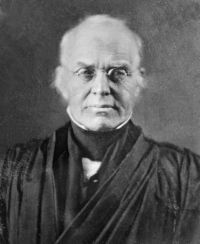
Portrait of Joseph Story Joseph Story Commentaries on the Constitution of the United States (1833)

It was without question borrowed from a corresponding clause in the articles of confederation, [66] where it was with more propriety given, because there was a prohibition of all implied powers. In Great Britain, the king, in his capacity of generalissimo of the whole kingdom, has the sole power of regulating fleets and armies. [67] But parliament has repeatedly interposed; and the regulation of both is now in a considerable measure provided for by acts of parliament. [68] The whole power is far more safe in the hands of congress, than of the executive
Source: Wikisource

Get perspective with Kwize: daily news enlightened by great literature