“ When it comes to downright earnest, you can't skip from one religion to another. Lost in a crowd one can coquet with another religion, tolerate it, even enjoy its unfamiliar ancient ritual. But, with my De Profundis it was different. I couldn't shed my Protestantism like an old cloak in the twinkling of an eye.Not that I felt, as I sat down again on the platform of the Calvary, that praying for the dead was false doctrine and superstitious error. ”
De Profundis
Definition and stakes
The theme of “De Profundis” has been addressed by authors such as Arthur Ransome, André Gide, Arthur Compton-Rickett, baron de Etienne-Léon Lamothe-Langon and A. R. Whitham. It is often associated with terms like religion, church, religious, Catholicism and Protestantism.
Quotes about “De Profundis”
Arthur Compton-Rickett, The Vagabond in Literature
“ And here is Oscar Wilde in De Profundis:—“Prosperity, pleasure, and success, may be rough of grain and common in fibre, but sorrow is the most sensitive of all created things. There is nothing that stirs in the whole world of thought to which sorrow does not vibrate in terrible and exquisite pulsation. ”
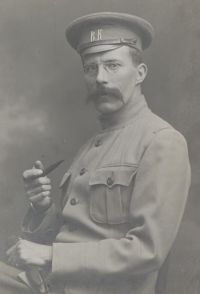 Arthur Ransome,
Oscar Wilde, a Critical Study
Arthur Ransome,
Oscar Wilde, a Critical Study
“ The Ballad of Reading Gaol, Salomé, The Importance of Being Earnest, one or two of the fairy tales, and De Profundis, are surely enough with which to challenge the attention of posterity.These things were the toys of a critical spirit, of a critic as artist, of a critic who took up first one and then another form of art, and played with it almost idly, one and then another form of thought, and gave it wings for the pleasure of seeing it in the light; of a man of action with the eyes of a child; of a man of contemplation curious of all the secrets of life, not only of those that serve an end ”
baron de Etienne-Léon Lamothe-Langon, Memoirs of the Comtesse Du Barry
“ I am suspected of having attacked that which, in common with all France, I respect! When there only remains to me the smallest power of utterance, but enough to chant a De profundis, that I should employ it in howling at the most lovely and amiable of females! Believe me, monsieur le duc, that it is not at the moment when a man is about to render up his soul, that a man of my good feeling would outrage the divinity whom he adores. ”
Arthur Ransome,
Oscar Wilde, a Critical Study
“ Malaprop classes paradoxes with Greek, Hebrew, simony and fluxions as inflammatory branches of learning, and, in De Profundis, Wilde says: "What the paradox was to me in the sphere of thought, perversity became to me in the realm of passion." Paradox and perversity were matches to set fire to his thought and his dreams. But paradox is not in itself different from direct speech. It is made by the statement of a result and the omission of the steps of reasoning by which that result has been achieved. ”
Arthur Ransome,
Oscar Wilde, a Critical Study
“ At the end of a week he took rooms in the inn at the little hamlet of Berneval.Here, for the first time, he lost his power of turning life into tapestry. Alone in his cell he had written the magnificent pageant of De Profundis, a pageant of purple and fine [Pg 180] linen, though he who wrote it wore the coarse cloth of convict dress. Set suddenly in the world again, he was cut off more sharply from his former existence than ever he had been cut off in prison. He became blithe and smiling, like a child who has had no past. ”
Arthur Ransome,
Oscar Wilde, a Critical Study
“ He has been told to forget who he is; life in prison almost compels him to rebellion; but he has learnt that only by remembering his identity, by shifting to his own shoulders the burden of his disaster, and by an absolute acceptance of all that has happened in and to him, will he be able to win the pride that humility confers and that rebellion makes impossible.This purpose, to give his life the unity he demanded from a poem; these motives, of suffering and humility, run waveringly through De Profundis, carrying with them here and there fragments of mournful experience. ”
A. R. Whitham, The Christian Use of the Psalter
“ His agony takes the form of guilt and compunction. He is doing penance, He is making confession, He is exercising contrition with a reality and a virtue infinitely greater than that of all saints and penitents together; for He is the one Victim for us all, the sole satisfaction, the real penitent, all but the real sinner. [1] Connected closely with these confessions of sin, these outcries of suffering and expiation, with the Miserere and the De Profundis, are those solemn declarations of God's wrath upon the impenitent sinner which have already been alluded to in a previous lecture. ”
Arthur Ransome,
Oscar Wilde, a Critical Study
“ The man who takes an attitude and is [Pg 163] unable to sustain it, who smirks at the audience, who plays as it were the traitor to his own choice, can produce nothing but what is ugly, since, like him, it will contain a contradiction. But the man who chooses an attitude, and preserves it consistently in any work of art, is thereby fulfilling a condition of beauty. He may make a lovely thing, and then, taking another attitude, may contradict himself in a thing of no less loveliness. Repentance like that in De Profundis is a guarantee of a moment of humility, but not of a life of reform. ”
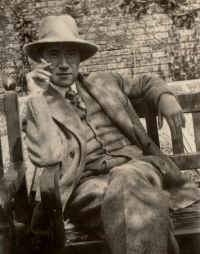 André Gide,
Oscar Wilde, a study
André Gide,
Oscar Wilde, a study
“ John Lane, were issued simultaneously in America by Messrs. Copeland and Day, of Boston. De Profundis was published in America by Messrs. G. P. Putnam's Sons, of New York. Seven editions have been issued. The Decay of Lying, The Portrait of Mr. W. H., [Pg 104] and The Soul of Man under Socialism, appeared in the 'Eclectic Magazine' of New York a few weeks after publication in this country.No notice is taken in this Bibliography of many unauthorised and pirated reprints, and those works which have been falsely attributed to Mr. Wilde by unscrupulous publishers are all rejected. ”
André Gide,
Oscar Wilde, a study
“ Canterville Ghost, The. Illustrations by F. H. Townsend. Court and Society Review, February 23, March 2, 1887. In 'Lord Arthur Savile's Crime and Other Stories.'Case of Warder Martin, The. Daily Chronicle, May 28, 1897.Children in Prison. Murdoch & Co., 1898 (February) . [Pg 94] Chinese Sage, A. Speaker, February 8, 1890Conqueror of Time, The. Time, April, 1879.Critic as Artist, The. In 'Intentions.'De Profundis. Methuen & Co., 1905 (February 23) , 4th Edition, March, 1905.Decay of Lying, The. A Dialogue. Nineteenth Century, January, 1889. ”
A Catalogue of Books Published by Methuen and Company…
“ See also Standard Library. Whitfield (E. E.) . See Commercial Series. Whitehead (A. W.) . GASPARD DE COLIGNY. Illustrated. Demy 8vo. 12s. 6d. net. Whiteley (R. Lloyd) , F.I.C., Principal of the Municipal Science School, West Bromwich. AN ELEMENTARY TEXT-BOOK OF INORGANIC CHEMISTRY. Cr. 8vo. 2s. 6d. Whitley (Miss) . See Lady Dilke. Whitten (W.) . See John Thomas Smith. Whyte (A. G.) , B.Sc. See Books on Business. Wilberforce (Wilfrid) . See Little Books on Art. Wilde (Oscar) . DE PROFUNDIS. Eleventh Edition. Cr. 8vo. 5s. net. A Colonial Edition is also published. ”
 Oscar Wilde,
De Profundis
(1905)
Oscar Wilde,
De Profundis
(1905)
“ and not merely imagining this but actually achieving it, so that at the present moment all who come in contact with his personality, even though they may neither bow to his altar nor kneel before his priest, in some way find that the ugliness of their sin is taken away and the beauty of their sorrow revealed to them. ”
P.-J. Proudhon, System of Economical Contradictions…
“ All these attributes, of which the idea of Providence is made up, are but a caricature of humanity, irreconcilable with the autonomy of civilization, and contradicted, moreover, by the history of its aberrations and catastrophes. Does it follow, because God can no longer be conceived as Providence, because we take from him that attribute so important to man that he has not hesitated to make it the synonym of God, that God does not exist, and that the theological dogma from this moment is shown to be false in its content? ”
 James Anthony Froude,
The Divorce of Catherine of Aragon
(1891)
James Anthony Froude,
The Divorce of Catherine of Aragon
(1891)
“ When we have nothing before us but rumours set in circulation, we know not by whom or on what authority, and we are driven to consider probabilities, the Protestant, who believes the Reformation to have been a victory of truth over falsehood, cannot come to the same conclusion as the Catholic, who believes it to have been a curse, or perhaps to the same conclusion as the indifferent philosopher, who regards Protestant and Catholic alike with benevolent contempt. ”
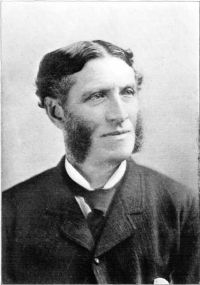 Matthew Arnold,
Literature and Dogma
(1883)
Matthew Arnold,
Literature and Dogma
(1883)
“ And this has been the fault of Protestantism generally: not its presumption in interpreting Scripture for itself,—for the Church interpreted it no better, and Jesus has thrown on each individual the duty of interpreting it for himself,—but that it has interpreted it wrong, and no better than the Church. 'Calvinism has borne ever an inflexible front to illusion and mendacity,' says Mr. Froude. Surely this is but a flourish of rhetoric! for the Calvinistic doctrine is in itself, like the Lutheran doctrine, and like Catholic dogma, a false criticism of the Bible, an illusion. ”
Herbert W. Paul, The Life of Froude
“ When he came back in his old age to Oxford, it was to sound the trumpet-note of private judgment and religious liberty, as if the Oxford Movement and the Anglo-Catholic revival had never been. Froude could not be indifferent to the moral side of historical questions, or accept the doctrine that every one is right from his own point of view. The Reformation did in his eyes determine that men were responsible to God alone, and not to priests or Churches, for their opinions and their deeds. ”
 Pierre-Joseph Proudhon,
Translation:Confessions of a Revolutionary…
Pierre-Joseph Proudhon,
Translation:Confessions of a Revolutionary…
“ What maintains faith in Providence is the involuntary confusion of the laws of society with the accidents that form the mise en scène. The vulgar, perceiving a certain logic in general facts, and relating to the same source the facts of detail, of which he neither discovers purpose nor necessity, since in fact this necessity does not exist, concludes a Providential Will which sovereignly rules the little things and the greatest alike, the contingent and the necessary, as the school says: that which is simply a contradiction. ”
P.-J. Proudhon, System of Economical Contradictions…
“ Nevertheless it is plain, in spite of these semblances of religion, we might even say these desires for it, that the quarrel between socialism and Christian tradition, between man and society, must end by a denial of Divinity. Social reason is not distinguishable by us from absolute Reason, which is no other than God himself, and to deny society in its past phases is to deny Providence, is to deny God. ”
P.-J. Proudhon, What is Property? An Inquiry into the Principle of Right and of Government
“ Reformers, as a general thing, are jealous of their role; they suffer no rivals, they want no partners; they have disciples, but no co-laborers. It is my desire, on the contrary, to communicate my enthusiasm, and to make it, as far as I can, epidemic. I wish that all were, like myself, reformers, in order that there might be no more sects; and that Christs, Anti-Christs, and false Christs might be forced to understand and agree with each other. Again, every reformer is a magician, or at least desires to become one. Thus Moses, Jesus Christ, and the apostles, proved their mission by miracles. ”
P. A. S. van Limburg Brouwer, Akbar: An Eastern Romance
“ I, the poor, unknown priest, despised by many, possess a power that you, in all your greatness, cannot rival. And by what might are they thus subject to me? Through that which nothing can resist, by which reason is silenced and the will destroyed, so that man is nothing more than a living, moving corpse—the power of religious fanaticism. Just a sign of my finger towards whom I will, towards you or some other, is enough to show more than one of my followers what new offering will be the most welcome to the never-satiated Durga; and the higher the rank, the more welcome is the victim. ”
P.-J. Proudhon, System of Economical Contradictions…
“ Simonians, republicans, university men, economists, in the knowledge of man and society! The priest knows that our life is but a voyage, and that our perfection cannot be realized here below; and he contents himself with outlining on earth an education which must be completed in heaven. The man whom religion has moulded, content to know, do, and obtain what suffices for his earthly destiny, never can become a source of embarrassment to the government: rather would he be a martyr. O beloved religion! is it necessary that a bourgeoisie which stands in such need of you should disown you? ”
Various, The Catholic World, Vol. 26, October…
“ Froude’s own history. If it can be shown that it is false, there is an end of it; false it is, and no man is bound to believe it. The foundation of Protestantism, as Mr. Froude very rightly says, stands “on the truth of the Gospel history”—that is, on the Bible, and the Bible alone. Christ, however, did not build his church on the Bible, but on Peter, the chief of the apostles: “I say to thee, Thou art Peter, and upon this rock I will build my church, and the gates of hell shall not prevail against it.” ”
Oscar Wilde,
De Profundis
(1905)
“ When I think about religion at all, I feel as if I would like to found an order for those who cannot believe: the Confraternity of the Faithless, one might call it, where on an altar, on which no taper burned, a priest, in whose heart peace had no dwelling, might celebrate with unblessed bread and a chalice empty of wine. Every thing to be true must become a religion. ”
P.-J. Proudhon, System of Economical Contradictions…
“ A complete criticism of God and humanity.I point to the programme of the honorable society: it is not I who have fixed the conditions of my task, it is the Academy of Moral and Political Sciences. Now, how can I satisfy these conditions, if I am not myself endowed with infallibility; in a word, if I am not God or divine? The Academy admits, then, that divinity and humanity are identical, or at least correlative; but the question now is in what consists this correlation: such is the meaning of the problem of certainty, such is the object of social philosophy. ”
P.-J. Proudhon, System of Economical Contradictions…
“ Certainly, if there is a prejudice, a mysticism, which now seems to me deceptive in a high degree, it is no longer Catholicism, which is disappearing, but rather this humanitary philosophy, making man a holy and sacred being on the strength of a speculation too learned not to have something of the arbitrary in its composition; proclaiming him God,—that is, essentially good and orderly in all his powers, in spite of the disheartening evidence which he continually gives of his doubtful morality ”
 William Ware,
Aurelian; or, Rome in the Third Century
William Ware,
Aurelian; or, Rome in the Third Century
“ But, let me ask, what harm could it do any good man among you, to come and look at this figure of Apollo, or a statue of your Paul or Peter, as you name them—supposing they were just men and benefactors of their race?''There ought to be none,' Probus replied. 'It ought to be a source of innocent pleasure, if not of wholesome instruction, to gaze upon the imitated form of a good man—of a reformer, a benefactor, a prophet. But man is so prone to religion,—it is an honorable instinct—that you can scarce place before him an object of reverence but he will straightway worship it. ”
Joseph Deharbe, A Complete Catechism of the Catholic Religion (1912)
“ Each one of these Sects presumed, after the example of Luther, to reform the faith. At last impious Free-thinkers, first in England and afterwards in France, carried their presumption to the highest pitch, and contrived the infernal scheme totally to abolish Religion, and to exterminate for ever the Belief in Christ. Under the pretence of enlightening mankind, they deluged the world with writings in which they scoffed at all Holy things, grossly calumniated the Pope and the Clergy, and openly advocated the most shameful licentiousness. ”
 Theodore Parker,
The Collected Works of Theodore Parker
(1875)
Theodore Parker,
The Collected Works of Theodore Parker
(1875)
“ So the littlest of sects must have their defenders of the faith to hoot out "Infidel," "Deist," and put a fence high as the Roman wall about the little, transient, thin-soiled summer garden of cooling fruits. In each sect of Protestsantism it is still a heresy to believe theologic truth because it is true, or to hope for progress beyond the Ecclesiastical Institutions of Christendom. But a movement more important than that of Luther has long been going forward. Men deny all these five false ideas, and undermine the foundation of the Christian theology, the miraculous revelation itself. ”
