Duke of Gordon's Three Daughters… (1840-1850)
“ It sets not the Duke of Gordon’s daughter To follow a soilder lad. O hold your tongue, bonny Jean Gordon, O hold thy tongue my lamb, For once I was a noble captain, Now for thy sake a single man. ”
Duke of Gordon's Three Daughters… (1840-1850)
“ It sets not the Duke of Gordon’s daughter To follow a soilder lad. O hold your tongue, bonny Jean Gordon, O hold thy tongue my lamb, For once I was a noble captain, Now for thy sake a single man. ”
Thomas Finlayson Henderson, Dictionary of National Biography… (1890)
“ GORDON, GEORGE, fourth Marquis of Huntly and first Duke of Gordon (1643–1716) , was the eldest son of Lewis, third marquis of Huntly, by his wife Isabel, daughter of Sir James Grant of Grant. He succeeded his father in 1653, when about ten years of age. Charles II had nominally restored the titles and estates, which had been forfeited when his grandfather, George Gordon, second marquis [q. v.] ”
The Scottish Highlands, Highland Clans and Highland Regiments…
“ George, fifth duke, died without issue on 28th May 1836. At his death the title of Duke of Gordon became extinct, as well as that of Earl of Norwich in the British peerage, and the Marquisate of Huntly devolved on George Earl of Aboyne, descended from Charles, fourth son of George, second Marquis of Huntly, while the Duke of Richmond and Lennox, son of his eldest sister, succeeded to Gordon castle, Banffshire, and other estates in Aberdeenshire and Inverness-shire.The clan Gordon was at one period one of the most powerful and numerous in the north. ”
1911 Encyclopædia Britannica, Volume 12… (1911)
“ The Gordons fill a considerable place in Scottish legend and ballad. “Captain Car,” or “Edom (Adam) of Gordon” describes an incident in the struggle between the Forbeses and Gordons in Aberdeenshire in 1571; “The Duke of Gordon’s Daughter” has apparently no foundation in fact, though “Geordie” of the ballad is sometimes said to have been George, 4th earl of Huntly; “The Fire of Frendraught” goes back to a feud (1630) between James Crichton of Frendraught and William Gordon of Rothiemay; the “Gallant Gordons Gay” figure in “Chevy Chase” ”
Beautiful old song, entitled, The Duke of Gordon's three daughters (October 2020)
“ The Captain came off with his Lady, and his lovely babies three, saying, I’m as good blood by descent, though the great Duke of Gordon you be.’ This work was published before January 1, 1929, and is in the public domain worldwide because the author died at least 100 years ago. ”
Mrs. A. T. Thomson, Memoirs of the Jacobites of 1715 and 1745…
“ It is consolatory to turn to those who, unaffected by the intrigues of a Court, came [Pg 64] heartily, and with a disinterested love, to the cause of which the Earl of Mar was the unworthy leader.First in rank, was the Marquis of Huntly, eldest son of George, the first Duke of Gordon, and of that daring Duchess of Gordon, a daughter of the house of Howard, who, in 1711, had presented to the Dean and Faculty of Advocates in Edinburgh a silver medal, with the head of the Chevalier on one side, and on the other the British Islands, with the word "Reddite." ”
James Tait, Dictionary of National Biography… (1890)
“ Gordon had also been honourably treated at the court of the Prince of Anspach, father of Queen Caroline, and for him the queen always had a great regard. The duke lived chiefly at home, maintaining a princely style. He was handsome in appearance, kindly in disposition, liberal to his tenants, and generous to the poor. He died on 28 Nov. 1728. The duchess died at Prestonhall, near Edinburgh, 11 Oct. ”
William Bayne, Dictionary of National Biography… (1890)
“ GORDON, Lord LEWIS (d. 1754) , Jacobite, was the third son of Alexander, second duke of Gordon [q. v.] , and Lady Henrietta Mordaunt, daughter of Charles, earl of Peterborough and Monmouth. He was for some time a lieutenant in the navy, but on the outbreak of the rebellion of 1745 he joined the cause of the Stuarts. On 16 Oct. 1745 he swore allegiance to Prince Charles Edward at Holyrood, representing, it was believed, his brother, Cosmo George, third duke of Gordon. Lord Lewis formed one of the prince's council instituted at Edinburgh. ”
The Modern Scottish Minstrel, Volumes 1-6
“ And bend beneath the bitter blast, To save them from despair. But Nature waits her guests to greet, Where disappointments cannot come, And Time guides, with unerring feet, The weary wanderers home. [Pg 46] ALEXANDER, DUKE OF GORDON.Alexander, the fourth Duke of Gordon, was born in the year 1743, and died on the 17th of January 1827, in the eighty-fourth year of his age. Chiefly remembered as a kind patron of the poet Burns, his name is likewise entitled to a place in the national minstrelsy as the author of an excellent version of the often-parodied song, "Cauld Kail in Aberdeen." ”
James Tait, Dictionary of National Biography… (1890)
“ They charged the English at the head of a hundred horsemen, and inflicted much slaughter, but were overpowered and slain. Gordon left two daughters, one of whom died early; the other, Elizabeth de Gordon, married Alexander, son of William Seton of Seton, Edinburgh. On 28 July 1408 the Duke of Albany, regent of the kingdom, granted a charter confirming to Alexander Seton and Elizabeth Gordon, heiress of Gordon, the barony of Gordon and Huntly, Berwickshire, with other lands which had formerly belonged to Gordon there and in Aberdeenshire. ”
1911 Encyclopædia Britannica (1911)
“ George Gordon, 2nd marquess of Huntly (d. 1649) , his eldest son by Lady Henrietta, daughter of the duke of Lennox, was brought up in England as a Protestant, and created earl of Enzie by James I. On succeeding to his father’s title his influence in Scotland was employed by the king to balance that of Argyll in the dealings with the Covenanters, but without success. In the civil war he distinguished himself as a royalist, and in 1647 was excepted from the general pardon; in March 1649, having been captured and given up, he was beheaded by order of the Scots parliament at Edinburgh. ”
Gordon Goodwin, Dictionary of National Biography… (1890)
“ Unable to find employment at home, he became at Easter 1790, on the recommendation of Lord Adam Gordon, land-steward to the Prince of Monaco on his estate at Torigny in Lower Normandy. From 14 Oct. 1793 till 24 Jan. 1795 he was imprisoned by the revolutionary leaders, with his wife Isabella and his five children, in the castle at Torigny. The Duke of Valentinois, the son and successor of the Prince of Monaco, after being restored to his castle and such part of his estates as remained unsold, appointed Greene his land-steward in February 1796. ”
Gordon Young, Great Days (1924)
“ The Duke was a good man with his fists, though in a fight to the finish Webster was the better. With the Duke, fighting was more than a science—it was an art. For a moment Frank hesitated as one hesitates before something odd. But when he started he came headlong, with short neck shortened; and the Duke drove a right straight to his nose, starting the blood, then he stepped deftly aside as Frank's heavy fist whirled through the air. ”
Gordon Goodwin, Dictionary of National Biography… (1893)
“ A steady adherent of Lord Arundel, Lumley was deeply implicated in the intrigues, which formed the Ridolfi plot, for the re-establishment of Roman catholicism and the marriage of his brother-in-law, the Duke of Norfolk, to Mary Queen of Scots. ”
Gordon Goodwin, Dictionary of National Biography… (1887)
“ CARDONNEL, ADAM [de] (d. 1719) , secretary to the Duke of Marlborough, was a son of Adam de Cardonnel, a French protestant, who had been rewarded for his services to royalty by the lucrative patents of customer and collector of customs at the part of Southampton (Cal. State Papers, Dom. 1660–1, p. 213, 1661–2, pp. 504–5) . ”
Gordon Goodwin, Dictionary of National Biography… (1890)
“ Though a protestant he zealously advocated the right of James, duke of York, to the succession. On 10 Dec. 1679 he entertained the duke and duchess, when on their way to Scotland, at his Yorkshire seat of Norton-Conyers (Luttrell, Brief Historical Relation of State Affairs, 1857, i. 26) . Supported by other high tories he moved in the commons in behalf of the duke against the Exclusion Bill, 2 Nov. 1680. His exertions were rewarded by his being created a peer of Scotland by the title of Viscount Preston in the county of Haddington, and Baron Graham of Eske. ”
Gordon Goodwin, Dictionary of National Biography… (1888)
“ To make the company as select as possible, the establishment was regularly organised as a club, and the election of members vested in a committee.’ ‘Crockford's’ forthwith became the rage. All the celebrities in England, from the Duke of Wellington to the youngest ensign of the guards, hastened to enrol themselves as members, whether they cared for play or not. Many great foreign diplomatists and ambassadors, in fact all persons of distinguished birth or position who arrived in England, belonged to Crockford's as a matter of course. ”
Gordon Goodwin, Dictionary of National Biography… (1891)
“ One day James gave the duke (a staunch protestant) the sword of state to carry before him to the popish chapel, but he stopped at the door, upon which the king said to him, ‘My lord, your father would have gone further;’ to which the duke answered, ‘Your majesty s father was the better man, and he would not have gone so far’ (Burnet, Own Time, Oxf. ed., i. 684) . In 1687 the duke undertook to act as James's agent in Surrey and Norfolk, for the purpose of obtaining information as to the popular view of the Declaration of Indulgence. ”
Gordon Goodwin, Dictionary of National Biography… (1891)
“ He became deputy lieutenant of Sussex on 1 June 1781, deputy earl-marshal of England on 30 Aug. 1782, and lord-lieutenant of the West Riding of Yorkshire on 28 Sept. 1782. He was a lord of the treasury in the Duke of Portland's administration (5 April to December 1783) , and became colonel of the first West Yorkshire regiment of militia on 10 Jan. 1784. On the death of his father, 31 Aug. 1786, he succeeded as eleventh duke of Norfolk, and was appointed high steward of Hereford in 1790, recorder of Gloucester on 5 Sept. 1792, and colonel in the army during service on 14 March 1794. ”
Gordon Goodwin, Dictionary of National Biography… (1888)
“ In March 1686 he accompanied the Duke of Hamilton and Sir George Lockhart to Westminster to confer with the king, who had proposed that, while full liberty should be granted to the Roman catholics in Scotland, the persecution of the covenanters should go on without mitigation. Drummond, although a loose and profane man, ‘ambitious and covetous,’ had yet sufficient sense of honour to restrain him from public apostasy. ”
Gordon Goodwin, Dictionary of National Biography… (1889)
“ On the death of the old Duke of Bolton in 1722 the pair parted (Walpole, Letters, ed. Cunningham, i. 176 n., viii. 234) . Soon after the death of the duchess (20 Sept. 1751) the duke married Lavinia Fenton at Aix in Provence. Both as mistress and wife her conduct was commendably discreet. Dr. Joseph Warton, in the note already cited, says of her: ‘She was very accomplished; was a most agreeable companion; had much wit, and strong sense, and a just taste in polite literature. Her person was agreeable and well made: though she could not be called a beauty. ”
Gordon Goodwin, Dictionary of National Biography… (1890)
“ Thomas Hammond sold Somersham Place to the Duke of Manchester (Camden, Britannia, ed. Gough, ii. 159) . Thomas Cooke, the translator of ‘Hesiod,’ who formed Hammond's acquaintanceship in 1722, says ‘he was a well-bred man, had but a small portion of solid understanding, and was a great flatterer. He was a pleasant story-teller, and seldom sad. He courted men of letters and genius, and was fond of being taken notice of by them in their writings. He would ask them to mention him in their works ”
Demetrius Charles Boulger, The Life of Gordon, Volume II
“ England may well feel proud of having produced so noble and so unapproachable a hero. She has had, and she will have again, soldiers as brave, as thoughtful, as prudent, and as successful as Gordon. She has had, and she will have again, servants of the same public spirit, with the same intense desire that not a spot should sully the national honour. But although this breed is not extinct, there will never be another Gordon. The circumstances that produced him were exceptional; the opportunities that offered themselves for the demonstration of his greatness can never fall to the lot of another ”
Demetrius Charles Boulger, The Life of Gordon, Volume II
“ He was to learn in his own person the weakness and falseness of his Government, and to find himself betrayed by the very persons who had only sought his assistance in the belief that by a miracle—and nothing less would have sufficed—he might relieve them from responsibilities to which they were not equal. Far better would it have been, not only for Gordon's sake, but even for the reputation of England, if he had carried out his original project on the Congo, where, on a less conspicuous scene than the Nile, he might still have fought and won the battle of humanity. ”
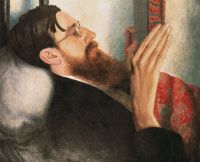 Lytton Strachey,
Eminent Victorians — The End of General Gordon
(1918)
“ In July, Nankin was taken, the remaining chiefs were executed, and the rebellion was at an end. The Chinese Government gave Gordon the highest rank in its military hierarchy, and invested him with the yellow jacket and the peacock's feather. He rejected an enormous offer of money; but he could not refuse a great gold medal, specially struck in his honour by order of the Emperor. At the end of the year he returned to England, where the conqueror of the Taipings was made a Companion of the Bath. ”
Lytton Strachey,
Eminent Victorians — The End of General Gordon
(1918)
“ The news of the catastrophe reached England, and a great outcry arose. The public grief vied with the public indignation. The Queen, in a letter to Miss Gordon, immediately gave vent both to her own sentiments and those of the nation. "How shall I write to you," she exclaimed, "or how shall I attempt to express what I feel! To think of your dear, noble, heroic Brother, who served his Country and his Queen so truly, so heroically, with a self-sacrifice so edifying to the World, not having been rescued. ”
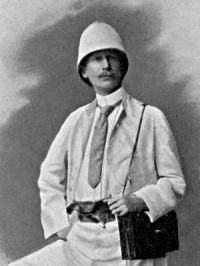 George Chetwynd Griffith,
Men Who Have Made the Empire
“ But there is another and very practical sense in which Gordon was a British Empire-Maker. This realm of ours is what it is, not only because we have fought for some parts of it and successfully stolen others. It is ours because we knew how to make use of it after we got it; because of all other men now existing on the face of the earth the Anglo-Saxon is the best leader and governor of savage and semi-savage men that has so far been evolved, and of such leaders and governors Gordon plainly proved himself to be one of the very best.Under the British flag he never won a battle for255 Britain. ”
F. J. Cross, Beneath the Banner: Being Narratives of Noble Lives and Brave Deeds
“ Five years later Gordon was fighting with the English and French armies in China. Shortly after he was made commander of a force that was commissioned by the Emperor of China to put down a rebellion of the Taipings, of so dangerous a character that it threatened to overturn the monarchy.Gordon had only about 3000 men, chiefly Chinese; and, notwithstanding the fact that when he took over the force it had just been demoralised by defeat, he soon proved himself more than a match for the rebel hordes. From one victory to another he led his men on, and cities fell in quick succession before him. ”
Demetrius Charles Boulger, The Life of Gordon, Volume I
“ Sir Henry knew the ingrained and unalterable character of his brother, and adapted himself to it, partly through affection and partly through admiration, for in his eyes Charles Gordon was the truest of heroes. No man ever possessed a truer or more solicitous friend than General Gordon found in him. ”
The Junior Classics, Volume 7: Stories of Courage and Heroism
“ Many even set themselves to resist the king in open battle rather than obey him in the matter of their consciences. It was only in this that they were rebellious, for many of them had been active in bringing him again to the throne.Among those who thus went out to fight were William Gordon and his son Alexander. William Gordon was a grave, courteous, and venerable man, and his estate was one of the best in all Galloway. Like nearly all the lairds in the south and west, he was strongly of the Presbyterian party, and resolved to give up life and lands rather than his principles. ”
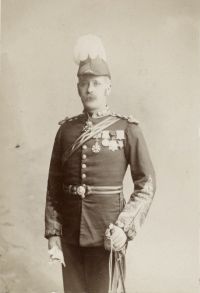 Charles Moore Watson,
1911 Encyclopædia Britannica, Volume 12…
(1911)
“ To serve God and to do his duty were the great objects of his life, and he died as he had lived, carrying out the work that lay before him to the best of his ability. The last words of his last letter to his sister, written when he knew that death was very near, sum up his character: “I am quite happy, thank God, and, like Lawrence, I have tried to do my duty. [1] Authorities.—The Journals of Major-General Gordon at Khartoum (1885) ; Lord Cromer, Modern Egypt (2 vols., 1908) ; F. R. Wingate, Mahdiism and the Egyptian Sudan (1891) ; the British Parliamentary Paper on Egypt (1884–1885) ”
 Horace WalpoleWilliam Bayne
 Benjamin DisraeliMary Louisa Boyle
 Anthony Trollope
 William ShakespeareJohn LordThomas Finlayson HendersonThomas MaloryHenry Manners ChichesterEdward FarrGordon Young
 Philip Massinger
 Edmund Burke
 Hippolyte Taine
 George Bernard Shaw
 Charles Kingsley
