Euphrates River

Definition and stakes

Henry C. Rawlinson, Charles W. Wilson and John P. Peters,  1911 Encyclopædia Britannica, Volume 9… (1911)

“ In this part of its course the Euphrates runs through an open, treeless and sparsely peopled country, in a valley a few miles wide, which it has eroded in the rocky surface. The valley bed is more or less covered with alluvial soil, and cultivated in places by artificial irrigation. The method of this irrigation is peculiar. Three or four piers or sometimes bridges of masonry are run out into the bed of the river, frequently from both sides at once, raising the level of the stream and thus giving a water power sufficient to turn the gigantic wheel or wheels, sometimes almost 40 ft. ”
Source: Wikisource

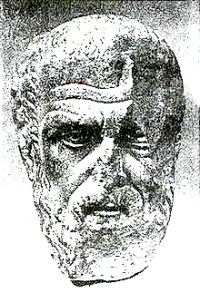
Portrait of Arrian Arrian,  The Anabasis of Alexander

“ For the land through which it flows is more elevated than its water, and it is not drawn off into canals or into another river, but rather receives them into itself. It is nowhere possible to irrigate the land from it. But the Euphrates flows in an elevated channel, and is everywhere on a level with the land through which it passes. ”
Source: Gutenberg

G. Maspero,  History of Egypt, Chaldæa, Syria…

“ Between the embouchures of the Khabur and the Balîkh, the Euphrates winds across a vast table-land, ridged with marly hills; the left bank is dry and sterile, shaded at rare intervals by sparse woods of poplars or groups of palms. The right bank, on the contrary, is seamed with fertile valleys, sufficiently well watered to permit the growth of cereals and the raising of cattle. The river-bed is almost everywhere wide, but strewn with dangerous rocks and sandbanks which render navigation perilous. ”
Source: Gutenberg

Get perspective with Kwize: daily news enlightened by great literature