“ From Fourteenth Street to Forty-second Street, a distance of more than a mile along the most extravagantly showy thoroughfare in the world, these two dense lines of humanity took absolute possession, driving clerks back into their shops and customers from trade by the sheer weight of numbers. ”
Forty-second Street
Definition and stakes
The theme of “Forty-second Street” has been addressed by authors such as Willard W. Glazier, P. T. Raymond, Sir C. H. Reilly, Dixon Scott and Christopher Morley. It is often associated with terms like avenue, fifth, Broadway, city and house.
Quotes about “Forty-second Street”
 Francis Hackett,
The Invisible Censor
Francis Hackett,
The Invisible Censor
“ A little later there will be more leaves than blossoms, the men coming from work giving a duller tone. But one is permitted to believe for this period that Fifth Avenue has a personality, parti-colored, decorative, flashing, frivolous, composed of many styles and many types. The working world intersects it rudely at Forty-second Street, but scarcely infiltrates it. A qualification distinguishes those who turn up and down the Avenue. It is not leisure that distinguishes them, or money, but their sense that there is romance in the appearance of money and leisure. ”
 Kurt Vonnegut,
Breakfast of Champions
(1973)
Kurt Vonnegut,
Breakfast of Champions
(1973)
“ As Trout departed, he sent this telepathic message to the Creator of the Universe, serving as His eyes and ears and conscience: “Am headed for Forty-second Street now. How much do you already know about Forty-second Street?” ”
“ The streets are fluttering with beautiful women; light summer frocks are twinkling in the busy frolic air. Oh, to be turned loose at the corner of Broadway and Thirty-second Street at 6:15 o'clock of a June evening, with nothing to do but follow the smile of adventure to the utmost! Thirty-second, we might add, is our favourite street in New York. It saddens us to think that the old boarding house on the corner of Madison Avenue is vanished now and all those quaint and humorous persons dispersed. ”
 Arthur Bartlett Maurice,
Fifth Avenue
Arthur Bartlett Maurice,
Fifth Avenue
“ How the window loungers of that clubland stretch of the seventies and eighties would have stared and rubbed their eyes had it been given to them to see the procession that throngs the sidewalks today!The stretch of glories departed is quickly passed. The nine blocks are really eight, for it is at Twenty-second Street that the Flatiron begins, and the drab hives behind are forgotten as the vision of the Square strikes the eye. The Parisian, sipping an apéritif at the corner table of the Café de la Paix, believes himself to be occupying the exact centre of the universe. ”
Arthur Bartlett Maurice,
Fifth Avenue
“ He preferred the more plebeian trails, the department-store infested thoroughfare to the west, with the clattering "El" road overhead; or Fourth Avenue to the east, beginning at the statue of "George the Veracious," running between the silent and terrible mountains, finally, with a shriek and a crash, to dive headlong into the tunnel at Thirty-fourth Street, and never to be seen again; or even some purlieu of the great East Side, where he could sit listening at ease in the humble shop of Fitbad the Tailor. ”
Arthur Bartlett Maurice,
Fifth Avenue
“ But for the purposes of fiction there has never been one just like the establishment that occupied a corner at the junction of the Avenue and Fourteenth Street. It was a more limited town in those days. ”
 Stephen Graham,
With Poor Immigrants to America
Stephen Graham,
With Poor Immigrants to America
“ You come to streets where all the bakers' shops are "panneterias," and you know you are among the Italians. One Hundred and Thirteenth Street as it goes down from Second Avenue to First Avenue is full of Greeks and Italians, and is extraordinarily dark and wild; men of murderous aspect are prowling about, there is howling across the street from tenement to tenement. Dark, plump women stand at doorways and stare at you, and occasionally a negress in finery trapes past. ”
Willard W. Glazier, Peculiarities of American Cities
“ On the western side, with the exception of Fifth and Sixth, they commence but little below Fourteenth street. They are mostly devoted to retail trade, and, on seeing their miles of stores, one wonders where, even in a great city like New York, all the people come from who support them.Second Avenue is almost the only exception among the avenues. Early in the century it was what Fifth Avenue has become to-day, the fashionable residence [Pg 304] avenue ”
 Geraldine Bonner,
The book of Evelyn
(1913)
Geraldine Bonner,
The book of Evelyn
(1913)
“ Roger said, “I like you in brown.”I love going down Fifth Avenue in the dark of a winter evening. The traffic of business is over. Motors and carriages go spinning by, carrying people [Pg 61] to dinners. The big glistening street is like an artery with the joyous blood of the city racing through it, coursing along with the throb, throb, throb of a deathless vitality. ”
“ This Nancy trudged for hours through straight and terrible streets called avenues, with a dismal husband and a tired baby at her side. Third Avenue, Fourth Avenue, then quickly across Fifth Avenue, which had nothing to do with us, and again across to Sixth Avenue ... and everywhere dirty shops, screaming children, jostling girls, rude men, trains rushing overhead, street-cars screeching and clanging. Then, at last, Seventh Avenue, where there were streets full of quiet, squalid boarding-houses, fewer screaming children, fewer dirty shops, and no trains. ”
 Julian Street,
American Adventures: A Second Trip 'Abroad at home'
Julian Street,
American Adventures: A Second Trip 'Abroad at home'
“ The blind themselves are not so blind as those who, seeing with the physical eye, lack the eye of imagination.Residence streets like Chase and Biddle, in the blocks near where they cross Charles Street, midway on its course between the Union Station and Mount Vernon Place, are at night, even more than by day, full of the suggestion of comfortable and settled domesticity. Their brick houses, standing wall to wall and close to the sidewalk, speak of honorable age, and, in some cases of a fine and ancient dignity. ”
Arthur Bartlett Maurice,
Fifth Avenue
“ But in the bustling New York of fifty or one hundred years hence the dreamer or the student wishing to feel how the inhabitants of Manhattan lived three or four score years ago, or how we are living today, will not disdain to turn over pages originally designed to lighten the tedium of idle hours.Now and again, in the novels of the fifties and sixties, there are glimpses of the stretch from Washington Square to Fourteenth Street, but the greater Fifth Avenue, as a factor in fiction, dates from about the time when Daisy Miller became a type. ”
Arthur Bartlett Maurice,
Fifth Avenue
“ Of all the blocks in the stretch of tradition that carries the Avenue up to Fourteenth Street, the richest in interest is, naturally, that which lies immediately north of the Square. Dividing this block in two, and running respectively east and west, are Washington Mews and MacDougall Alley. When Fifth Avenue was young and addicted to stately horse-drawn turnouts, it was in these half streets that were stabled the steeds and the carriages. ”
Arthur Bartlett Maurice,
Fifth Avenue
“ In the stirring times in which we are living, it seems as if every day is a great day on the Avenue. Take a single example: The morning broke dark and threatening. Heavy clouds presaged showers. But after an hour or two they passed from the heavens, and warmth and golden sunshine came. In the course of various activities the writer made his way to points between the Battery and Fifty-ninth Street, and the means of travel employed included three journeys on top of Fifth Avenue buses. If one of the early settlers could only have seen the proud and amazing thoroughfare! ”
Julian Street,
American Adventures: A Second Trip 'Abroad at home'
“ Near the old courthouse, which rears itself so handsomely at the summit of a series of terraces leading up from the street, are a number of old sand roads which must be to-day almost as they were in the heyday of the river's glory, when the region in which the courthouse stands was the principal part of the city—the days of heavy drinking and gambling, dueling, slave markets, and steamboat races. These streets are not the streets of a city, but of a small town. ”
Sinclair Lewis, Main Street (1920)
“ When Carol had walked for thirty-two minutes she had completely covered the town, east and west, north and south; and she stood at the corner of Main Street and Washington Avenue and despaired. Main Street with its two-story brick shops, its story-and-a-half wooden residences, its muddy expanse from concrete walk to walk, its huddle of Fords and lumber-wagons, was too small to absorb her. The broad, straight, unenticing gashes of the streets let in the grasping prairie on every side. She realized the vastness and the emptiness of the land. ”
 Arthur Morrison,
Tales of mean streets — INTRODUCTION
(1894)
Arthur Morrison,
Tales of mean streets — INTRODUCTION
(1894)
“ Foul slums there are in the East End, of course, as there are in the West; want and misery there are, as wherever a host is gathered together to fight for food. But they are not often spectacular in kind.Of this street there are about one hundred and fifty yards—on the same pattern all. It is not pretty to look at. A dingy little brick house twenty feet high, with three square holes to carry the windows, and an oblong hole to carry the door, is not a pleasing object; and each side of this street is formed by two or three score of such houses in a row, with one front wall in common. ”
Arthur Bartlett Maurice,
Fifth Avenue
“ The sharp rise to what was the old summit and to the modified hill of the present does not begin until Thirty-third Street is reached. But there is perceptible a grade of a kind as soon as the Avenue leaves the northern line of the Square. Today it is a slope in transition. Here and there the change has been wrought. A modern structure reaches superciliously skyward. Beside it and below it the buildings of yesterday give the impression of feeling acutely conscious of their impending doom. They know. Their race is almost run. ”
Julian Street,
American Adventures: A Second Trip 'Abroad at home'
“ The sixty squares ("islets" according to the Creole idiom, because each block was literally an islet in time of flood) which comprise the old French town established in 1718 by the Sieur de Bienville, are unlike the rest of the city not merely in architecture, but in all respects. The street names change at Canal Street, the highways become narrower as you enter the French quarter, and the pavements are made of huge stone blocks brought over long ago as ballast in sailing ships. Nor is the difference purely physical. ”
 Sir C. H. Reilly,
Some architectural problems of to-day
(1924)
Sir C. H. Reilly,
Some architectural problems of to-day
(1924)
“ The proof of this is still to be seen to-day in Great Pulternay Street,—the most dignified and perfect town street I know. As you walk down it you feel that you are, at any rate for the time being, a citizen of no mean city. ”
Arthur Bartlett Maurice,
Fifth Avenue
“ To those who really understand them, every one of the great, vital streets of the world has a soul as well as a body. The social invader from the West, the merchant whose establishment still found profit in Grand Street, the banker from Broad Street, or the ship's chandler from South, the club awakening to the fact that its quarters on Broadway or in one of the side streets near Irving Place was too far downtown, or in size inadequate to its growing membership—those were the agencies that wrought the Avenue's material development. ”
Sir C. H. Reilly,
Some architectural problems of to-day
(1924)
“ It is not only the vast scale of the street as measured by its width, which seems enormous when one looks at the sea of traffic, but which seems narrow when one looks at the towering buildings, nor the beauty of those buildings or the delicacy of their detail that give Fifth Avenue its peculiar character and interest. Without the great masses of well-dressed men and women which crowd its wide pavements all day long it would seem dull and heavy. ”
 Rupert Brooke,
Letters from America — New York
(1916)
Rupert Brooke,
Letters from America — New York
(1916)
“ Fifth Avenue is handsome, the handsomest street imaginable. It is what the streets of German cities try to be. The buildings are large, square, 'imposing,' built with the solidity of opulence. The street, as a whole, has a character and an air of achievement. "Whatever else may be doubted or denied, American civilisation has produced this." One feels rich and safe as one walks. Back in Broadway, New York dropped her mask, and began to betray herself once again. A little crowd, expressionless, intent, and volatile, before a small shop, drew me. ”

“ Every city has its Fifth Avenue. That which we can not have as our own we strive to imitate. Animal and vegetable life simply reproduces itself; humanity does more than that, it imitates. Williams Street was the Fifth Avenue of Herculaneum. ”
 Ellis Parker Butler,
Wetter New York
(1907)
Ellis Parker Butler,
Wetter New York
(1907)
“ AN UPPER WEST SIDE STREET "Business and pleasure occupy the people as usual!" When I reached my office I stood for a few minutes looking out at the crowded junction of Fifth Avenue and Broadway, where they cross Twenty-third Street. Here were the same hurrying crowds that I had seen there of old. Below me I saw the same policeman guarding the pedestrians across the crowded streets, and the same sleepy cab horses drowsing in the sun along the edge of Madison Square. ”
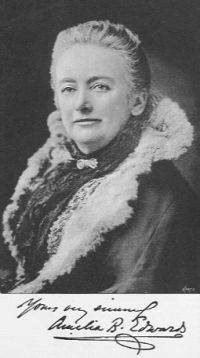 Amelia B. Edwards,
In the Days of My Youth: A Novel
Amelia B. Edwards,
In the Days of My Youth: A Novel
“ Jacques, the Rue de la Harpe, the Rue des Grès, narrow, steep, dilapidated though they might be, were in truth the leading thoroughfares--the Boulevards, so to speak--of the Student Quartier. In most of the side alleys, however, some of which dated back as far, and farther, than the fifteenth century, there was no footway for passengers, and barely space for one wheeled vehicle at a time. A filthy gutter invariably flowed down the middle of the street. ”
Arthur Bartlett Maurice,
Fifth Avenue
“ The great stream has its tributaries. To Fifth Avenue belong the side streets that feed it and in turn draw from it flavour and inspiration. To it belong Washington Square, the south side as well as the north side, and the street beyond, that today is known as West Broadway, and yesterday was South Fifth Avenue, and before that, in the remote past, was Laurens Street; and the crossing thoroughfares that constituted the French Quarter of the late seventies and early eighties ”
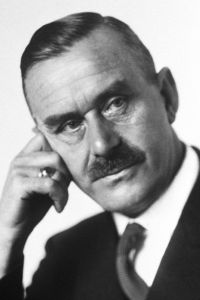
“ There is a Goethe and a Schiller, a Lessing and a Heine Street—there is even an Adalbert Stifter Street upon which I stroll with particular sympathy and reverence in my hob-nailed boots. Square stakes are visible, such as may be seen in at the corners of the raw and uncompleted streets in the suburbs where there are no corner houses. ”
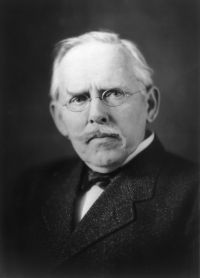 Jacob A. Riis,
The Making of an American
Jacob A. Riis,
The Making of an American
“ My route from the office lay through the Fourth and the Sixth wards, the worst in the city, and for years I walked every morning between two and four o'clock the whole length of Mulberry Street, through the Bend and across the Five Points down to Fulton Ferry. There were cars on the Bowery, but I liked to walk, for so I saw the slum when off its guard. The instinct to pose is as strong there as it is on Fifth Avenue. It is a human impulse, I suppose. We all like to be thought well of by our fellows. ”
Julian Street,
Abroad at Home: American Ramblings…
“ We had gone hardly a block before we realized that our earlier impressions of the place had been ill-founded. We had arrived in the least agreeable portion of the city, and had not, hitherto, seen any of the built-up, well-paved streets. "Petticoat Lane"—the fashionable shopping district on Eleventh Street between Main Street and Grand Avenue—has a metropolitan appearance, and the wider avenues, with their well-built skyscrapers, tell a story of substantiality and progress. ”
Arthur Bartlett Maurice,
Fifth Avenue
“ Many more are the names that might be mentioned, for the street has ever been a magnet, and even those who toil in the attics of Bohemia find their way here, in the hours of leisure, to see and to be observed. Grub Street has assumed the garments of propriety, and shorn itself of its long hair, and in the prosperous, well-dressed throng that surges up and down the Fifth Avenue pavement, its denizens pass to and fro, no longer shyly, furtively, and conspicuously out of place, but with the easy assurance of those who are "to the manor born." ”
Jacob A. Riis,
How the Other Half Lives: Studies Among the Tenements of New York
“ Below Houston Street the door-bell in our age is as extinct as the dodo. East of Second Avenue, and west of Ninth Avenue as far up as the Park, it is practically an unknown institution. The nearer the river and the great workshops the more numerous the tenements. The kind of work carried on in any locality to a large extent determines their character. ”
Related terms
Authors who wrote about “Forty-second Street”
Willard W. GlazierP. T. RaymondSir C. H. ReillyDixon Scott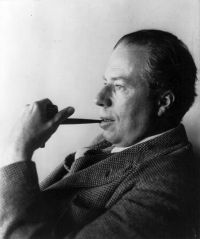 Christopher MorleyDaniel Joseph KirwanJulian StreetSinclair LewisArthur Morrison
 Nathaniel HawthorneArthur Bartlett MauriceCharles Hemstreet
 Max BeerbohmHenry James
 Martha Joanna Lamb
 Lillian D. WaldJacob A. RiisVarious
 Walter Besant
 William Dean Howells
Sir C. H. ReillyDixon ScottChristopher MorleyDaniel Joseph KirwanJulian StreetSinclair LewisArthur MorrisonNathaniel HawthorneArthur Bartlett MauriceCharles HemstreetMax BeerbohmHenry JamesMartha Joanna LambLillian D. WaldJacob A. RiisVariousWalter BesantWilliam Dean Howells