Gadara

Definition and stakes

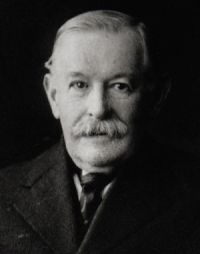
Portrait of Robert Alexander Stewart Macalister Robert Alexander Stewart Macalister,  1911 Encyclopædia Britannica, Volume 11… (1911)

“ Gadara is now represented by Umm Kais, a group of ruins about 6 m. S.E. of the Sea of Galilee, and 1194 ft. above the sea-level. There are very fine tombs with carved sarcophagi in the neighbourhood. There are the remains of two theatres and (probably) a temple, and many heaps of carved stones, representing ancient buildings of various kinds. The walls are, or were, traceable for a circuit of 2 m., and there are also the remains of a street of columns. The natives are rapidly destroying the ruins by quarrying building material out of them. ”
Source: Wikisource

Various,  Popular Science Monthly (1891)

“ Huxley, [9] "the proof that Gadara was, to all intents and purposes, a Gentile and not a Jewish city, is complete." And, again, [10] Gadara was, "for Josephus, just as much a Gentile city as Ptolemais." Utterly contesting these two propositions, I make two admissions: first, that one or more of the many and sparse references of Josephus may easily mislead a prepossessed and incomplete inquirer; and secondly, that in the territory of Gadara, and in various other parts of Palestine, it would be a mistake to look for a perfectly homogeneous population either Hebrew or Gentile. ”
Source: Wikisource

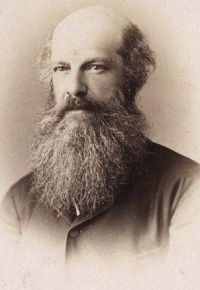
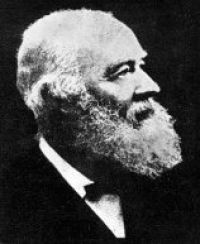
Portrait of Thomas Henry Huxley Thomas Henry Huxley,  Essays Upon Some Controverted Questions

“ Gadara was a commercial centre of some importance, and therefore, it may be assumed, Jews settled in it, as they settled in almost all considerable Gentile cities. But a wholly mistaken estimate of the magnitude of the Jewish colony has been based upon the notion that Gabinius, proconsul of Syria in 57-55 B.C., seated one of the five sanhedrims in Gadara. Schürer has pointed out that what he really did was to lodge one of them in Gazara, far away on the other side of the Jordan. This is one of the many errors which have arisen out of the confusion of the names Gadara, Gazara, and Gabara. ”
Source: Gutenberg

Get perspective with Kwize: daily news enlightened by great literature