Decapolis

Definition and stakes

Various,  Popular Science Monthly (1891)

“ In my judgment, this statement is devoid of foundation. At p. 972 of my paper on The Keepers of the Herd of Swine I point out, at some length, that, "in accordance with the ancient Hellenic practice," each city of the Decapolis must have been "surrounded by a certain amount of territory amenable to its jurisdiction"; and, to enforce this conclusion, I quote what Josephus says about the "villages that belonged to Gadara and Hippos." ”
Source: Wikisource

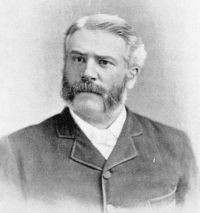
Portrait of Jesse Lyman Hurlbut Jesse Lyman Hurlbut,  Hurlbut's Life of Christ For Young and Old

“ The word Decapolis means "The Ten Cities," and because in that land were ten large Roman cities, the whole country was called "The Country of Ten Cities."
It must have been very early in the morning when Jesus and his disciples brought their boats to the shore at Gerasa. Just as they were landing, a man came running down the hill to meet them, and from his wild acts they saw that he was one of those wretched people who were under the power of evil spirits. This man wore no clothes; he would not live in any house, but stayed in the caves in the hillside, which were used as burial places.
”
Source: Gutenberg

George A. Barton,  Archæology and the Bible

“ Pliny [297] gives the ten cities as Damascus, Philadelphia, Raphana, Scythopolis, Gadara, Hippos, Dion, Pella, Gerasa, and Kanatha. Ptolemy, the astronomer and geographer, in the second century A. D. enumerated eighteen cities as belonging to it. In the time of Christ it probably consisted of but ten. The Decapolis apparently was created by the Roman General Pompey, when he conquered this region for Rome in 65-63 B. C. These cities with Greek populations appear to have appealed to him and he granted them certain privileges, including a degree of autonomy. ”
Source: Gutenberg

Get perspective with Kwize: daily news enlightened by great literature