Gades

Definition and stakes

Max Duncker,  The History of Antiquity, Vol. 2…

“ Long after the naval power of the Phenicians and Carthage [Pg 302] had perished, Gades remained a great, rich, and flourishing city of trade. Strabo describes it thus: "Situated on a small island not much more than a hundred stades in length, and scarce a stade in breadth, without any possessions on the mainland or the islands, this city sends out the most and largest ships, and seems to yield to no other city, except Rome, in the number of the inhabitants. But the greater part do not live in the city, but on ships." ”

Source: Gutenberg

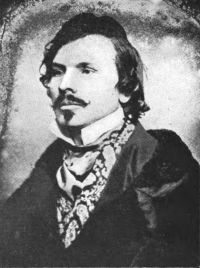
Portrait of Velleius Paterculus Velleius Paterculus,  Compendium of the History of Rome… (1852)

“ At this time, also, a fleet of the Tyrians, then very powerful at sea, founded the city of Gades, on the remotest coast of Spain, at the extremity of one part of the world, and on an island surrounded by the Ocean, divided from the continent only by a very narrow strait. By the same people, also, a few years afterwards, Utica, in Africa, was built. The children of Orestes, being expelled by the Heraclidæ, and harassed by various misfortunes, as well as by hardships at sea, found a settlement, in the fifteenth year after their expulsion, opposite the island of Lesbos. ”
Source: Wikisource

Max Duncker,  The History of Antiquity, Vol. 2…

“ If the Phenicians about the year 1100 B.C. were in a position to discover the straits of Gibraltar, the fact shows us that they must have practised navigation for a long time. The horizon of the Greek mariner ended even in the ninth century in the waters of Sicily, and in the fifth century B.C. the voyage of a Greek ship from the Syrian coast to the pillars of Heracles occupied 80 days. [180] After the founding of Gades the Phenicians ruled over the whole length of the Mediterranean by their harbour fortresses and factories. ”
Source: Gutenberg

Get perspective with Kwize: daily news enlightened by great literature