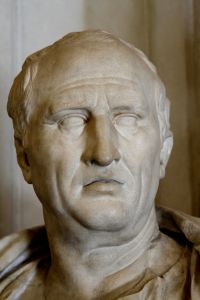
Gaius Julius Caesar

Definition and stakes

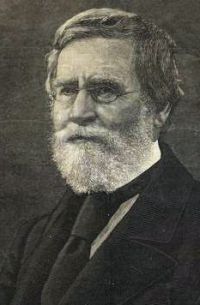
Hutton Webster,  Early European History

“ RISE OF CAESAR Rome at this time held another prominent leader in politics, namely, Gaius Julius Caesar. He belonged to a noble family, but his father had favored the democratic cause and his aunt had married Marius. After Sulla's death Caesar threw himself with energy into the game of politics at the capital city. In these early years the future statesman seems to have been a demagogue of the usual type, who sought through the favor of the people a rapid rise to power. ”
Source: Gutenberg

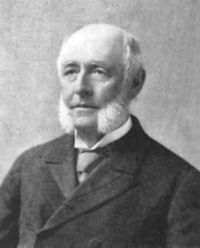
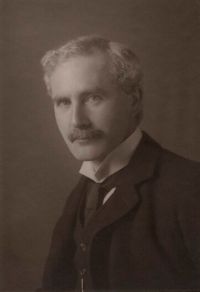
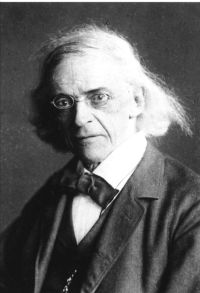
Portrait of Theodor Mommsen Theodor Mommsen,  The History of Rome (Volumes 1-5…

“ The new monarch of Rome, the first ruler over the whole domain of Romano-Hellenic civilization, Gaius Julius Caesar, was in his fifty-sixth year (born 12 July 652?) when the battle at Thapsus, the last link in a long chain of momentous victories, placed the decision as to the future of the world in his hands. Few men have had their elasticity so thoroughly put to the proof as Caesar— the sole creative genius produced by Rome, and the last produced by the ancient world, which accordingly moved on in the path that he marked out for it until its sun went down. ”
Source: Gutenberg

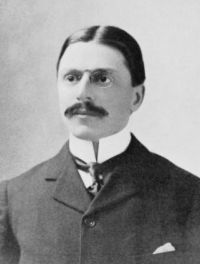
Portrait of William Holmes McGuffey William Holmes McGuffey,  McGuffey's Sixth Eclectic Reader

“ Shakespeare.—Julius Caesar, Act iii, Scene ii.
NOTES.—Gaius Julius Caesar (b. 102, d. 44 B. C.) was the most remarkable genius of the ancient world, Caesar ruled Rome as imperator five years and a half, and, in the intervals of seven campaigns during that time, spent only fifteen months in Rome. Under his rule Rome was probably at her best, and his murder at once produced a state of anarchy.
The conspirators against Caesar—among whom were Brutus, Cassius and Casca—professed to be moved by honest zeal for the good of Rome; but their own ambition was no doubt the true motive, except with Brutus.
”
Source: Gutenberg

Get perspective with Kwize: daily news enlightened by great literature