Gentile da Fabriano

Definition and stakes

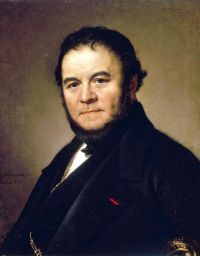
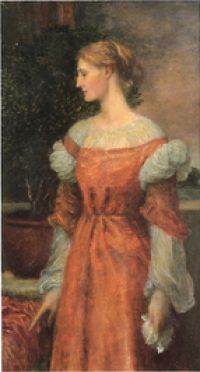
Portrait of Lina Duff Gordon Lina Duff Gordon The Story of Perugia

Before them there were around Perugia only phantoms: stiff saints on panels and on parchment, without dates, ghosts of unattained, though dimly felt, ideals—a scattered flock of “primitives,” left here and there on chapel walls or psalters. Then gradually, all through Umbria and her border lands, in a steady circle of glory, like the stars on a summer night, the lights arose and burned. At Gubbio, Camerino, Foligno, Gualdo, Fabriano, and Urbino we trace their steady progress through the work of men like Nelli, Piero della Francesca, Gentile da Fabriano, Niccolò Alunno, and many others.
Source: Gutenberg

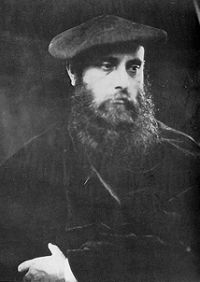
Portrait of John Ruskin John Ruskin On the Old Road Vol. 1 (of 2…

What a scene of beauty, what a flower-garden of art—how bright and how varied—must Italy have presented at the commencement of the sixteenth century, at the death of Raphael! The sacrileges we lament took place for the most part after that period; hundreds of frescoes, not merely of Giotto and those other elders of Christian Art, but of Gentile da Fabriano, Pietro della Francesca, Perugino and their compeers, were still existing, charming the eye, elevating the mind, and warming the heart. Now alas! few comparatively and fading are the relics of those great and good men.
Source: Gutenberg

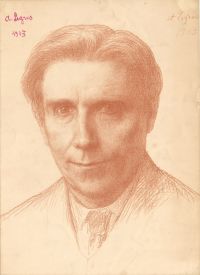
Portrait of Sidney Colvin Sidney Colvin 1911 Encyclopædia Britannica (1910)

When the accomplished Umbrian master Gentile da Fabriano came to practise at Venice, where art was backward, several young men of the city took service under him as pupils. Among these were Giovanni and Antonio of Murano and Jacopo Bellini. Gentile da Fabriano left Venice for Florence in 1422, and the two brothers of Murano stayed at home and presently founded a school of their own (see Vivarini) .
Source: Wikisource

Get perspective with Kwize: daily news enlightened by great literature