George William, Elector of Brandenburg

Definition and stakes

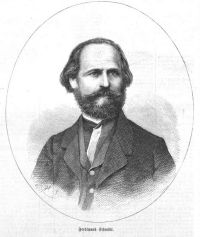
Portrait of Ferdinand Schmidt Ferdinand Schmidt The Youth of the Great Elector

In the Elector’s Castle
All golden flashes the princely crown, symbol of the highest earthly power, yet terrible, often crushing, is its burden. This was the experience of George William, Elector of Brandenburg, who ascended the throne of his father in 1619. The political sky was thick with gathering clouds, which now and then threatened to let loose the Thirty Years’ War.
Source: Gutenberg

J. N. Larned History for ready reference, Volume 1…

Duke Albert died in 1618; and Brandenburg and Prussia were then united under the Elector John Sigismund. It was well that the Duchy had been secured before the storm which was already gathering over the Empire had burst. ... During the long struggle of the Thirty Years' War, the history of Brandenburg is that of a sufferer rather than an actor. ... George William, who died in 1640, bequeathed a desert to his successor. That successor was Frederick William, to be known in history as the Great Elector.
Source: Gutenberg

Various Encyclopaedia Britannica, 11th Edition…

In 1871 William, the seventh king, took the title of German emperor. While the electorate of Brandenburg passed according to the rule of primogeniture, the Franconian possessions of the Hohenzollerns, Ansbach and Bayreuth, were given as appanages to younger sons, an arrangement which was confirmed by the dispositio Achillea of 1473. These principalities were ruled by the sons and descendants of the elector Albert Achilles from 1486 to 1603; and, after reverting to the elector of Brandenburg, by the descendants of the elector John George from 1603 to 1791.
Source: Gutenberg

Get perspective with Kwize: daily news enlightened by great literature