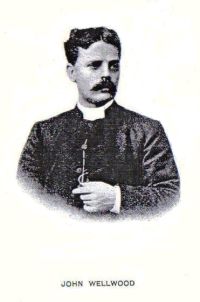
“ Is the grand army to remain broken up into separate divisions, each to recruit to its own standard, and to invite the Hindoos to wear our respective uniforms, adopt our respective shibboleths, and learn and repeat our respective war-cries, and even make caste marks of our wounds and scars, which to us are but the sad mementoes of old battles? ”
Grand Army
Definition and stakes
The theme of “Grand Army” has been addressed by authors such as Charles Cooper King, Spenser Wilkinson, Sun Tzu, Ulysses S. Grant and Hubert Foster. It is often associated with terms like military, war, general, regiment and battle.
Quotes about “Grand Army”
Francis Duncan, History of the Royal Regiment of Artillery Vol…
“ What a noble mission, then, an army may follow in time of peace! To show that men with skill and power, and with a consciousness of these qualities, can yet subordinate themselves for the good of the commonwealth, instead of the individual, is surely a grand object for an army’s purpose. ”
 George Grote,
The Two Great Retreats of History
George Grote,
The Two Great Retreats of History
“ Two kings, one prince, eight marshals, followed by a few officers, generals on foot, dispersed, and without attendants: finally, a few hundred men of the Old Guard, [Pg 310] still armed—these were the remains of the Grand Army—these alone represented it!Or rather, I should say, it still breathed only in Marshal Ney! Comrades! allies! enemies! here I invoke your testimony; let us pay the homage which is due to the memory of an unfortunate hero: the facts alone will suffice. ”
Great Speeches of the War/Authors, Great Speeches of the War (1915)
“ With regard to the Army, it should be remembered that we are supplying across the sea, in the teeth of the enemy's opposition, an Army almost as large as the Grand Army of Napoleon, only vastly more complex in organization and equipment. ”
Annie Randall White, The Blue and the Gray; Or, The Civil War as Seen by a Boy
“ The vast body of human beings moving fearlessly across the swaying structure, the fitful gleams of light reflecting from their muskets, the two great generals sitting there as calmly as though watching a festive procession—the somber depths of the forest on either side, where danger lurked in many shapes—what heart could fail to be impressed by the solemn spectacle? By the morning of the 18th that vast army had crossed to the west side of the river, but the rebel general had not waited to receive them, but flown, without attempting to give them battle. ”
Sydney Smith, Peter Plymley's Letters, and Selected Essays
“ If you despise the little troop which, in these numerous experiments, did make good its landing, take with you, if you please, this prècis of its exploits: eleven hundred men, commanded by a soldier raised from the ranks, put to rout a select army of 6,000 men, commanded by General Lake, seized their ordnance, ammunition, and stores, advanced 150 miles into a country containing an armed force of 150,000 men, and at last surrendered to the Viceroy, an experienced general, gravely and cautiously advancing at the head of all his chivalry and of an immense army to oppose him. ”
Lord Ernest Hamilton, The First Seven Divisions
“ They represent the supreme sacrifice in the interests of the national honour of what was familiarly known as our "regular army." Since the outbreak of the war, fresh armies have arisen, of new and unprecedented proportions. The members of these new armies are as familiar now to the public eye as the representatives of the old regular army are scarce. ”
Charles Cooper King, The Story of the British Army
“ It is curious to see, therefore, how the first voluntary national army, long embodied, produced an antagonism, among the mass of the people, to standing armies altogether, a feeling which lasts even until now in theory, if not in fact. ”
Lord Ernest Hamilton, The First Seven Divisions
“ To-day, generals commanding armies rather search for honour in the field of duty—duty accomplished, orders obeyed. These simple formulæ have always been the watchwords of the soldier-unit, whether that unit be a man, a platoon, a company or a regiment. Now, with the limitless increase in the size of armaments, a unit may well be an Army Corps, or even a combination of Army Corps, and the highest aim of the general officer commanding such a unit must be—as of old—fulfilment of duty, obedience to orders. ”
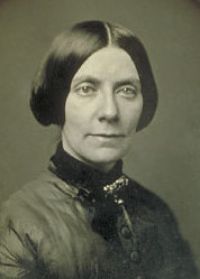 Emma Dorothy Eliza Nevitte Southworth,
How he won her
(1869)
Emma Dorothy Eliza Nevitte Southworth,
How he won her
(1869)
“ But if every private soldier of the Union could have been advanced according to his deserts, we should have had an army composed almost entirely of major generals. There were thousands upon thousands of men in the ranks, as brave, as true, as skillful, and as devoted, as many who commanded divisions and corps; and if these could not all be promoted it was only because, as I once heard a schoolboy captain demonstrate to his discontented company, “All cannot be corporals.” ”
Gouverneur Morris, Aladdin O'Brien (1902)
“ To march an army of preponderous strength through level and fertile country, flanked by friendly war-ships and backed by unassailable credit; to meet and overcome a much smaller and far less rich army, intrenched behind earthworks of doubtful formidableness, and finally to besiege and capture an isolated city of more historic than strategic advantages, seemed on the face of it as easy as rolling a barrel downhill or eating when hungry. ”
W. H. Morgan, Personal Reminiscences of the War of 1861-5
“ The whole army, of every branch—infantry, artillery, and cavalry—was drawn up in columns of regiments, brigades, and divisions, in large open fields, General Lee and his staff riding along the lines of each command, and then all marched by the reviewing station, showing by the steady and firm step and soldierly bearing that they were not disheartened, but ready to go whenever their trusted and beloved commander might point the way. ”
The Story of the Great War, Volume 8
“ These three veteran divisions, after their rest from the fearful fighting of the second phase of the battle, now had the opportunity finally, as the movement spread, to join in the glorious final phase which saw that army of regulars, guardsmen, and draftmen, the strongest force America had ever had under arms, as citizens victorious in the cause of democracy. ”
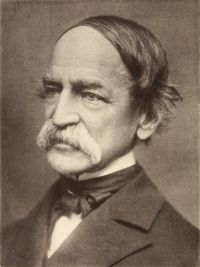 Isaac N. Arnold,
The Life of Abraham Lincoln — Chapter XXII
(1885)
Isaac N. Arnold,
The Life of Abraham Lincoln — Chapter XXII
(1885)
“ The armies in the East and West acted independently and without concert, like a balky team, no two ever pulling together; enabling the enemy to use to a great advantage his interior lines of communication for transporting troops from East to West, re-enforcing the army most vigorously pressed, and to furlough large numbers, during seasons of inactivity on our part, to go to their homes and do the work of producing for the support of their armies. ”
Ben Ames Williams, Thrifty Stock, and Other Stories
“ But this regiment which did not know how to surrender, and which was at large behind the German lines, was another matter, my friends. It was worth well nigh a division to France. For an army is as vulnerable as it is vast, gentlemen; and it can do only one thing at a time. ”
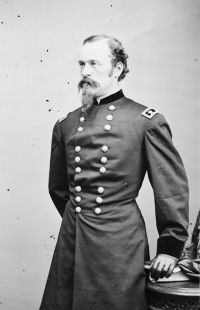 James Harrison Wilson,
Heroes of the Great Conflict; Life and Services of William Farrar
James Harrison Wilson,
Heroes of the Great Conflict; Life and Services of William Farrar
“ As the war was a sectional one in its origin, many of our best officers believed that the volunteer regiments should be formed into brigades and divisions, without reference to the States from which they came. They held that an army organized in this way would more rapidly develop the national spirit and become a more efficient military machine than one formed on state or sectional lines, and the general practice to the end of the war, in the Union army, was in accordance with this idea. ”
George T. Stevens, Three years in the Sixth Corps
“ To deprive the leader of a great army of his command just upon the eve of a great battle, when, by the most brilliant marches and masterly strategy, he had thrown this army face to face with his enemy, thwarting his designs of moving upon the capital, without some offense of a grave character, was an act unheard of before in the history of warfare. ”
Baron John Emerich Edward Dalberg Acton Acton, Lectures on Modern history
“ When he laid up treasure, and organised an army that was not so large as that of France, of Austria, or of Russia, but more concentrated and better drilled, his people understood that he would some day provide territory and population to match—an army so excessive, an army six times as large, in proportion to those of other Powers, was meant to be employed. ”
Hubert Foster, Organization: How Armies are Formed for War
“ Large numbers of untrained men, without organization to embody them in, add little to actual military strength. Armies of First LineThe Army which will take the field at the outbreak of war is the Regular Army, which is organized, kept up, and trained, year by year, in peace. The War Army will be this Peace Army mobilized, or brought up to war strength and completed in every essential, by calling up reserve officers and men to fill its ranks. ”
The German Classics of the Nineteenth and Twentieth Centuries…
“ But what possibility was there of raising an army out of nothing, without the all-powerful aid of gold and the inspiriting name of a victorious commander; above all, an army which, by its discipline, warlike spirit, and activity, should be fit to cope with the experienced troops of the northern conqueror? In all Europe, there was but one man equal to this, and that one had been mortally affronted. ”
Sun Tzu, The Art of War (2000)
“ Thus, if you order your men to roll up their buffcoats, and make forced marches without halting day or night, covering double the usual distance at a stretch, doing a hundred LI in order to wrest an advantage, the leaders of all your three divisions will fall into the hands of the enemy. 8. The stronger men will be in front, the jaded ones will fall behind, and on this plan only one-tenth of your army will reach its destination. ”
Great Speeches of the War/Authors, Great Speeches of the War (1915)
“ Every part of the kingdom, and every man and every woman in every part of it, is called upon to make his or her contribution and to do his or her share, and our primary business is to fill the ranks. [Cheers.] There is, I find, in some quarters an apprehension that the recruiting for the new army, and the functions to be assigned to that army when it is formed and trained, may interfere with or may in some way belittle or disparage the Territorial Force. Gentlemen, believe me, no delusion can be more mischievous or more complete. ”
Charles Cooper King, The Story of the British Army
“ When peace was signed, we had boy soldiers in the ranks much as we have now, many of the older men having perished; yet they fought well, as they always have done. Outside the first line there were foreign legions and militia,400 and that was all. The times even then were past since an army of 25,000 men was considered a respectable command for a serious European war; and the change in the conditions is even greater now, with all Europe an armed camp, and the armies themselves counting as many thousands as they did hundreds “when George the Third was king.” ”
J. Douglas Borthwick, The Battles of the World
“ In the first general engagement in the Great Rebellion of the United States—which was fought at Bull Run—American Volunteers were also for the first time under fire, but what was the result? A total pell-mell rout—a scattered army hurrying on—cavalry, artillery, and infantry—in one mighty, confused mass—treading down and overthrowing each other, in their eagerness to escape from the manly chivalry of the South. ”
“ I saw the superb and veteran armies of Great Britain, France and Italy. I saw the heroic associates with whom our own army is to fight, and I had then, as I have now a sense of stirring and rising pride in the feeling that America's great and splendidly equipped and prepared army is composed of men worthy to be classed with those heroes and that they will find heroes worthy of their fellowship. ”
Warren Lee Goss, Jed's Boy: A Story of Adventures in the Great World War
“ At this time our army in northern France were holding a sector in the world’s great battle where our regiment, with other American and French forces, faced the German army at the peak of a German salient. At some points the American positions were maintained in the shell holes that pitted the battle ground; and I felt guilty at leaving my comrades when I felt myself fit for duty and there was fighting to be done. ”
John Lord, Beacon Lights of History, Volume 12…
“ Only a few of the generals had seen important military service before the war, and not one had evinced remarkable abilities, although many had distinguished themselves for bravery and capacity to manage well an army corps. ”
Laurie Magnus, The West Riding Territorials in the Great War (1920)
“ Yet, somehow, in justice to the heroic dead, and to those who earned as well as to those who received decorations, the perception must be aroused that the war was won in the last resort by the private soldier, whether Regular, Territorial or New Army. ”
Hubert Foster, Organization: How Armies are Formed for War
“ The Military Forces of the Great Powers have now grown so large that a further development of organization has become necessary. They are therefore divided in war into separate Armies. Army, in this new sense, does not mean, as it used to, the whole Force, for which, indeed, some other49 word than “Army” is urgently needed. An Army is simply the highest Unit in the organization of a great host in the field. ”
Inez Bigwood, Winning a Cause: World War Stories
“ However capable divisions, battalions, and companies may be as units, success would be impossible unless they worked together. A well organized General Staff trained for war has not hitherto existed in our army. Under the Commander in Chief this staff must carry out the policy of the army as a whole and direct all the details of its preparation, support, and operation. As models to aid us, we had the veteran French General Staff and the experience of the British who had formed a staff to meet the demands of a great army. ”
 Hudson Maxim,
Defenseless America
Hudson Maxim,
Defenseless America
“ Let us, for argument's sake, assume for a moment that we were to be invaded with an army of only a hundred thousand men, trained, equipped, and supplied with the supreme adequacy with which the troops of the other Great Powers are trained, equipped, and supplied. ”
James Wolfe, Battle of the Plains of Abraham Speech (1759)
“ You know too well the forces which compose their army to dread their superior numbers. A few regular troops from old France, weakened by hunger and sickness, who, when fresh, were unable to withstand the British soldiers, are their general’s chief dependence. ”
John Tyler, Third State of the Union Address (1843)
“ The Army may be regarded, in consequence of the small number of the rank and file in each company and regiment, as little more than a nucleus around which to rally the military force of the country in case of war, and yet its services in preserving the peace of the frontiers are of a most important nature. ”
Great Speeches of the War/Authors, Great Speeches of the War (1915)
“ There is no doubt that, if you set yourselves to it, that Army which is now fighting so valiantly on our behalf, and on that of our Allies, can be raised successively from its present figure to a quarter of a million of the finest professional soldiers in the world, and from that in the New Year to something like half a million of men, and from that again, when the early summer begins in 1915 to the full figure of 25 Army Corps, fighting in the line together. The vast population of these islands and the Empire is pressing forward to serve. ”
Baron Max Aitken Beaverbrook, Canada in Flanders, Volume I
“ Henceforth we shall be represented in the field by an Army Corps, a noble contribution to the necessity of the Empire. When we contemplate, quite apart from their moral value, the immense material contributions which the Dominions have made to this campaign, we may reflect with irony upon the strange errors of which many brilliant men are capable. ”
The Seventeenth Highland Light Infantry…
“ From the good accounts that I have received of the Division, I am confident that the high traditions of the British Army are safe in your hands, and that with your comrades now in the Field you will maintain the unceasing efforts necessary to bring the War to a victorious ending. ”
Various, Continental Monthly , Vol. 5, No…
“ Our staff corps and regular army are insignificant, compared with those of European nations, in which the average strength of the standing armies is from 250,000 to 300,000 men on the peace footing, and 400,000 to 600,000 on the war footing, with immense magazines of equipage and material, numerous military schools, and extensive organizations in all the departments incident to an army. ”
Ben Ames Williams, Thrifty Stock, and Other Stories
“ The army’s front is like the front of a dam, vast and impregnable; but behind, that front is bolstered and strengthened and buttressed by many little lines of communication and supply, just as a dam may be buttressed on the lower side. A division may shatter itself in vain against the army’s front; a hundred men may cut one of those little lines behind. ”
J. Ross, A History of the Coldstream Guards…
“ The Army will for the first time be associated with an Ally to whom it has been the lot of the British nation to be opposed in the field for many centuries.“The gallantry and high military qualities of the French Army are matters of history, and the alliance which has now been formed, will, the Commander of the Forces trusts, be of long duration, as well as productive of the most important and the happiest consequences. ”
Related terms
Authors who wrote about “Grand Army”
Charles Cooper King Spenser WilkinsonSun Tzu
 Ulysses S. GrantHubert Fosterbaron de Antoine Henri Jomini
 Newton D. BakerWilliam T. ShermanKelly MillerJames Harrison Wilson
 Carl von ClausewitzGreat Speeches of the War/AuthorsJ. RossJ. Douglas BorthwickGeorge T. StevensHenry RuffinAnnie Randall WhiteRichard Cannon
 William RobsonHudson Maxim
Spenser WilkinsonSun TzuUlysses S. GrantHubert Fosterbaron de Antoine Henri JominiNewton D. BakerWilliam T. ShermanKelly MillerJames Harrison WilsonCarl von ClausewitzGreat Speeches of the War/AuthorsJ. RossJ. Douglas BorthwickGeorge T. StevensHenry RuffinAnnie Randall WhiteRichard CannonWilliam RobsonHudson Maxim