“ Chicago at that time was mostly built of wood, and the fire spread until it looked as if the whole great city would be burnt to ashes. For two days it kept on burning until the richest part of the city had gone up in smoke and flame. Many people were burned to death in the streets and two hundred million dollars worth of property was destroyed. It was the most frightful fire of modern times. But Americans do not stop for fire or water. The city was built up again, far handsomer than before, and it is now one of the greatest cities, not only of this country, but of the world. ”
Great Chicago Fire
Definition and stakes
The theme of “Great Chicago Fire” has been addressed by authors such as Thomas Dove Foster, Frank J. Loesch, Marshall Everett, George Moses Davis and Carl Sandburg. It is often associated with terms like city, street, new, avenue and York.
Quotes about “Great Chicago Fire”
Historic Towns of the Western States
“ Even when we speak of the fire of 1871, we must call it the "great Chicago fire," for never before perhaps in the history of the world were so many of the piled-up monuments of man's hands consumed so rapidly. Such awful moments, happily, seldom come in the history of communities. ”
Annie Randall White, The Blue and the Gray; Or, The Civil War as Seen by a Boy
“ Great conflagrations have raged in many lands, and in all ages, doing exceeding great damage, but it is yet to be recorded that a fire ever swept over so wide a territory, and swallowed up so large an amount of wealth and products, sacrificing so much life as did the great Chicago Fire. ”
Thomas Dove Foster, A Letter From the Fire: Being an Account of the Great Chicago Fire
“ This place was partly on the prairie, so had a splendid view of the fire at large, although fully three miles from it. The smallest print could be read with ease, the light was so intense. As day dawned the light faded, but daylight revealed the volumes of black smoke rolling up from the city, and the ruins of the previous night’s destruction. The fire was now sweeping the North Side entirely unchecked, the waterworks being burnt and no water in the town. ”
 Charles Paschal Telesphore Chiniquy,
The Priest, the Woman and the Confessional
“ Has not the world at large been struck with terror when they heard of the fire which a few years ago had reduced the great city of Chicago to ashes? But those who have visited that doomed city, and seen the desolating ruins of her 16,000 houses, had to stand in silent admiration before a few which, in the very midst of an ocean of fire, had escaped untouched by the destructive element. ”
Thomas Dove Foster, A Letter From the Fire: Being an Account of the Great Chicago Fire
“ At eleven-fifteen these brands set fire to the roof of a church about three hundred yards from the main fire. I went to see this before there was the sign of a blaze; (I adopted the plan of keeping before the fire, so that in case it spread I should not be cut off from my hotel) some men got on the roof and tried to put it out but they could not. So an engine came, and dilly-dallied about for a few minutes, until a volume of thick black smoke rolled up from it and in two minutes it was in flames. The edifice was wood and it went like a matchbox ”
Thomas Dove Foster, A Letter From the Fire: Being an Account of the Great Chicago Fire
“ Nothing happened; but just as I was going into the hotel, at ten o’clock, there was the glare of a fire in the sky. I did not feel like going to bed, so thought I might spend an hour looking at the flames. It was a big fire in my eyes then, a large wooden house [Pg 17] near a row of splendid brick ones; the latter they were trying to save, and succeeded. I was in a splendid position for seeing, without getting any of the water the firemen directed at the crowd every few minutes. It was nearly over, and I was just going to leave, when some one shouted that there was a fire on the west side. ”
Thomas Dove Foster, A Letter From the Fire: Being an Account of the Great Chicago Fire
“ At two o’clock we walked down together and found the flames stopped by blowing up of several streets of houses. The North Side was swept out clear and clean, right into the country, burning up Lincoln Park and a Catholic Cemetery. Seventy-five thousand people resided on the North Side, and every house with one exception was burned to the ground, not even the walls standing. Altogether one hundred thousand people were rendered homeless, and had to [Pg 39] camp out on the prairie without any covering for two days and two nights, having little to eat and scarcely any water to drink. ”
Thomas Dove Foster, A Letter From the Fire: Being an Account of the Great Chicago Fire
“ The wind was blowing in the direction from 1 to 6, so I thought the fire would wear out at the lake, and not be able to cross the river to the North Side. In this I was mistaken, for when I went to look at the fire, after deposing our things at the express-man’s house, as before stated, we found the bridge we had just crossed was on fire, and that the North Side was doomed unless the wind changed (this was three o’clock) so we turned back to move our traps again. Whilst walking up, we met a man pulling a large trunk. ”
Thomas Dove Foster, A Letter From the Fire: Being an Account of the Great Chicago Fire
“ The people were mostly looking at the fire, but as soon as they saw their homes in danger, a general packing up could be observed in all the houses, and soon after a regular exodus, everyone, old and young, carrying something. ”
Thomas Dove Foster, A Letter From the Fire: Being an Account of the Great Chicago Fire
“ The fire lasted thirty-six hours, during that time clearing everything before it for a distance of five and a half miles, commencing in a point, and finishing two miles in width; about fifty thousand tons of coal caught fire, which burned for a week quite bright, always keeping the sky aglow with its light. It is still burning but no fire can be seen. I must add here that Mr. Kenny did not turn up the whole afternoon, and I began to fear the worst. However he [Pg 40] made his appearance between seven and eight o’clock, all safe and sound and relieved my mind. ”
Marshall Everett, "Lest We Forget": Chicago's Awful Theater Horror
“ A few minutes later, possibly not more than half an hour after the discovery of the fire, when the firemen had beaten back the flames to the raging stage another procession moved across that same plank again. It moved in silence, for it was a procession of death. The great tragedy began and ended in fifteen minutes. Its echoes may roll down as many centuries, compelling the proper safeguarding of all places of amusement, in America at least. If so, the Iroquois victims did not give up their lives in vain. ”
J. N. Larned, History for ready reference, Volumes 1 to 5 (1895)
“ Toward evening the Mayor sent a fleet of tow-boats which took off the fugitives at the Sands. When the next day [Tuesday, October 10] dawned, the prairie was covered with the calcined ruins of more than 17,000 buildings. ... This was the greatest and most disastrous conflagration on record. The burning of Moscow, in 1812, caused a loss amounting to £30,000,000; but the loss at Chicago was in excess of this amount. The Great Fire of London, in 1006, devastated a tract of 430 acres, and destroyed 13,000 buildings; but that of Chicago swept over 1,900 acres, and burned more than 17,000 buildings. ”
 John Greenleaf Whittier,
Personal Poems, Complete
“ Thanks for thy generous faith in man, Thy trust in God unswerving. Still echo in the hearts of men The words that thou hast spoken; No forge of hell can weld again The fetters thou hast broken. The pilgrim needs a pass no more From Roman or Genevan; Thought-free, no ghostly tollman keeps Henceforth the road to Heaven! CHICAGO The great fire at Chicago was on 8-10 October, 1871. Men said at vespers: "All is well!" In one wild night the city fell; Fell shrines of prayer and marts of gain Before the fiery hurricane. On threescore spires had sunset shone, Where ghastly sunrise looked on none. ”
Thomas Dove Foster, A Letter From the Fire: Being an Account of the Great Chicago Fire
“ Old women were carrying weights too heavy for men, and young women were dragging trunks (enough for a donkey to pull) , no doubt containing their best clothes, or sat on them and wept quietly when they could not pull any longer, and had to leave them for the fire to lick up as a giant would swallow a midge. [Pg 25] I was not an idle observer during all this. I carried boxes and bundles without number, placing them in nooks that the owners considered safe. Vain delusion. Everything I laid hands to save was eventually burnt. In one place there was a long train of empty railway cars. ”
 William Archer,
America To-day, Observations and Reflections
“ You will often see the vista of a gorge-like street so choked with a seeming thundercloud that you feel sure a storm is just about to burst upon the city, until you look up at the zenith and find it smiling and serene. Again and again a sudden swirl of smoke across the street (like that which swept across Fifth-avenue when the Windsor Hotel burst into flames) has led me to prick up my ears for a cry of "Fire!" But Chicago is not so easily alarmed. It is accustomed to having its airs from heaven blurred by these blasts from hell. ”
Frank J. Loesch, Personal Experiences During the Chicago Fire… (1925)
“ The roar of the flames, the air alive with flying embers, the fierceness with which the wind and fire combined were whirling the flames into and circling in and above the street, fascinated me. No voice could make itself heard above the roar. Even in the house we had to shout into each others’ ears to make ourselves heard. As I came down the steps facing south, the three blocks south of Indiana Street caught fire with the suddenness of the explosion of a bomb, including the pavement and the sidewalks, and were a mass of flames in a moment. ”
Thomas Dove Foster, A Letter From the Fire: Being an Account of the Great Chicago Fire
“ In more modern times the great fire of London holds the center of the stage. In extent and results it was not unlike the Chicago fire of two centuries later. How little does man profit by the lessons and the losses of the past! ”
Thomas Dove Foster, A Letter From the Fire: Being an Account of the Great Chicago Fire
“ This account has been carefully compared with authentic records published immediately after the fire, and in no case have any important discrepancies been discovered.Order followed chaos; the citizens formed themselves into Home Guards under General F. T. Sherman, and Foster patrolled a beat on State Street, with a rifle over his shoulder, from midnight until four A.M. Later, the city was put under military control with Lieutenant-General Philip H. Sheridan commanding.In 1830 Chicago had a population of 70 ”
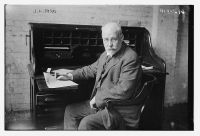 James L. Ford,
The Third Alarm: A Story of the New York Fire Department
“ A stranger, seeing the awful conflagration that had broken out so suddenly on that night of storm and snow, would have said, without hesitation, that the city was doomed to a repetition of that hurricane of smoke and flames that swept through Chicago years ago, and left of that fair city nothing but a waste of smoking ashes. The most destructive of all elements had begun its deadly work, and who could say what limit there would be to the destruction of life and property which would result? ”
Frank J. Loesch, Personal Experiences During the Chicago Fire… (1925)
“ Our eyes were ever to the south, watching the steady coming on of the fire as it lapped up in flames street after street of houses.About 1:30 o’clock on Tuesday morning when we had given up hope of any stay and when the last row of houses on Belden Avenue or the street south of it, next south of the prairie, was about being licked up, rain suddenly came down in such volume as to assure us safety and the extinguishment of the fire. Without more ado every man sought some place of refuge. ”
Marshall Everett, "Lest We Forget": Chicago's Awful Theater Horror
“ Fires in Chicago attended with loss of life have been of increasing frequency in the past few years. Fire in the Henning & Speed building on Dearborn street, in 1900, caused four girls to lose their lives. Since it and before the Iroquois disaster have come: The St. Luke Sanitarium horror, 10 lives lost, 43 injured; the Doremus laundry explosion, 8 lives lost; [Pg 192] the American Glucose Sugar refinery blaze, 8 killed; Northwestern railroad boiler explosion, 8 killed, Stock Yards boiler explosion, 18 killed, and about a year ago the Lincoln hotel fire, 14 visiting stockmen suffocated. ”
Frank J. Loesch, Personal Experiences During the Chicago Fire… (1925)
“ Sticking out of one of these we found the legs of a man who had been roasted to death in his place of refuge, probably blindly sought by him in a drunken stupor.We were told that a few hours after we had left Chicago Avenue bridge and as refugees in vehicles and afoot were crowding over it in the face of advancing flames, a [Pg 21] small oil refinery near there caught fire, exploded and caused the death of over a hundred people by burning or by drowning in being crowded off the bridge or jumping into the river in the frenzy and agony of the crowd following the explosion. ”
Frank J. Loesch, Personal Experiences During the Chicago Fire… (1925)
“ It will be understood that the force of the southwest wind was driving the flames in a straight northeast direction, the termination point so far as inflammable material was concerned being at about the pumping station at Chicago Avenue and present North Michigan Avenue. Every one should have felt, but did not, that safety in flight lay in keeping out of the line of the fire as indicated, by walking northward and branching off westwardly and northwardly as fast as conditions permitted. ”
Frank J. Loesch, Personal Experiences During the Chicago Fire… (1925)
“ The intense blackness of the night, the heat from the burning coal, the blue flames now bursting into little spurts of red, the crackling of the coal as lumps were splitting up, the unexpected glare of a sudden high spurt of red fire, the complete silence except the noises referred to, the absence of any other human beings in the entire distance traversed, made a nearly speechless walk as well as a fearful one, and I, at least, had the feeling that the fires of hell were about us and the imps of Satan waiting amidst them for unwary victims. ”
 George Barr McCutcheon,
The Red Book Magazine, Volume 32…
(1919)
“ As Anderson Crow, now deputy marshal of the town, declared the instant he arrived at the scene of the conflagration, nothing but the most heroic and indefatigable efforts on the part of the volunteer fire-department could save the town—only he put it in this way: “We'll have another Chicago fire here, sure as you're born, unless it rains or the wind changes, mighty all-fired sudden; so we got to fight hard, boys.” ”
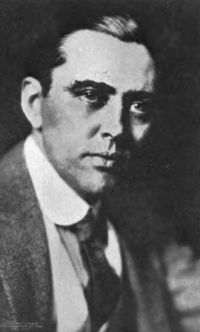 Julian Street,
Abroad at Home: American Ramblings…
“ A cow is rumored to have kicked over a lamp and started the Chicago Fire. An earthquake kicked over a building and started the San Francisco Fire. People do not refer to the Chicago Fire as the "Cow." Why then should they refer to the San Francisco Fire as the "Earthquake"? That is the way they reason at the Golden Gate. But however that may be, the important fact is this: the Chicago Fire taught that city a lesson. When Chicago was rebuilt in brick and stone, instead of wood, another cow could [ 487] kick over another lamp without endangering the whole town. ”
Thomas Dove Foster, A Letter From the Fire: Being an Account of the Great Chicago Fire
“ Possibly no fire of modern times has [Pg 8] received as much publicity as the one which swept over Chicago on Sunday night, October the 8th, 1871, and the following day. Exactly who was responsible for starting the fire is a matter of conjecture, but until about a dozen years ago it was generally believed that an obstreperous cow, belonging to a certain Mrs. O’Leary, was the culprit. Now cows in history, from the time of the Golden Calf, have oftener been infamous than otherwise, and Mrs. ”
 Mary L. Day,
The World As I Have Found It
“ Surely— "Sorrows come not single spies, But in battalions,"And while I felt myself overwhelmed by this one deep grief in quick succession came another. One morning while at our breakfast, and without the slightest preparation, tidings was brought to me that Chicago was destroyed by fire.My husband had just completed our new home, a comfortable resting place, with lovely garden and pleasant surroundings, and thither I had hoped ere long to go and rest from my labors. Daily, as the diagrams of the fire reached us, we traced upon them the loved site of our home, as in the burnt district. ”
Frank J. Loesch, Personal Experiences During the Chicago Fire… (1925)
“ The final precaution was the filling of many open kettles and pans with water from a well, and placing them so that in the emergency feared each woman and child for herself or itself, or some man for them, could soak a wrap, place it about the woman or child, the man throwing what water he could over his legs and then with his charge run the gauntlet of the prairie fire. ”
Frank J. Loesch, Personal Experiences During the Chicago Fire… (1925)
“ The dryness of the season, the superheat for hours of the fiercely driven flames, the tarred-over pavement, were sufficient explanation to account for the street’s burning, while the thousands of falling burning brands added to the other factors before mentioned easily explained how three blocks of buildings, including brick business buildings, could burst into flames at almost the same instant. ”