Henry Vaughan

Definition and stakes

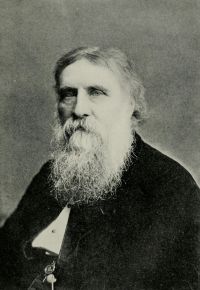
Portrait of George MacDonald George MacDonald England's Antiphon

From the heights of Henry Vaughan's verse, I look across a stony region, with a few feeble oases scattered over it, and a hazy green in the distance. It does not soften the dreariness that its stones are all laid in order, that the spaces which should be meadows are skilfully paved.
Henry Vaughan belongs to the mystical school, but his poetry rules his theories. You find no more of the mystic than the poet can easily govern; in fact, scarcely more than is necessary to the highest poetry. He develops his mysticism upwards, with relation to his higher nature alone: it blossoms into poetry.
Source: Gutenberg

1911 Encyclopædia Britannica, Volume 27… (1911)

Anthony à Wood, who is the main authority for Vaughan’s biography, says that Henry was entered at Jesus College, Oxford, in 1638, but no corroboration of the statement is forthcoming, although Thomas Vaughan’s matriculation is entered, nor does Henry Vaughan ever allude to residence at the university. [1] He was sent to London to study law, but turning his attention to medicine, he became a physician, and settled first at Brecon and later at Scethrog to the practice of his art. He was regarded, says Wood, as an “ingenious person, but proud and humorous.”
Source: Wikisource

Portrait of Daniel Lleufer Thomas Daniel Lleufer Thomas Dictionary of National Biography… (1899)

VAUGHAN, WILLIAM (1577–1641) , poet and colonial pioneer, born in 1577, was the second son of Walter Vaughan of Golden Grove, Carmarthenshire [see under Vaughan, Richard, second Earl of Carbery] . Sir Henry Vaughan (1587?–1659?) [q. v.] was his brother. William matriculated, along with his brother John, from Jesus College, Oxford, on 4 Feb.
Source: Wikisource

Get perspective with Kwize: daily news enlightened by great literature