Hissarlik

Definition and stakes

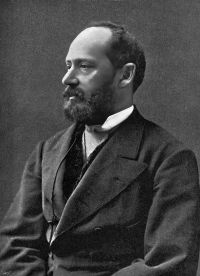
Portrait of Harold Peake Harold Peake,  The Bronze Age and the Celtic World

“ The cause of this interruption is uncertain, but it is perhaps permissible to suggest that the inhabitants of Hissarlik II., like their successors in Hissarlik VI., held the straits and so restricted the traffic through it as to kill it. The disappearance of the type A culture must certainly be equated approximately with the rise of Hissarlik II., for, as we shall see, the disappearance of Type B. culture practically synchronises with the destruction of that city. ”

Source: Gutenberg

Thomas Wilson,  The Swastika, the Earliest Known Symbol…

“ To the third century A. D. belongs the surface of the fortress hill of Hissarlik, which still lies above the Macedonian wall; and the oldest “cities”—although not only polished stones but also chipped flakes of chalcedony and obsidian occur in them—nevertheless fall within the age of metals, for even in the first city utensils of copper, gold, and even silver were dug up. No stone people, properly so called, dwelt upon the fortress hill of Hissarlik, so far as it has been uncovered. ”
Source: Gutenberg

1911 Encyclopædia Britannica (1911)

“ Tiryns and Hissarlik, other communities of the early race began to arrive at civilization, but were naturally influenced by the more advanced culture of Crete, in proportion to their nearness of vicinity. Early Hissarlik shows less Cretan influence and more external (i.e. Asiatic) than early Melos. The inner Greek mainland remained still in a backward state. Five hundred years later—about 1600 B.C.—we observe that certain striking changes have taken place. The Aegean remains have become astonishingly uniform over the whole area ”
Source: Wikisource

Get perspective with Kwize: daily news enlightened by great literature