Hussite Wars

Definition and stakes

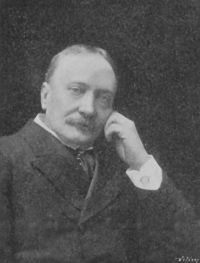
Portrait of František Lützow František Lützow,  The Hussite Wars (1914)

“ In consequence of the almost incessant warfare on the borders of Poland, Lithuania, Russia, and the dominions of the Teutonic order, these lands swarmed with mercenaries, always ready to take part in any warlike enterprise. Such men were mainly attracted by the democratic character of the Hussite armies, in which the rich spoils were distributed with the strictest impartiality. ”
Source: Wikisource

Portrait of James Harvey Robinson James Harvey Robinson,  An Introduction to the History of Western Europe

“ His ashes were thrown into the Rhine lest they should become an object of veneration among his followers.
The Hussite wars, 1419–1431.
The death of Huss rather promoted than checked the spread of heresy in Bohemia. A few years later the Germans undertook a series of crusades against the Bohemians. This embittered the national animosity between the two races, which has even yet by no means died out. The heretics proved valiant fighters and after several bloody wars succeeded in repulsing the enemy and even invaded Germany.
Opportunity of the council to reform the church.
”
Source: Gutenberg

Portrait of František Lützow František Lützow,  The Hussite Wars (1914)

“ The reason of this was that they [the Hussites] never ventured out of their wagons, for the enemies were strong in cavalry and they dared not attack them on foot. Whenever the enemy prepared to attack him [Žižka] or fought with him, he always defeated them, and they were beaten back by him; for differently are horsemen equipped and differently foot-soldiers, to whom it is an unaccustomed thing [to fight on horseback] ; for if you wish to learn something, before you get used to it some time is required and a certain leisure. ”
Source: Wikisource

Get perspective with Kwize: daily news enlightened by great literature