“ The glaciers left by the last ice age naturally melted first in the lower reaches, and as those that now cap the peaks and flow down between ridges like the arms of a starfish, melt in their turn, they will leave their icy, green-blue crystal pools higher and higher up the mountainsides. ”
Ice Age
Definition and stakes
The Ice Age refers to a geologic period characterized by extensive glaciation, significantly shaping Earth's landscapes and ecosystems. Authors such as John Muir described glacial remnants as "beautiful memories" of this time, underscoring their role in nurturing distinctive plant life. Julia McNair Wright viewed the Ice Age as a brief but pivotal era, contrasting its extreme cold with later temperate periods.
Hallam Hawksworth examined the movement of species, showing how glaciers functioned as both eroding and redistributing agents. Together, these viewpoints highlight the Ice Age as a dynamic interaction of climate, terrain, and biological change, leaving lasting marks on the planet's physical and ecological past.
Quotes about “Ice Age”
“ Some of the short laterals of the glaciers that drew their fountain snows from the jagged recesses of the summit are from one to two hundred feet in height, and scarce at all wasted as yet, notwithstanding the countless storms that have fallen upon them, while cool rills flow between them, watering charming gardens of arctic plants—saxifrages, larkspurs, dwarf birch, ribes, and parnassia, etc.—beautiful memories of the Ice Age, representing a once greatly extended flora. ”
 Julia McNair Wright,
Nature readers
(1891)
“ Over against this marvel of a mild climate, luxuriant vegetation, and nearly equal days and nights within the Polar Circle, we may set that other wonder of the glacial or ice age—the time when the polar cold wandered beyond its bounds and came down into the temperate zone to stay, for how long we cannot tell; for very long indeed, no doubt, though not for as long as a world-building epoch. The Glacial age was only a portion of the age that came just before the human period. ”
 Joseph McCabe,
The Story of Evolution — Chapter XIX. Man and the Great Ice-Age
“ But it must be added that a singular circumstance prolonged the glacial regime in the northern hemisphere. Modern geologists speak rather of a series of successive ice-sheets than of one definite Ice-Age. ”
Hallam Hawksworth, The Strange Adventures of a Pebble
“ As the glaciers spread downward from the Far North in the Ice Age they brought all their home things with them—climate, plants, insects, animals. Plant and animal life was driven step by step before the advancing ice. Then, as the ice melted, flowers, butterflies, and all followed their natural climate back. But those that lingered too long in the meadows around the mountain tops could not cross the hot summer plains that now lay between them and the retiring ice sheet; for plants and animals that are used to cold can't stand the heat any more than those from the tropics can stand the cold. ”
 Elisha Gray,
Familiar Talks on Science: World-Building and Life…
“ Whatever may have been the cause that created the great ice age in North America, so that a sheet of ice covered considerably more than half of the continent, there is no doubt in regard to the fact of the existence of such an age, and it will be interesting to study some of the physical changes that have been made by the ice at that period on the surface of the glaciated area. ”
 Percival Lowell,
Mars and Its Canals
“ To cause extensive glaciation we must have, in addition to favorable eccentricity, a large precipitation. With these two factors combined we get an ice age, but not otherwise. The result has an important bearing on geologic glacial periods and their explanation.Once formed, an ice-sheet cools everything about it and chills the climate of its hemisphere. ”
William Harmon Norton, The Elements of Geology
“ Our science cannot foretell whether all traces of the Great Ice Age are to disappear, and the earth is to enjoy again the genial climate of the Tertiary, or whether the present is an interglacial epoch and the northern lands are comparatively soon again to be wrapped in ice. ”
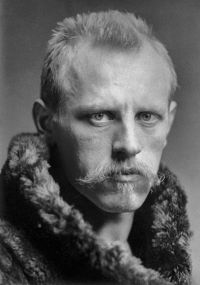 Fridtjof Nansen,
In Northern Mists: Arctic Exploration in Early Times…
“ We only know that ice-age followed ice-age, covering Northern Europe, and to some extent Asia and North America as well, with vast glaciers which obliterated all traces of early human habitation of those regions. Between these ice-ages occurred warmer periods, when men once more made their way northward, to be again driven out by the next advance of the ice-sheet. ”
Francis Rolt-Wheeler, The monster-hunters (1916)
“ Perry, as the land rose at the end of the Pliocene Epoch, and the Pleistocene Epoch began, tropical beasts and plants fled to the Equator, snow gathered on the newly made mountain ranges, glaciers glittered on their flanks. The Third Ice Age had come, the beginning of the Quarternary or Modern Period. Nor is the Third Ice Age yet past, for it is only recently that the shrinking of the ice has allowed Man to stand on the North and South Poles of the globe. ”
Edward Huntington Williams, A History of Science — Volume 3
“ Gradually others fell in line, and after the usual imbittered controversy and the inevitable full generation of probation, the idea of an ice age took its place among the accepted tenets of geology. All manner of moot points still demanded attention—the cause of the ice age, the exact extent of the ice sheet, the precise manner in which it produced its effects, and the exact nature of these effects; and not all of these have even yet been determined. But, details aside, the ice age now has full recognition from geologists as an historical period. There may have been many ice ages, as Dr. ”
Various, Popular Science Monthly (1887)
“ The period when such warm-weather creatures flourished in such northern latitudes must surely have been one of very genial climatic conditions. But, toward the close of the Pliocene age, mutterings and forewarnings of the great glaciation begin to show themselves, and to herald the advent of that vast ice-sheet which gradually swallowed up in its devouring bosom the better portion of either continent. ”
C. A. M. Taber, The Coming Ice Age
“ But, with the assistance of a frigid period in the southern hemisphere to cool the ocean waters, and thus lower the temperature of all tropical currents, including the Gulf Stream and Japan currents, an ice age could be brought about in the northern hemisphere equal in intensity to the glacial periods of the past. ”
Julia McNair Wright,
Nature readers
(1891)
“ The ice-sheet, which at this day wraps the poles, began to extend southward, and an icy sea, such as now washes the shores of Greenland and the North Cape, rolled over the northern half of the globe.The Ice period has occasioned much dispute and wonderment among men of science. Its remaining traces are chiefly drift, ice-markings such as ice-worn rocks and boulders, with the bones of animals and the traces of Arctic plants found far south of the regions which such organisms occupy at the present time, or did occupy in an age earlier than the Glacial. ”
C. A. M. Taber, The Coming Ice Age
“ The broad, level lands of British America and Siberia during the ice age must have been thickly covered by the snow which fell on the deeply frozen plains, besides the large amount of snow that the cold westerly winds must have drifted over their icy surface from lands of greater snow-fall on their western borders. ”
C. A. M. Taber, The Coming Ice Age
“ For it appears that the larger areas of land in the northern latitudes, embracing wide continents and large islands, must, during the growth of a frigid age, have increased the spread of glaciers many times greater in extent than could be obtained on the smaller lands of the high latitudes of the southern hemisphere.24 For it is evident that the water evaporated from the sea and deposited in snow on the large continents and islands of the high northern latitudes during the growth of an ice period would, while thus diminishing the ocean waters, greatly increase the weight of northern lands. ”
Julia McNair Wright,
Nature readers
(1891)
“ At present we can only say that geologists consider that the ice-cap came down to the 40° parallel of latitude north, while others believe that the frequent ice-markings and boulders found throughout the temperate zone are the work of icebergs drifting in Arctic currents, and swept much further [Pg 37] south than they are now seen. Up to this period we have considered red-hot worlds, melted worlds, drowned worlds; the Glacial age gives us a frozen world.But the one great fact written over the face of the globe is change. Earth-building sweeps through great circles or periods of change. ”
 Ignatius Donnelly,
Ragnarok : the Age of Fire and Gravel
“ It being apparent that glaciers were not adequate to produce the results which we find, the glacialists have fallen back upon an extraordinary hypothesis--to wit, that the whole north and south regions of the globe, extending from the poles to 35° or 40° of north and south latitude, were, in the Drift age, covered with enormous, continuous sheets of ice, from one mile thick at its southern margin, to three or five miles thick at the poles. ”
Ignatius Donnelly,
Ragnarok : the Age of Fire and Gravel
“ When we consider the magnitude of the ice-sheets which, it is claimed by the glacialists, covered the continents during the Drift age, it becomes evident that a vast proportion of the waters of the ocean must have been evaporated and carried into the air, and thence cast down as snow and rain. ”
C. A. M. Taber, The Coming Ice Age
“ The spreading ice-sheets having covered the land are able to flow into the surrounding seas, where their outer edges become detached and form icebergs, which float out to sea, and so scatter over the adjoining oceans. ”
Willis Luther Moore, The new air world (1922)
“ For several hundred years all the great glaciers have receded, but we should not expect such recession to continue indefinitely. Geology furnishes abundant evidence that great changes took place in the climate of the earth during the prehistoric ages; that there were several glacial periods, the last occurring during pleistocene times, somewhere between twenty and fifty thousand years ago, and that there were intervals between the culminations of the Ice Ages of probably fifty thousand to one hundred thousand years. ”
Emory Adams Allen, The Prehistoric World; Or, Vanished Races
“ If we suppose, with Sir Charles Lyell, that the lands of the globe were all to be gathered around the equator, and the waters were gathered around the poles, it is manifest that there would be no such a thing as extremes of temperature, and it is, perhaps, doubtful whether ice would form, even in polar areas.18 At any rate, no glaciers could be formed, as there would be no land on which snow could gather in great quantities. ”
Various, Littell's Living Age (1877)
“ High up it can only show itself at intervals between smothering snow-beds which form continuous bridges. Even the thundering fall of the Handeck becomes a gentle thread of pure water creeping behind a broad sheet of ice, more delicately carved and moulded than a lady's veil, and so diminished in volume that one wonders how it has managed to festoon the broad rock faces with so vast a mass of pendent icicles. The pulse of the mountains is beating low; the huge arteries through which the life-blood courses so furiously in summer have become a world too wide for this trickle of pellucid water. ”
Louis Legrand Noble, After Icebergs with a Painter
“ It is the warm weather that gives them their naked brilliancy, and melts them into picturesque forms, and rolls and explodes them in the magnificent style, I have attempted to describe. They are seen to move occasionally at the same rate of speed, whether through the densely packed ice or the open sea. Wind, current and tide, and the ocean crowded with ice as far as sight can reach, all frequently set in one direction, and the bergs in another. On they move, majestic and serene, tossing the crystal masses from their shaggy breasts, cracking, crashing, thundering along. ”
 Henry Alleyne Nicholson,
The Ancient Life History of the Earth
“ With the commencement of the Quaternary period, however, this diminution of temperature became more decided; and beginning with a temperate climate, we find the greater portion of the northern hemisphere to become gradually subjected to all the rigours of intense Arctic cold. All the mountainous regions of Northern and Central Europe, of Britain, and of North America, became the nurseries of huge ice-streams, and large areas of the land appear to have been covered with a continuous ice-sheet. ”
Frederick Albert Cook, My Attainment of the Pole
“ Frequent falls of snow, combined with alternate melting and freezing in summer, and a process similar to the upbuilding of glacial ice, are mainly responsible for the growth in thickness of the ice on the Polar sea. ”
 Edward Sylvester Morse,
Popular Science Monthly
(1877)
“ With a knowledge of glacial phenomena, we are capable of judging the condition of things which must, of necessity, have existed directly after the recedence of the great ice-sheet: its southern border slowly retreating, and, with the encroachment of the warmer zone, the arctic forms dying out, or surviving under changed conditions ”
 H. G. Wells,
The Outline of History: Being a Plain History of Life and Mankind
“ An arctic fauna, musk ox, woolly mammoth, woolly rhinoceros,{v1-59} lemming, ushers in the Pleistocene. Over North America, and Europe and Asia alike, the ice advanced. For thousands of years it advanced, and then for thousands of years it receded, to advance again. Europe down to the Baltic shores, Britain down to the Thames, North America down to New England, and more centrally as far south as Ohio, lay for ages under the glaciers. ”
John Phillips, A Treatise on Geology (1852)
“ Icebergs are merely the broken-off ends of glaciers, which descend to the sea, or the detached fragments of icy cliffs generated on the coasts of circum-polar regions. When liberated they are carried by oceanic currents through various and often great distances, till, melted, overthrown, or stranded, they yield up the stony masses, which glaciers had brought down, or shore ice had raised up, and thus encumber the sea bed with the spoils of distant lands. ”
 James Geikie,
Fragments of Earth Lore: Sketches & Addresses Geological and Geographical
“ Glaciation, as we have seen, was developed in the same directions and over the same areas as we should expect it to be were the snow-line to be generally depressed. To put it in another way, were the snow-line by some means or other to be lowered over Europe, Asia, and North America, then, with sufficient precipitation, great ice-fields and glaciers would reappear in the very regions which they visited during Pleistocene times. Neither elevation nor depression of the land would be required to bring about such a result. ”
Elisha Gray,
Familiar Talks on Science: World-Building and Life…
“ The glacial period is not only closely related to the topography of North America and parts of Europe in the changing of river beds, the formation of lakes, the transportation of rock, the grinding down of mountains and spreading the débris over thousands of miles in extent, but it is related in an intimate way to many of the sciences, such as botany and zoölogy. A study of the flight of animals and plants in front of the great advancing ice sheet is a subject of intense interest. ”
T. Sterry Hunt, The American Cyclopædia (1879)
“ Those, on the other hand, who restrict the action of land ice to local glaciers, and call in the aid of floating ice and the arctic current, maintain that the process of glaciation is limited rather by place than by time. Ever since the conditions of the earth have been such as to give rise to the formation of polar ice, the shores and the shallow seas to which the arctic current has borne it must have been subject to glacial action such as we have endeavored to describe. ”
Various, The Book of History (Vol. 1 of 18… (1921)
“ We have sure proofs that through a decrease in the yearly temperature a glacial period set in over Europe, North Asia, and North America, burying vast areas under a sheet of ice, of the effect and extent of which Northern Greenland, with its ground-relief veiled in inland ice, can give us an idea. ”
W. Mattieu Williams, Science in Short Chapters
“ If the earth has a fluid centre, and only a comparatively thin crust, as some suppose, there must be such tides, produced by the gravitation of the moon and sun.Ice presents some interesting results of this viscosity. At a certain height, varying with latitude, aspect, etc., we reach the “snow line” of mountain slopes, above which the snow of winter remains unmelted during summer, and, in most cases, goes on accumulating. It soon loses its flocculent, flaky character, and becomes coherent, clear blue ice by the pressure of its own weight. ”
Various, The Atlantic Monthly, Volume 12…
“ These layers of ice become numerous and are parallel to each other, like the layers of ice formed from slosh. Such crusts of ice I have myself observed again and again upon the glacier. This stratified snowy ice is now the bottom on which the first autumnal snow-falls accumulate. These sheets of ice may be formed not only annually before the winter snows set in, but may recur at intervals whenever water accumulating upon an extensive snow-surface, either in consequence of melting or of rain, is frozen under a sharp frost before another deposit of snow takes place. ”
Related terms
Authors who wrote about “Ice Age”
Julius PayerC. A. M. Taber Robert E. PearyJames GeikieFridtjof NansenElisha GrayWilliam Harmon Norton
 Edwin Swift BalchFrederick Albert CookG. F. Browne
 John MuirWallace Walter Atwood
 Charles Henry Hitchcock
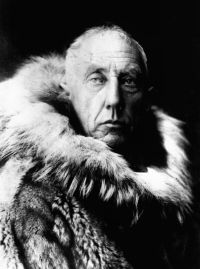 Roald AmundsenT. Sterry HuntLouis Legrand NobleElias Lewis Jr.
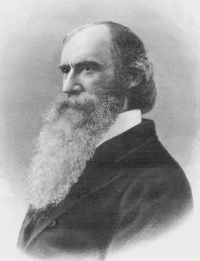 John Strong NewberryRichard Bliss
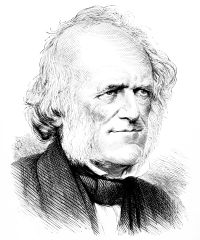 Charles Lyell
Robert E. PearyJames GeikieFridtjof NansenElisha GrayWilliam Harmon NortonEdwin Swift BalchFrederick Albert CookG. F. BrowneJohn MuirWallace Walter AtwoodCharles Henry HitchcockRoald AmundsenT. Sterry HuntLouis Legrand NobleElias Lewis Jr.John Strong NewberryRichard BlissCharles Lyell