“ Towards the middle of the day, when Iceland lay far behind them,—a bar of black on the ocean's edge,—they were little by little aware of the roll and thunder of breakers, and the cries and calls of very many sea birds and—very faint—the bleating of sheep. The fog and the scud of rain and the spindrift that the wind whipped from off the wavetops shut out all sight beyond the cast of a spear. But they knew that they must be driving hard upon the island, and Grettir, from his place at the helm, bent himself to look under the curve of the sail. ”
Iceland spar
Definition and stakes
Quotes about “Iceland spar”
“ In an instant the great fight—the fight that would be told of in Iceland for hundreds of years to come—burst suddenly forth like the bursting of a dyke. Illugi had leaped forward, and through the smoke of the weltering fire his spear-blade flashed, curving like the curving leap of a salmon in the rapids of the Jokulsa. There was a cry, a rush of many feet, a parting of the group in the doorway, and Hialti Thinbeard's hands shut their death-grip upon the shaft of Illugi's spear as the blade of it tore out between his shoulders. ”
Sir Hall Caine,
The Bondman: A New Saga
“ I am partly conscious that the Iceland I have described is the Iceland of an earlier era; but Icelanders will not object to my having tried to bring within my too narrow limits much of what is beautiful and noble and firing to enthusiasm in their old habits, customs and laws. To the foolish revolt which occurred at Reykjavik early in this century I have tried to give the dignity of a serious revolution such as, I truly think, Icelanders may yet make in order to become masters in their own house. ”
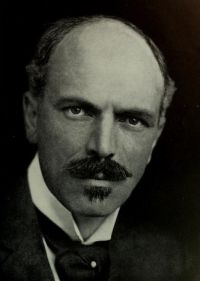
Grettir the Outlaw: A Story of Iceland
“ Now, here and there in this vast region there are certain sheltered spots where some grass grows, valleys that have escaped the overflow of the molten rock, or the thrust of the glacier; and during the ninety years that Iceland had been inhabited, every now and then a churl who got tired of service, or a murderer afraid of his life, ran away into the centre of the island, and lived a precarious existence on the wild birds, their eggs, and on the fish that abounded in the countless lakes. ”
The King's Mirror (Speculum regale-Konungs skuggsjá…
“ For many a simple-minded man might think that all this was mere deception unworthy of notice and told merely to terrify, if there were no such evidence as what we have now pointed out. But now no one can deny what he sees before his own eyes, since we hear exactly the same things about the tortures of hell as those which one can see on the island called Iceland: for there are vast and boundless fire, overpowering frost and glaciers, boiling springs, and violent ice-cold streams. ”
Ida Pfeiffer,
Visit to Iceland and the Scandinavian North
“ The people who maintain that they have seen these children of nature, assert that they are taller and stronger than other Icelanders; that their horses’ hoofs, instead of being shod earth iron, have shoes of horn; and that they have much money, which they can only have acquired by pillage. When I inquired what respectable inhabitants of Iceland had been robbed by these savages, and when and where, no one could give me an answer. ”
“ They are no place now for free men."So by the time Ingolf was an old man, Iceland was no longer an empty land. Every valley was spotted with bright feast halls and temples. Horses and cattle pastured on the hillsides. Smoke curled up from kitchens and smithies. Gay ships sailed the waters, taking Iceland cloth and wool and Iceland fish and oil and the soft feathers of Iceland birds to Norway to sell, and bringing back wood and flour and grain.When Ingolf died, his men drew up on the shore the boat in which he had come to Iceland. ”
Pliny Miles, Norðurfari; or, Rambles in Iceland
“ The air was vocal with birds, that constantly flew about us. The mournful note of the plover, and the wild scream of the curlew, were constantly heard, as they rested on the signal-cairns by the way-side, or flew away towards a thicket. These birds, as well as the ptarmigan, are quite plentiful in Iceland, and all reckoned as game-birds.A man could travel through Iceland in the summer, carrying a gun, a few loaves of bread, some tea, coffee, and sugar, get plenty of milk and cream at the farmers’ houses, and shoot game enough for his meat, without once leaving his horse. ”
Frederick York Powell,
Encyclopædia Britannica, Ninth Edition…
“ Men of good birth (nearly always, too, of Celtic blood on one side at least) , they leave Iceland young and attach themselves to the kings and earls of the north, living in their courts as their henchmen, sharing their adventures in weal and woe, praising their victories, and hymning their deaths if they did not fall by their sides—men of quick passion, unhappy in their loves, jealous of rival poets and of their own fame, ever ready to answer criticism with a satire or with a sword-thrust, but clinging through all to their art, in which they attained most marvellous skill. ”
Sir Richard Francis Burton,
Ultima Thule; or, A Summer in Iceland…
“ Little by little, France, with patient and strenuous action, established a hold on, and afterwards a monopoly of, the Iceland deep-sea fishery; thus securing, as in Newfoundland, not only a source of national wealth, but a powerful reserve of experienced seamen. Certainly, no better school for sailors can be imagined than the dangerous and intricate navigation of the Iceland Fjörðs. In 1859, there were 269 French smacks and ships, varying from forty to eighty tons burden, and manned by 7000 fishermen ”
Paul B. Du Chaillu, The Viking Age. Volume 2 (of 2…
“ The policy of the Norwegian King Harald Fairhair, which led to the subjection of many lesser chieftains about the middle of the ninth century, gave rise to an emigration of the more high-spirited chiefs in search of other lands, and resulted in the discovery of Iceland, called in some Sagas Snowland, and afterwards of Greenland and Vinland, or America. The hero of the discovery of Iceland was a sea-rover called Naddod, about the year 861. ”
Marquis of Frederick Temple Blackwood Dufferin and Ava, Letters from High Latitudes
“ After passing the cape, away we went across the spacious Brieda Fiord, at the rate of nine or ten knots an hour, reeling and bounding at the heels of the steamer, which seemed scarcely to feel how uneven was the surface across which we were speeding. Down dropped Snaefell beneath the sea, and dim before us, clad in evening haze, rose the shadowy steeps of Bardestrand. The north-west division of Iceland consists of one huge peninsula, spread out upon the sea like a human hand, the fingers just reaching over the Arctic circle ”
Sir Richard Francis Burton,
Ultima Thule; or, A Summer in Iceland…
“ His mother country forbids him to decuple the human hand and arm by machinery; the enormous water-power of his rivers is useless, and thinness of population bars out the appliances of civilisation—how can he expect to hold a fair place in the race of life? Moreover, like another small and heroic kingdom, modern Greece, Iceland has suffered from ages of virtually foreign dominion, not to say tyranny, and from restrictions of trade, which, small as items, combined to form a system of grinding oppression. ”
Maurice Hewlett,
Gudrid the Fair: A Tale of the Discovery of America
“ Where heroism has been so shown on all sides of us in these three dreadful years, it is no longer possible to pick and choose heroic nations. One might otherwise have said that no such heroes were ever given to the world as the heroes of Iceland. ”
W. P. Ker,
Epic and Romance: Essays on Medieval Literature
“ One at least of the Icelandic Sagas is one of the great prose works of the world—the story of Njal and his sons.The most perfect heroic literature of the Northern nations is to be found in the country where the heroic polity and society had most room and leisure; and in Iceland the heroic ideals of life had conditions more favourable than are to be discovered anywhere else in history. Iceland was a world divided from the rest, outside the orbit of all the states of Europe ”
Mrs. Alec-Tweedie,
A Girl's Ride in Iceland
“ This they agreed to do, and, after much bloodshed, in 1264 Iceland was annexed to Norway, and its far-famed little republic became extinct.The history of the Island since that date has been a mournful one. Until thirty years since, the conquest of their Island by Norway, left in its train nothing but apathy and discontent among its inhabitants; in fact, the poor Icelanders, when once they realised their loss of independence, seemed to have neither spirit nor power to rise above the state of suicidal slavery into which they had fallen through their political differences. ”
Frederick York Powell,
Encyclopædia Britannica, Ninth Edition…
“ This period of Iceland's existence is torpid and eventless: she had got peace but with few of its blessings; all spirit seemed to have died with the commonwealth; even shepherding and such agriculture as there had been sank to a lower stage; waggons, ploughs, and carts went out of use and knowledge; architecture in timber became a lost art, and the fine carved and painted halls of the heathen days were replaced by turf-walled barns half sunk in the earth, and lasting at best a generation ”
Mrs. Alec-Tweedie,
A Girl's Ride in Iceland
“ Such is a brief description of the tremendous forces which dominate Iceland. Here Nature works in silence for long periods beneath the crust of the earth, and then, with little or no forewarning, bursts forth in uncontrollable fury, ruthlessly devastating with its fiery streams whatever impedes its course.p. 155Who can wonder that, under such existing terrors, the scanty inhabitants of the Island are a sad and dejected race. A people with death and terror continually at their doors can hardly be otherwise ”
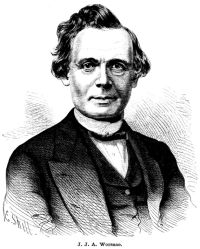
Jens Jacob Asmussen Worsaae,
An Account of the Danes and Norwegians in England…
“ The powerful warriors, who in those remote times emigrated from the North, were, for the most part, men no less high-spirited and fond of freedom than their fathers before them. The old chronicles state, that among the warriors who came over to England with the conquerors Svend and Canute, there was not a single serf. The history of Iceland shows, even at an earlier period, that most of the colonists who went thither were descendants of kings, jarls, and other of the most powerful freemen of the North. ”
Frederik Winkel Horn, History of the Literature of the Scandinavian North (1884)
“ The intercourse between Iceland and Norway was not interrupted, but their mutual relations assumed wholly new forms. The Icelanders no longer visited the Norwegian kings in the capacity of skalds or for the purpose of becoming their courtiers, and thus the conditions for saga writing disappeared and the Norwegians who came to Iceland, being mostly ignorant merchants and seamen, could not take the place of the sagamen. Besides, the island was devastated in the fourteenth and fifteenth centuries by epidemics such as the black plague, by famine, etc. ”
Frederik Winkel Horn, History of the Literature of the Scandinavian North (1884)
“ The decline of oral tradition can also be partly accounted for by the fact that the social conditions in Iceland gradually assumed a new character and consequently the saga materials, which were formerly liable to develop anywhere, now gathered around a few centres and no longer awakened the same general interest as before. The original institutions under which the Icelandic freeman considered himself the equal of every other freeman in the land, had gradually developed into the government of a few, inasmuch as a comparatively large power was centred in the hands of a few chiefs ”
B. F. DeCosta,
The Pre-Columbian Discovery of America by the Northmen
“ Among the contents was a Damascened sword, with runes, showing that the letter existed among the Northmen in the seventh century. [55] The people of Iceland were always noted for their superiority in this respect over their kinsmen in Denmark and Norway. There is one significant fact bearing on this point, which is this: that, while a few of the people of Iceland went at an early period to engage in piratical excursions with the vikings of Norway, not a single pirate ship ever sailed from Iceland. ”
Ian C. Hannah, Capitals of the Northlands: Tales of Ten Cities
“ Iceland is perhaps the least mixed nation to be found on the surface of the globe. Among the fathers of her settlement there were indeed a few of other than Norse blood, particularly ubiquitous Irish, some of whom were men very well thought of, but all except a few individuals here and there were of pure Scandinavian stock. The Landnama-bok expressly tells us: "Men of knowledge say that the country was wholly settled and taken up in sixty winters, so that it hath never after been settled any more." ”
Jens Jacob Asmussen Worsaae,
An Account of the Danes and Norwegians in England…
“ In Iceland, on the contrary, where a great number of the most powerful and shrewdest of the heathens of Norway sought, after the year 870, a refuge against spiritual and political oppression, and where they founded a republic which retained its independence for centuries, the Scandinavian spirit obtained a free field. Not only did the old bardic lays, and the remembrance of the deeds of former times, continue to live among the Icelandic people, but new bards arose in numbers, who, spreading themselves over the whole north of Europe, returned “with their breasts full of Sagas.” ”
Pliny Miles, Norðurfari; or, Rambles in Iceland
“ There is no reason why the king of Denmark should not open the trade of Iceland equally to all nations. It is not a particle of pecuniary benefit to his kingdom, as there are no duties charged; but, by restricting the trade to Danish vessels, it is kept as a kind of monopoly by a few merchants of Copenhagen; while the poor Icelanders complain greatly of the oppression and hardship of being dependent for their foreign necessaries and luxuries, entirely on a few grasping speculators. Whenever the Iceland Althing passes an act opening their ports to all nations, the king vetoes the bill. ”
W. S. C. Russell, Iceland: Horseback tours in saga land
“ For a long time they have had rights in this fiord and in the adjacent waters and it is a virtual French colony, presided over by the Abbé and the French Consul, who is resident at Reykjavik. The treaty is with Denmark as Iceland can not make a treaty. It has been advantageous to the French but otherwise to the local Icelandic fishermen. The younger fishermen of Iceland have obtained power boats for fishing off the coast and they look upon the French as poachers upon their ancient domain and rightfully. ”
W. P. Ker,
Epic and Romance: Essays on Medieval Literature
“ Thus while Iceland on the one hand is a reactionary state, founded by men who were turning their backs on the only possible means of political progress, cutting themselves off from the world, and adhering obstinately to forms of life with no future before them, on the other hand this reactionary commonwealth, this fanatical representative of early Germanic use and wont, is possessed of a clearness of self-consciousness, a hard and positive clearness of understanding, such as is to be found nowhere else in the Middle Ages and very rarely at all in any polity. ”
Ida Pfeiffer,
Visit to Iceland and the Scandinavian North
“ Before quitting Iceland, I must relate a tradition told me by many Icelanders, not only by peasants, but also by people of the so-called higher classes, and who all implicitly believe it.It is asserted that the inhospitable interior is likewise populated, but by a peculiar race of men, to whom alone the paths through these deserts are known. These savages have no intercourse with their fellow-countrymen during the whole year, and only come to one of the ports in the beginning of July, for one day at the utmost, to buy several necessaries, for which they pay in money. ”
W. P. Ker,
Epic and Romance: Essays on Medieval Literature
“ The conditions of life in Iceland were, and still are, such as to exclude a number of the [Pg 251] things that in other countries prevent the historian from writing epic. There were none of the large, abstract considerations and problems that turn the history into a dissertation on political forces, on monarchy, on democracy, on diplomacy; there were none of the large, vague multitudes of the people that impose themselves on the historian's attention, to the detriment of his individual characters. The public history of Iceland lies all in the lives of private characters ”