Icelandic sagas

Definition and stakes

L. Winifred Faraday,  The Edda, Volume 1

“ This, however, is true of other Gods, notably of Tyr, who is without question one of the oldest. The only deities named with any suggestion of sacrifice or worship in the Icelandic sagas proper are Odin, Thor, Frey, Njörd, Frigg and Freyja. The process of choice is as arbitrary in mythology as in other sciences. Again, it is more likely that the original version of the legend should have survived in Iceland than in Denmark, which, being on the mainland, was earlier subject to Christian and Romantic influences ”
Source: Gutenberg

Frederik Winkel Horn,  History of the Literature of the Scandinavian North (1884)

“ The Icelandic sagas proper, that is to say, the narratives which have the description of Icelandic affairs for their object, extend from the time of the first settlement of the island to about the year 1030, a period which, on account of struggles arising from the further colonization of Iceland and from the introduction and establishment of the new faith, necessarily awakened the greatest interest and furnished the richest materials for tradition. ”
Source: Wikisource

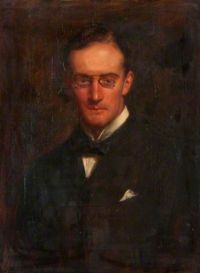
Portrait of William Paton Ker William Paton Ker,  Sturla the Historian (1906)

“ Icelandic prose is very near to the spoken language; it is rich in idiom and in conversation, and the artistic form given to it by writing men seems to follow easily from the natural growth of the spoken traditional tale.
By the early part of the thirteenth century most of the old stories had been written; and not only the Icelandic Sagas of the heroic age, but also the lives of the kings of Norway, which are best known in the work of Snorri, commonly called Heimskringla.
”
Source: Wikisource

Get perspective with Kwize: daily news enlightened by great literature