Isle of Thanet

Definition and stakes

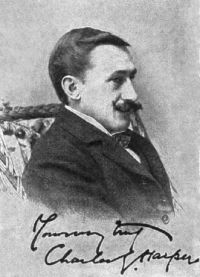
Portrait of Charles G. Harper Charles G. Harper,  The Ingoldsby Country: Literary Landmarks of the "Ingoldsby Legends"

“ Here we are well within the Isle of Thanet, whose name, as generally is the case, is of uncertain origin. "Thanatos," the "Isle of Death," suggested some commentator in the bygone years, but he did not bolster up his derivation by telling us in what way it was so deadly. Perhaps in the wrecks of its coast. In other respects, Thanet is the Isle of Good Health, of rude, hungry, boisterous health; and in summer the Isle of Cockneys. Does it not contain Ramsgate—"rollicking Ramsgate",—and Margate the merry, whose name—I am sorry—always reminds me of margarine? ”
Source: Gutenberg

Portrait of Charles G. Harper Charles G. Harper,  The Kentish Coast

“ The marshy character of the land still renders roads into Thanet scarce. The Wantsum, the channel that formerly divided the Isle of Thanet from the mainland of Kent, flowed past here in a salt-water estuary half a mile broad in the times of the Romans, who were so concerned to defend each of its two mouths, that they built the strong maritime fortresses of Regulbium and Rutupium where ruined Reculver125 and Richborough now stand. The direct way into Thanet was then, as now, by this road, but it was by ferry that travellers then crossed, and continued for many centuries to cross. ”
Source: Gutenberg

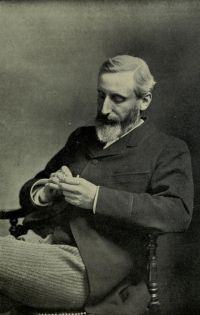
Portrait of Grant Allen Grant Allen,  Science in Arcady

“ In all this, however, we begin to catch the first faintly-resounding note of modern Thanet. The intelligent reader will no doubt have observed, with his usual acuteness, that up to date we have heard practically nothing of Ramsgate, Margate, and Broadstairs, which now form the real centres of population in the nominal island. Its relations have all been with Rutupiæ, Sandwich, Canterbury, and the mainland. But the silting up of the Wantsum turned the new Thanet seaward, by the chalky cliffs ”
Source: Gutenberg

Get perspective with Kwize: daily news enlightened by great literature