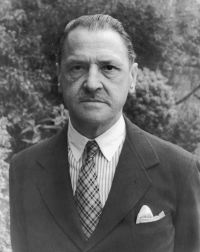
“ James envied with all his heart the beggar boy, wandering homeless and penniless, but free. He, at least, had not these inhuman fetters which it was death to suffer and death to cast off; he, indeed, could make the world his servant. Freedom, freedom! If one were only unconscious of captivity, what would it matter? It is the knowledge that kills. And James walked again by the neat, iron railing which enclosed the fields, his head aching with the rigidity and decorum, wishing vainly for just one piece of barren, unkept land to remind him that all the world was not a prison. ”
James the Just
Definition and stakes
James the Just, a Jewish bishop of Jerusalem and, according to the New Testament, the brother of Jesus, was a key figure in early Christianity, guiding the Jerusalem church and presiding over the Council of Jerusalem. His unwavering commitment to Mosaic Law stood in contrast to Paul’s focus on faith, illustrating the tensions within early Christian communities. While writers such as W.
Somerset Maugham examined themes of liberty and limitation in their fiction, historical records emphasize James’s role as a moral role model and leader, with his martyrdom underscoring his importance in shaping Jewish-Christian identity. His influence continues to resonate in theological discussions and church traditions, connecting Jewish heritage with the emerging Christian faith.
Quotes about “James the Just”
“ Ah, that was what he desired, freedom—freedom to feel that he was his own master; that he was not enchained by the love and hate of others, by the ties of convention and of habit. Every bond was tedious. He had nothing to lose, and everything to win. But just those ties which every man may divide of his own free will are the most oppressive; they are unfelt, unseen, till suddenly they burn the wrists like fetters of fire, and the poor wretch who wears them has no power to help himself.James knew he had not strength for this fearless disregard of others ”
 Harriet Beecher Stowe,
The May Flower, and Miscellaneous Writings
“ Now, this James is to be our hero, and he is just the hero for a sensation—at least, so you would have thought, if you had been in Newbury the week after his arrival. Master James was one of those whole-hearted, energetic Yankees, who rise in the world as naturally as cork does in water. He possessed a great share of that characteristic national trait so happily denominated "cuteness," which signifies an ability to do every thing without trying, and to know every thing without learning, and to make more use of one's ignorance than other people do of their knowledge. ”
Related terms
Authors who wrote about “James the Just”
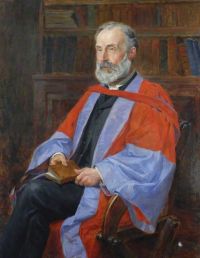 Alfred PlummerBaron Thomas Babington Macaulay Macaulay
 A. T. Robertson
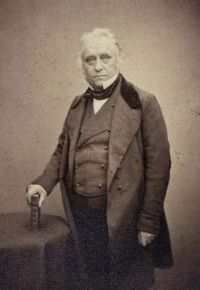 Thomas Babington MacaulayAmber Reeves Blanco WhiteMrs. A. T. ThomsonHenry James
 Andrew LangMatthew Weld Hartstonge
 John Cassell
 John GalsworthyMargaret MacArthur
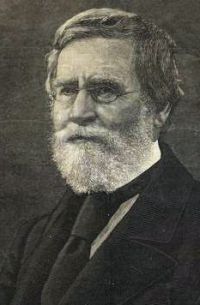 Jacob AbbottConstantine J. Smythby Henry JamesWilliam James
 David Hume
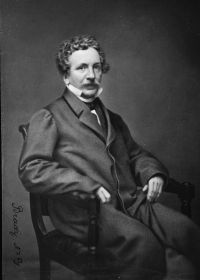 G. P. R. James
 Thomas JeffersonJames I
