“ They will explain the situation fully to John Watts. He will welcome any aid that will stop the man from getting back to the Watauga settlements. It’s as much his game as it is ours.”“We’ll hope so. But after I’ve eaten I think I will send a talk to Watts and Old Tassel to make sure they understand.”“If your Majesty please, I’m sure Watts will be in hot pursuit of the man before your talk can reach Great Hiwassee. As for Old Tassel, I didn’t think it wise to have the messengers see him. He’s weak. The less he knows about things the better it will be. ”
John Watts
Definition and stakes
Quotes about “John Watts”
Talbot Baines Reed,
A History of the Old English Letter Foundries
“ The elder Bowyer’s intimate connection with Caslon’s first ventures in letter-founding give Nichols’ work a special authority in the matter. At the same time there exists a certain confusion in the earlier part of the narrative which it is difficult completely to harmonise. 449 John Watts, a printer of first-rate eminence, for some time partner with Jacob Tonson II in Covent Garden. It was in Watts’ printing office in Great Queen Street, Lincoln’s Inn, that Benjamin Franklin worked as journeyman in 1725. Watts died in 1763, aged 85. ”
Octavius Brooks Frothingham,
Appletons' Cyclopædia of American Biography
(1900)
“ Watts's hymns, even when he was writing philosophical articles for the “Tribune,” and worshipping in New York with an independent society of the most liberal type. He was graduated at Harvard in 1823, the first scholar in a class that included men of some intellectual distinction. His only rival was John P. Robinson, who might have outstripped him, but was suspended for the part he took in a “rebellion,” and so lost his degree. At Cambridge young Ripley was known as an excellent scholar, especially in languages and literature. ”
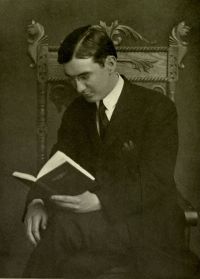
William Loftus Hare, Watts (1817-1904)
“ The portrait of John L. Motley, the American Minister to England in 1869, and author of "The Rise of the Dutch Republic," is one of the most successful paintings of handsome men; Watts here depicts perfectly the "spiritual body" of strength, purity, and appeal; the eyes are deepest blue, and the hair the richest brown. In this case the artist has, as he was so prone, fallen into symbolism even in portraiture, for we can trace in the background a faint picture of an old-time fighting ship. ”
John Wilson Townsend,
Kentucky in American Letters, 1784-1912…
“ Watts's early years were spent at Salem and Smithland, Kentucky, but he later went to New Orleans as a clerk in the firm of Givens, Watts and Company, cotton brokers. He shortly afterwards joined the New York branch of this New Orleans house, known as Watts, Crowe and Company, as a partner in the business; and from New York Watts went to Liverpool, England, to represent the firm of W. C. Watts and Company, which was the foreign title for the New Orleans and New York houses. For some years the business was very prosperous, and Watts, of course, shared largely in the firm's success. ”
British Association for the Advancement of Science, Handbook of Birmingham
“ Those of John Bright, by Frank Holt, R.A.; of George Dawson, by H. T. Munns; of William Murdock, by John Graham; of Arthur Ryland, the founder of the Birmingham and Midland Institute, and sometime Mayor of the town, by Sir J. W. Gordon; and of Sir John Franklin, by T. Phillips, R.A., also deserve note in this connexion.Watts and Portraits.—The large room of the Art Gallery is nearly filled with a collection of Mr. Watt’s pictures, kindly lent by the artist. Much interest now attaches to these works, as Mr. Watts has just offered them, with others, to the nation. ”
“ For the age that Carlyle spits at and the great and good John Ruskin scorns is gross, Mr. Aylwin; the age is grovelling and gross. No wonder, then, that Art in our time has nothing but technical excellence; that it despises conscience, despises aspiration, despises soul, despises even ideas—that it is worthless, all worthless.''Except as practised in a certain temple of art in a certain part of London that shall be nameless, whence Calliope, Euterpe, and all the rhythmic sisters are banished,' interposed Cyril.'But how did you attain to this superlative excellence, Mr. Wilderspin?' I asked. ”
“ Aylwin, no mortal can see the face behind that veil. And why? Those who alone could uplift it, the figures with folded wings—Faith and Love—are fast asleep at the great Queen's feet. When Faith and Love are sleeping there, what are the many-coloured lamps of science?—of what use are they to the famished soul of man?''A striking idea!' I exclaimed.'Your father's,' replied Wilderspin, in a tone of such reverence that one might have imagined my father's spectre stood before him. 'It symbolises that base Darwinian cosmogony which Carlyle spits at, and the great and good John Ruskin scorns. ”
Mary S. Watts, The Tenants: An Episode of the '80s
“ Steven eyed Gwynne vindictively. "I guess I can figger all right if I ain't a pin-head——""Nobody's saying your figures aren't right," said Gwynne, with a weary patience. "The colonel owes the estate that much, and if you'll let things alone, it'll be paid.""Oh, yes, it'll be paid. I'll make it my business to see that it's paid," said Steven, nodding. He turned to the doctor, confident of his support. "Ain't I right, John? Gwynne there won't do anything—won't lift his hand—just lets the rent keep on piling up and piling up. ”
by John Marshall, Royal Naval Biography — Watts, George Edward (1823)
“ His province is not to negociate, but to fight. He shall ‘labor in his vocation.’ I have the honor to be, &c. (Signed) “G. E. Watts.” Much as Captain Watts longed for an opportunity to carry into effect the threat contained in this letter, circumstances did not admit of it. The Jaseur, having sustained great damage in her masts and rigging, was forced to bear away for Bermuda, and did not return to the Delaware. ”
Isaac Watts,
Hymns and Spiritual Songs — John Was The Prophet Of The Lord
(1707)
“ Who makes his truth appear, His mighty hand fulfils his word, And all the oaths he sware. Now he bedews old David's root With blessings from the skies; He makes the branch of promise grow, The promis'd horn arise. ”
Isaac Watts,
Hymns for Christian Devotion — John Was The Prophet Of The Lord
(1853)
“ Sink every mountain low; The proud must stoop, and humble souls Shall his salvation know. "Behold the Morning Star arise, Ye that in darkness sit; He marks the path that leads to peace, And guides our doubtful feet. ”
Edwin Paxton Hood,
Isaac Watts; his life and writings…
(1875)
“ It is quite unnecessary here to dwell upon his transient importance and power; he was one of the last of those remarkable men in that singular interregnum of our history, and the very last after the resignation of Richard Cromwell who held some of the shadows of the departed substance of greatness. He spent the remainder of his days in the mansion of Stoke Newington before his final departure for Bunhill Fields. To this place, in time succeeded Sir John Hartopp, by his wife Elizabeth Fleetwood, a grand-daughter of the General ”
Edward Edwards, Lives of the Founders of the British Museum… (1870)
“ At an age when many men (far from being blockheads) are painfully striving after a literary command of their mother-tongue, young Watts had showed himself to be master of two several clusters of the great Indo-European family, and to have a very respectable acquaintance with a third. ”
Mrs. Alec-Tweedie,
Thirteen Years of a Busy Woman's Life
“ In the gallery in Melbury Road hung all manner of pictures and numerous portraits, amongst which I recognised those of Tennyson, the Prince of Wales, his former wife Ellen Terry, and Violet Lindsay—one of his favourite models—besides many more; but almost seventy were then being exhibited at Manchester, which somewhat denuded the walls.In personal appearance Watts was a gracious, kindly old gentleman, with white hair and a closely trimmed beard. He wore a tight tweed suit and a scarlet ribbon loosely tied round his neck, besides a black velvet skull-cap, head-gear of so many “old masters178.” ”
Lester Hostetler, Handbook to the Mennonite Hymnary
“ Though suffering from bodily ailments during the greater part of his adult life, he was robust in his thinking and became a bold and sturdy fighter for the cause of intellectual and religious freedom. Watts was one of the gentlest and kindest of men and a friend of the young. His wide intellectual interests enabled him to write textbooks on logic, geography, and astronomy, which were used in the universities of England as well as Harvard and Yale. ”
William Loftus Hare, Watts (1817-1904)
“ It is singular that in these three canvases the painter avoids the attempt to draw the face of the mother of the race. In the first the face is upturned, covered in shadow; in the second it is hid from view by the leaves of the forbidden tree, while in the third Eve turns her back and hides her weeping face with her arms. This habit of Watts to obscure the face is observed in "The Shuddering Angel," Judgment in "Time, Death, and Judgment," in "Love and Death," "Sic Transit," "Great Possessions," and some others. Often indeed a picture speaks as much of what is not seen as of what is seen. ”
William Loftus Hare, Watts (1817-1904)
“ This man, however, never appears in the pictures; when once in his studio, alone facing his canvas, Watts is final, absolute, an undisturbed and undistracted unity, conscious of that overwhelming "rightness" known to a Hebrew prophet. Whatever Time or Death may have in store for him or any man, there riding swiftly above them is Judgment the Absolute One; whatever theories may be spun from the perplexed mind of the magazine writer about Expansion and Necessity, there sits the terrible "Mammon" pilloried for all time. ”
William Loftus Hare, Watts (1817-1904)
“ Fortune has a lock of hair on her forehead by which alone she may be captured, and as she glides mockingly along, she leads her pursuers across rock, stream, dale, desert, and meadow typical of life. The pursuit of the elusive is a favourite theme with Watts, and is set forth by the picture "Mischief." Here a fine young man is battling for his liberty against an airy spirit representing Folly or Mischief. Humanity bends his neck beneath the enchanter's yoke—a wreath of flowers thrown round his neck—and is led an unwilling captive ”
William Loftus Hare, Watts (1817-1904)
“ It is a terrible picture of the god to whom many bow the knee—"dedicated to his worshippers." His leaden face shows a consciousness of power, but not happiness arising from power; his dull eyes see nothing, though his mind's eye sees one thing clearly—the money bags on his lap. The two frail creatures of youth and maiden, "types of humanity" as Watts said, are crushed by his heavy limbs, while behind a fire burns continuously, perhaps also within his massive breast. ”
George Henry Blore, Victorian Worthies: Sixteen Biographies
“ The career of Watts as a public man began in 1843 when he had reached the age of 26. The British Government, not often guilty of fostering art or literature, may claim at least the credit for having drawn him out of his seclusion at the very moment when his genius was ripening to bear fruit. In 1834 the Palace of Westminster, so long the home of the Houses of Parliament, had been burnt to the ground. ”
Edwin Paxton Hood,
Isaac Watts; his life and writings…
(1875)
“ From the last years of the reign of Charles II. to the closing years of George II. constitutes the era of Watts. Every age seems eminently important to its actors—sometimes even to spectators—and yet that age stands out with singular distinctness. How different the times of Watts’ birth and those of his death: the infant in the arms of a weeping mother, beneath the bars of the dungeon of the imprisoned Nonconformist, and the old man, that same infant, passing away, with the great Methodist movement rising into activity over the whole nation. ”
Edwin Paxton Hood,
Isaac Watts; his life and writings…
(1875)
“ There are Christians still who delight in this doubtful method of expressing and setting forth the holiest affections. Watts in all his religious works had at all times the ardent and fervent words of a poetic and imaginative nature, but he considerably pruned both thought and speech as the years passed in study and seclusion brought a riper wisdom; he did not repress the ardours of the heart, but he gave to their expression a chastened and colder form; he was not satisfied indeed by light without love, but he clothed that love with a more sacred reticence. ”
Sidney Colvin,
Dictionary of National Biography…
(1912)
“ To give a fixed date to any work of Watts is apt to be misleading, since it was his habit to paint upon a single picture, or upon variations and replicas of a single design, through many successive years. The decade 1860–70 saw the inception of most, and the completion of some, of the works in painting and sculpture by which he remains best known to the world. Such were in painting ‘The Court of Death’; a series of three pictures on the story of Eve, and another of three on the story of Cain, each charged with a weight of brooding ethical and symbolic suggestion ”
The History of Orange County New York
“ Born in England, about the same time that Judge Seeger was born in Germany, and brought to this country at an early age by his parents, as Judge Seeger was also, the career of both men is a striking illustration of what may be accomplished in this land of opportunity, without the social influence of generations of local ancestry, by sheer pluck, perseverance, energy and ability.Mr. Watts is a very nucleus of abounding and super-abounding energy. He generates energy by a process of spontaneous mental combustion. ”
William Loftus Hare, Watts (1817-1904)
“ There the young man who went away sorrowful with bowed head, scarcely knowing what he has lost, is used by Watts as one of his most powerful criticisms of modern life. Although the incident is a definite isolated one, yet the costume, figure, chain of office, and jewelled fingers, clutching and releasing, are of no time or land in particular. ”
Mrs. Henry Wood,
The Story of Charles Strange: A Novel…
“ Watts answered it, and lighted the gas."Tell your wife to prepare my dinner at once," I said to him; "or as soon as possible: Mr. Brightman is coming back to-night. You are going out, are you not?""Yes, sir, about that business. Mr. Lennard said I had better go as soon as I had had my tea.""All right. It will take you two or three hours to get there and back again. See to the fire in the next room; it is to be kept up. And, Watts, tell Leah not to trouble about vegetables to-day: I can't wait for them." ”
William Loftus Hare, Watts (1817-1904)
“ In "The All-pervading," there sits the Spirit of the Universe, holding in her lap the globe of the systems, the representation of the last conclusions of philosophy. This mysterious picture is very low in tone, conforming to Watts' rule to make the colouring suit the subject. Here there is nothing hard or defined; the spirit of the universe is merely suggested or hinted at, his great wings enclose all. The elliptical form of this composition is seen again in "Death Crowning Innocence" and "The Dweller in the Innermost," and the same expressive indefiniteness and lowness of the colour tones. ”
The History of Orange County New York
“ Watts are never shown to better advantage than when he is asserting the rights of the poor and weak against all the resources of corporate or individual wealth. He never tires. His tenacity cannot be shaken. ”
Leslie Stephen,
Dictionary of National Biography…
(1899)
“ In the fine house at Stoke Newington, which stood in what is now Abney Park cemetery, some figures on the panelling, painted by Watts, were formerly shown. His attacks of illness increased as years went on: he only reluctantly consented to retain his pastorate, and had scruples as to taking any salary; but the congregation refused to break the connection with one so famous and beloved as Watts became. ”
Edwin Paxton Hood,
Isaac Watts; his life and writings…
(1875)
“ It seems even the injustice of his opponents in disputation did not make him angry. Such injustice we know he had to experience; and when, in his later years, he offended on both sides, one writer complaining [250] of him that he had gone too far, and another that he had not gone far enough, he contented himself by saying, “Moderation must expect a box on both ears.” A character like that of Watts inspires confidence in almost all that proceeds from his pen: the men, indeed, who carry what Chalmers called “weight in life,” are usually the tall, the self-assertive, and the strong ”