Kathiawar

Definition and stakes

1911 Encyclopædia Britannica (1911)

“ Four of the old races, the Jaitwas, Churasamas, Solunkis and Walas still exist as proprietors of the soil who exercised sovereignty in the country prior to the immigration of the Jhalas, Jadejas, Purmars, Kathis, Gohels, Jats, Mahommedans and Mahrattas, between whom the country is now chiefly portioned out. Kathiawar has many notable antiquities, comprising a rock inscription of Asoka, Buddhist caves, and fine Jain temples on the sacred hill of Girnar and at Palitana. ”
Source: Wikisource

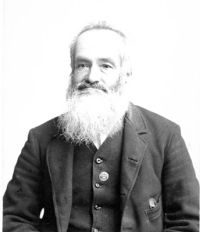
Portrait of William Lee-Warner William Lee-Warner,  Dictionary of National Biography… (1912)

“ He laid truly the foundations of primary education, in which Bombay has always taken the lead. He also compiled an outline of history to assist school teachers in giving their lessons. In 1872 the finances of the city of Bombay became embarrassed, and Peile was sent to settle them, acting as municipal commissioner. Subsequently he undertook for a short period the political charge of Kathiawar, to which he returned again in 1874, holding it until 1878. As political agent of Kathiawar Peile greatly added to his reputation. ”
Source: Wikisource

J. N. Larned,  History for ready reference, Volume 3… (1895)

“ Some have fought with us and come out of the struggle without dishonour. Some pay tribute; others pay none. Their extent and power vary as greatly as their political status. The Nizam of Haidarabad governs a kingdom of 80,000 square miles and 10,000,000 inhabitants. Some of the petty chieftains of Kathiawar exercise authority over only a few acres. It is, however, necessary to draw a line sharply circumscribing the native states, as a class, from British territory. Every native chief possesses a certain measure of local authority, which is not derivative but inherent. ”
Source: Gutenberg

Get perspective with Kwize: daily news enlightened by great literature