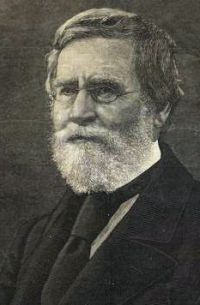
King Charles IX of France

Definition and stakes

Bernard Capes Bag and Baggage — The King's Star (1913)

III The young Charles IX of France was not only a poet in himself, but the cause that poetry was in other men. That should have made him a proud king, yet there must have been times when the sycophantic swarm of grasshoppers drove him to regret his own gift. He could discriminate very clearly between the real and the pretentious, and he did; yet it is doubtful if in earlier days he would have put his foot so savagely on the poor charlatan, Jean Biche.
Source: Wikisource

James Westfall Thompson The Wars of Religion in France 1559-1576

The duke of Alençon in vain entreated for the lives of his friends. Charles IX, who was morbid and savage and stricken unto death [1642] would only allow that, instead of being executed in public, they should be put to death in prison. [1643] On April 30 La Mole and Coconnas were beheaded and quartered. [1644]
But for once the ascendency of the queen mother over the King was of good effect. Charles IX was urged to mete out the same penalty to his brother, the marshals Cossé and Montmorency, and Henry of Navarre. If it had not been for powerful intervention this might have been the case.
Source: Gutenberg

James Westfall Thompson The Wars of Religion in France 1559-1576

As for the crown, it was even more anxious than the moderate Huguenots to avoid a protracted siege and come to some form of settlement. [1557] With this aim Charles IX, through the medium of the duke of Longueville, governor of Picardy, early in October had made overtures to La Noue, who was still in Flanders. After some hesitation La Noue came to Paris where he had a conference with the King and the queen mother. So trusted and so capable was he that Charles IX gave him practically discretionary powers to bring about a settlement, and in the middle of November La Noue went to La Rochelle.
Source: Gutenberg

Get perspective with Kwize: daily news enlightened by great literature