Kulan

Definition and stakes

Arabella B. Buckley,  Through Magic Glasses and Other Lectures

“ As I followed them in their course I fancied I saw troops of yet another animal of the horse tribe, the "Kulan," or Equus hemionus, which is a kind of half horse, half ass (Fig. 74) , living on the Kirghiz steppes of Tartary and spreading far beyond the range of the Tarpan into Tibet. Here at last we have a truly wild animal, never probably brought into subjection by man. The number of names he possesses shows how widely he has spread. The Tartars call him "Kulan," the Tibetans "Kiang," while the Mongolians give him the unpronounceable name of "Dschiggetai." ”
Source: Gutenberg

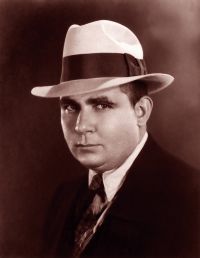
Portrait of Robert Ervin Howard Robert Ervin Howard,  The Shadow Kingdom

“ Kull's lifted hand and kingly voice stopped the rush that had started, and while they stood astounded he pointed to the thing which lay before them—whose face was fading into that of a snake. They recoiled, and from one door came Brule and from another came Ka-nu.
These grasped the king's bloody hand and Ka-nu spoke: "Men of Valusia, you have seen with your own eyes. This is the true Kull, the mightiest king to whom Valusia has ever bowed. The power of the Serpent is broken and ye be all true men. King Kull, have you commands?"
”
Source: Wikisource

Henry Yule and Charles Raymond Beazley,  1911 Encyclopædia Britannica (1911)

“ It was the first time that the khan, a man full of energy and intelligence, had fallen in with European gentlemen. He was delighted with the Venetian brothers, listened eagerly to all they had to tell of the Latin world, and decided to send them back as his envoys to the pope, with letters requesting the despatch of a large body of educated men to instruct his people in Christianity and the liberal arts. With Kublai, as with his predecessors, religion was chiefly a political engine. ”
Source: Wikisource

Get perspective with Kwize: daily news enlightened by great literature