Jane Austen,
Pride and Prejudice
(28 January 1813)
Jane Austen,
Pride and Prejudice
(28 January 1813)
“ Lady Catherine's unjustifiable endeavours to separate us were the means of removing all my doubts. ”
Jane Austen,
Pride and Prejudice
(28 January 1813)
“ Lady Catherine's unjustifiable endeavours to separate us were the means of removing all my doubts. ”
Jane Austen,
Pride and Prejudice
(28 January 1813)
“ "And is this all?" cried Elizabeth. "I expected at least that the pigs were got into the garden, and here is nothing but Lady Catherine and her daughter." ”
 Thomas Frederick Crane,
Italian Popular Tales
(1885)
Thomas Frederick Crane,
Italian Popular Tales
(1885)
“ Finally, after seven years, her Fate seemed weary of always persecuting the unfortunate Catherine. One day Catherine came again to a city and saw a lady standing at a window, who asked her: "Where are you going, all alone, pretty girl?" "Ah! noble lady, I am a poor girl, and would like to find a place to earn my bread. ”
Emma Leslie, At the "Sign of the Golden Fleece" (1900)
“ Already did this watchful friend of Queen Catherine know that grave danger threatened his mistress in the person of the merry, black-haired little lady, who had come recently from the Court of France, and who, though little more than a girl of sixteen, had sufficient strength of character to hold fast by the fashion in which the ladies dressed there, which was altogether more neat and becoming than the English fashion, which Queen Catherine had followed blindly, caring too little to approve or disapprove of the cut of a gown or wimple, so that it was splendid enough to please her husband. ”
Jane Austen,
Pride and Prejudice
(1817)
“ Collins was carefully instructing them in what they were to expect, that the sight of such rooms, so many servants, and so splendid a dinner, might not wholly overpower them. When the ladies were separating for the toilette, he said to Elizabeth, "Do not make yourself uneasy, my dear cousin, about your apparel. Lady Catherine is far from requiring that elegance of dress in us, which becomes herself and daughter. I would advise you merely to put on whatever of your clothes is superior to the rest, there is no occasion for any thing more. ”
 Grant Allen,
Cities of Belgium
Grant Allen,
Cities of Belgium
“ The central panel represents Our Lady, seated in an exquisite cloister, on a throne backed with cloth of gold. To the right and left are two exquisite angels, one of whom plays a regal, while the other, in a delicious pale blue robe, holds a book for Our Lady. Two smaller angels, poised in air, support her crown. To the left, St. Catherine of Alexandria kneels as princess, with the broken wheel and the sword of her martyrdom at her feet. The Child Christ places a ring on her finger; whence the whole composition is often absurdly called “The Marriage of St. Catherine.” ”
Maud Stepney Rawson, Bess of Hardwick and Her Circle
“ In faithe I wolde I were the Queen’s confessor this Lent, that I might joine her in penaunce to forgive and forget; or otherwise able to steppe into the pulpett to tell her Highness, that God will not forgive her, unleast she frelye forgeve all the worlde.”31This letter is worth quoting because it shows the prevailing attitude of the Elizabethan courtier. No one who lacked the favour of the sovereign could be accounted as one living. Lady Catherine, once under that heavy cloud of disfavour, never emerged, but died broken and miserable within six years of her unhappy marriage. ”
Thomas Frederick Crane,
Italian Popular Tales
“ Now Catherine remained years with this lady, and every morning she took a board with fresh bread and carried it up the mountain, and when she had called three times: "O my mistress' Fate!" there appeared a beautiful tall lady, who received the bread. Catherine often wept when she thought that she, who had once been so rich, must now serve like a poor maid. One day her mistress said to her: "Catherine, why do you weep so much?" ”
Jane Austen,
Pride and Prejudice
(28 January 1813)
“ In this manner Lady Catherine talked on, till they were at the door of the carriage, when, turning hastily round, she added, "I take no leave of you, Miss Bennet. ”
Catherine Sinclair, Holiday House: A Series of Tales
“ At last, one morning, as soon as Laura got up, Lady Harriet gravely led her towards a large table on which all the ill-used frocks had been laid out in a row; and a most dismal sight they were! Such a collection of stains and fractures was probably never seen before! A beggar would scarcely have thanked her for her blue merino; and the green silk frock looked like the tattered cover of a worn-out umbrella.“Laura,” said Lady Harriet, “in Switzerland a lady’s wardrobe descends to many generations; but nobody will envy your successor! ”
“ I am sure, my dear sister, you will excuse my remaining silent so long, and agree with me that such circumstances, while they continue from any cause in suspense, cannot be too cautiously concealed. When you have the happiness of bestowing your sweet little Catherine, some years hence, on a man who in connection and character is alike unexceptionable, you will know what I feel now; though, thank Heaven, you cannot have all my reasons for rejoicing in such an event. Catherine will be amply provided for, and not, like my Frederica, indebted to a fortunate establishment for the comforts of life. ”
Catherine Sinclair, Holiday House: A Series of Tales
“ It was long past five before Harry and Laura reached Holiday House, where Lord Rockville met them at the drawing-room door, looking taller, and grander, and graver than ever, while Lady Rockville rose from her sofa, and came up to them, saying, in a tone of gentle reproach,“My dear children! you ought to return home before the dinner hour, and not keep his Lordship waiting!” ”
Catherine Sinclair, Holiday House: A Series of Tales
“ All Laura’s clothes had been packed the night before, in a large chaise seat, which was now put into the carriage along with herself, and every thing seemed ready for departure, when Lady Harriet’s maid was suddenly taken so very ill, as to be quite unfit for travelling; therefore she was left behind, and a doctor sent for to attend her; while Lady Harriet said she would trust to the maids at Holiday House, for waiting upon herself and Laura.It is seldom that so happy a face is seen in this world, as Laura wore during the whole journey. ”
Catherine Sinclair, Holiday House: A Series of Tales
“ Marmalade comes home, she says to grandmama, ‘I have desired a leg of mutton to come here, my lady! and I told a goose to be over also,’ as if the leg of mutton and the goose walked here, arm-in-arm, of themselves.”“Look at those children, going to see the wild beasts,” added Laura, “and this little girl is on her way to buy a new frock. I am sure she needs one! that old man is hurrying along because he is too late for the mail-coach; and this lady with a gown like a yellow daffodil, is going to take root in the Botanical Gardens!”“Uncle David! there is the very poorest boy I ever saw!” ”
Catherine Sinclair, Holiday House: A Series of Tales
“ Most unfortunately, all the time of Laura’s visit at Holiday House, she had been, as usual, extremely heedless, in taking no care whatever of her clothes; consequently her blue merino frock had been cruelly torn; her green silk dress became frightfully soiled; four white frocks were utterly ruined; her Swiss muslin seemed a perfect object, and her pink gingham was both torn and discoloured. Regularly every evening Lady Harriet told her to take better care, or she would be a bankrupt in frocks altogether ”
Catherine Sinclair, Holiday House: A Series of Tales
“ It is rather fortunate I won, seeing that not one sixpence had I to have paid you with! not a penny to jingle on a mile-stone. You had more money than wit, and I had more wit than money, so we are well met. Did you not see that the grey horse had fallen lame? Good-bye, youngster! I shall tell all the giants and wild beasts to expect you another day!”“Harry!” said Lady Rockville, looking gravely at his enraged countenance, “it is a foolish fish that is caught with every bait! ”
Catherine Marsh, Memorials of Capt. Hedley Vicars… (1856)
“ In the month of October of the same year, my father, my sister, and I were renewing a friendship of former days by a visit to Terling-place. A letter was received on the morning of the 11th by Lady Rayleigh, promising a visit from her brother, which caused such a tumult of joyous excitement at the breakfast-table, and so much shouting and clapping of hands among the children, as soon as the news was made known to them, that, in my ignorance, I supposed the young soldier had only just arrived from Nova Scotia. ”
Catherine Sinclair, Holiday House: A Series of Tales
“ It is very bad for me! I generally feel an odd sort of over-all-ish-ness as soon as she begins; and I am getting too big now, for any thing but a birch-rod like Frank. How pleasant it is to be a grown-up man, uncle David, as you are, sitting all day at the club with your hat on your head, and nothing to do but look out of the window. That is what I call happiness!”“But once upon a time, Harry,” said Lady Harriet, “when I stopped in the carriage for your uncle David at the club, he was in the middle of such a yawn at the window, that he very nearly dislocated his jaw! ”
Catherine Owen, Culture and Cooking; Or, Art in the Kitchen
“ Pack in a jar, and keep cool. This butter is excellent for many purposes. For salad, beaten with oil, vinegar, and yolks of eggs, as for mayonnaise, it makes a delicious dressing. For cold meat or fish it is excellent, and also for chops.Two or three other articles serve to simplify the art of cooking in its especially difficult branches, and in the branches a lady finds difficult to attend to herself without remaining in the kitchen until the last minute before dinner; but with the aid of blanc and roux a fairly intelligent girl can make excellent sauces. ”
Thornton Hall, Love Romances of the Aristocracy
“ Well might her humble father, when he paid his Duchess-daughter a visit in London, throw up his hands in amazement at the splendours with which his "petite Louise" had surrounded herself! So high had she climbed that it seemed at one time that even the Crown of England was within her reach; for when Catherine was brought to the verge of death the Duchess was probably not alone in thinking that she might be her successor on the throne."She has got the notion," wrote the French Ambassador, "that it is possible she may yet be Queen of England. ”
A lady, The Englishwoman in Russia
“ The shopkeepers and merchants in Russia are now the richest class in the country; the nobility every year are becoming poorer. The policy of Catherine has worked well in that respect; for, they say, it was she who began to lower their power, which has ever been dangerous to the imperial family, and her successors follow in her steps. It is astonishing how reckless the Russian nobles are of the consequences of their extravagance. ”
John Lord, Beacon Lights of History, Volume 07…
“ No woman in modern times ever rose so high from a humble position, with the exception of Catherine I, wife of Peter the Great. She was not born a duchess, like some of those brilliant women who shed glory around the absolute throne of the proudest monarch of his century, but rose to her magnificent position by pure merit,--her graces, her virtues, and her abilities having won the respect and admiration of the overlauded but sagacious King of France. ”
 James Anthony Froude,
The Divorce of Catherine of Aragon
James Anthony Froude,
The Divorce of Catherine of Aragon
“ To the lords who carried the message to Catherine she replied as she had always done—that Queen she was, and she would never call herself by any other name. As to her establishment, she wanted nothing but a confessor, a doctor, and a couple of maids. If that was too much, she would go about the world and beg alms for the love of God. ”
Rupert Sargent Holland, Historic Girlhoods, Part One
“ Catherine became a most powerful woman, but powerful through fear. She had learned the lesson of her childhood well. She was a Medici, and therefore overweeningly ambitious, and she was as scheming, as clever, and as cruel as any of her famous family. Her husband, Henry, became King of France, and was killed in a tournament. Her three sons became kings of France in turn, and during all their reigns she was the power behind the throne. ”
James Anthony Froude,
The Divorce of Catherine of Aragon
“ If she was queen, Elizabeth was a bastard, and her insistance upon her title was an invitation to civil war. She was not standing alone. The Princess Mary, on her father’s marriage with Anne, had written him a letter, which he had praised as greatly to her credit; but either Anne’s insolence or her mother’s persuasion had taken her back to Catherine’s side. Her conduct may and does deserve the highest moral admiration; but the fidelity of the child to her mother was the assertion of a right to be next in succession to the crown. ”
Jeanne d'Arc, Maid of Orleans, Deliverer of France
“ I said to Saint Catherine: ‘Since God will help those at Compiègne, I wish to be there.’ Saint Catherine said to me, ‘Be resigned, and do not falter: you will not be delivered before seeing the King of England.’ I answered her: ‘Truly I do not wish to see him; I would rather die than fall into the hands of the English.’”“Is it true that you said to Saint Catherine and Saint Margaret: ‘Will God leave these good people of Compiègne to die so horribly’?” ”
 Anatole France,
Child Life in Town and Country
Anatole France,
Child Life in Town and Country
“ Catherine and Jean go roaming through the flowery meadows. As they go, Catherine gathers a nosegay. She picks blue centauries, scarlet poppies, cuckoo-flowers, and buttercups, which she also knows as little chicks. She picks those pretty purple blossoms that grow in hedgerows and are called Venus’ looking-glasses. She picks the dark ears of the milkwort, and crane’s-bill and lily of the valley, whose tiny white bells shed a delicious perfume at the least puff of wind. Catherine loves flowers because they are beautiful; and she loves them too because they make such pretty ornaments. ”
Various, The historians' history of the world in twenty-five volumes… (1905)
“ In this were interested all the personal partisans of Catherine, those “chosen sons of the people,” who had stirred up the empress to put herself at the head of the movement. They were far more interested in the matter than Catherine herself: the change had been brought about by all classes of society, by the whole nation, not by her; no one could even think of the detested Peter ascending the throne a second time—it was not on Catherine that the malcontents would revenge themselves, that is if there were or would be any, but on the “chosen of the people.” ”
 Raymond of Capua,
Life of Saint Catharine of Sienna
(1862)
Raymond of Capua,
Life of Saint Catharine of Sienna
(1862)
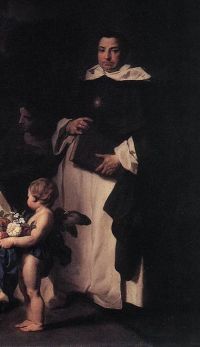
“ Follow therefore courageously, the inspiration which will enlighten thee; for I shall draw, by thy aid, numerous souls from the gulf of hell, and I will conduct them, with the help of my grace, to the Kingdom of Heaven." Catherine heard these words several times, and when our Lord repeated to her: "Fear nothing, be not troubled," she answered: "you are my God, and I am but thy little handmaid: may thy will ever be accomplished, but remember me and incline unto my aid, according to the greatness of thy mercy. ”
Thornton Hall, Love affairs of the Courts of Europe
“ But although no man ever deposed the shepherd from the first place in Elizabeth's favour, it must not be imagined that he was her only lover. The daughter of the hot-blooded Peter and the lusty scullery wench had always as great a passion for men as the second Catherine, who had almost as many favourites in her boudoir as gowns in her wardrobes. ”
 Violet Jacob,
Irresolute Catherine
Violet Jacob,
Irresolute Catherine
“ Catherine sat on by the fire, so tired that the silence fallen on the house with the shutting of Susannah’s window was a relief. She was aching, and her limbs felt the strain of that gallop along the edge of the hill. Surely there never was a woman so hard driven by the caprices of contrary winds as she; never a bride who was to watch the dawning of her expected wedding-day in such an untoward plight. Above her head enmity—there was small doubt of that—and now Heber was miles away. ”
Philip Chesney Yorke, 1911 Encyclopædia Britannica (1911)
“ Before her death she dictated a last letter to Henry, according to Polydore Vergil, expressing her forgiveness, begging his good offices for Mary, and concluding with the astounding assurance—“I vow that mine eyes desire you above all things.” The king himself affected no sorrow at her death, and thanked God there was now no fear of war. Catherine is described as “rather ugly than otherwise; of low stature and rather stout; very good and very religious; speaks Spanish, French, Flemish, English; more beloved by the islanders than any queen that has ever reigned.” ”