London and Birmingham Railway

Definition and stakes

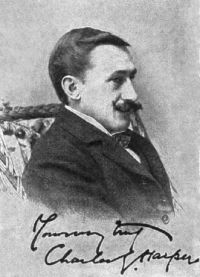
Portrait of Edwin A. Pratt Edwin A. Pratt,  A History of Inland Transport and Communication in England… (1912)

“ The story of the London and Birmingham Railway is especially significant of the general conditions under which the English railway system came into being.
Industrial expansion had brought about great developments in the Birmingham and Black Country districts, the population in Birmingham alone having increased from about 50,000 in 1751 to 110,000 in 1830. Wide possibilities of increasing trade and commerce were being opened up, but these were seriously hampered by the disadvantages experienced in the matter of transport.
”
Source: Wikisource

Anonymous,  Remarks on the Proposed Railway Between Birmingham and London

“ Having then referred to what has been done upon a line of railway from Liverpool to Manchester, with a profit to the proprietors and great benefit to the public, let us inquire whether there is the same want of an improved conveyance from Birmingham to London. We will first consider the amount that is now paid, and the time that is now required for conveying both goods and passengers. The amount paid for the conveyance of passengers and goods between Birmingham and London is upwards of 800,000l. per annum ”
Source: Gutenberg

Anonymous,  Remarks on the Proposed Railway Between Birmingham and London

“ As the utility of railroads may be considered established by the one now in operation, it must be evident how desirable it is to connect Liverpool, Manchester, and Birmingham, and ultimately other towns in the North, with the Metropolis. Supposing a railroad connecting these important towns to exist, which might be considered as the chief line of communication from the North to the South, there is a reasonable hope, that shortly other roads would be proposed and executed, connecting the remaining influential towns. ”
Source: Gutenberg

Get perspective with Kwize: daily news enlightened by great literature